Uncategorized

Mobile World Congress 2017: The Quiet Tipping Point

By • Posted & filed under Uncategorized

There was an aspect of expectation to Mobile World Congress (MWC) 2017 in Barcelona that went far beyond the usual trade show hype. With the mobile world encompassing everything in our technology universe, MWC 2017 very quietly – and firmly – showed that the mobile ecosystem can, and will, show the way forward. All of that hype about VR and super mixed reality last year? We have greater clarity this year – from Samsung Gear to network operators such as Verizon and Orange. Augmented reality seemed too much too soon last year? We now have more AR implementations, and more interest and demand in AR now than ever before. 5G yet another acronymic bamboozle? It will take a while, for sure, but it’s coming – this year.

MWC 2017 was a watershed, in its own quiet way. And it’s not just the big boys who are spurring innovation. Qualcomm and Intel duked it out near each other, as always, but while the companies shared as much of the stage in the IoT, smart auto, AI shuffle, it was more evident than ever that the European start-up ecosystem was making major strides in the mobile SDK world. From gesture recognition (the Swedes showed off Manomotion and Crunchfish) to intelligent location (Finland’s Quuppa), we are seeing more efficient delivery of complex experiences, driven from European university spin-outs and venture-backed start-ups.

The week was endless, as usual, and started with GSMA’s event at the Pullman Barcelona Skipper Hotel, and an excellent panel moderated by Bonfire Lab’s John Gilles, on VR/AR, paneled by Verizon Ventures’ Ed Ruth; Oculus’ Andy Mathis, and Ericsson’s Per Borgklint.
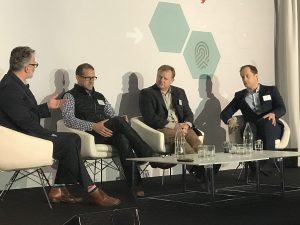
John Gilles, Bonfire Labs; Ed Ruth, Verizon Ventures; Andy Mathis, Oculus, and Per Borgklint at GSMA Summit’s VR/AR panel

Mobile Sunday, at the Estrella Damm event center, saw a critical mass of people – investors, start-ups, and analysts – with a mass of new faces. Kudos to Robin Wauters and Rudy De Waele on growing this event into a seminal MWC gathering.
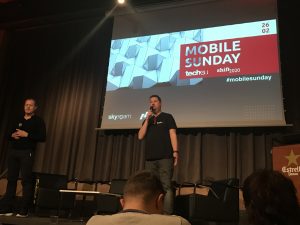
Rudy De Waele and Robin Wauters great the Mobile Sunday crowd at the Estrella Damm event center

With the entire world worried about cybersecurity’s ability to take on new threats, the mobile world had more answers at MWC 2017, including solutions from Estonia. More network-based innovations for smart cities and IoT were on display from everywhere – from SK Telecom to Huawei.

The device manufacturers did not boffo announcements, but incremental progress – from Sony’s Xperia accessories to LG and Samsung’s forthcoming tablets – and the nostalgic hype for the Nokia 3310 and the new BlackBerry device showed the diversity of the market.
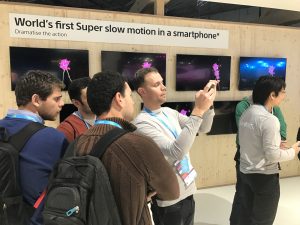
Sony’s super slow motion feature showed that the smartphone has now overcome the likes of GoPro
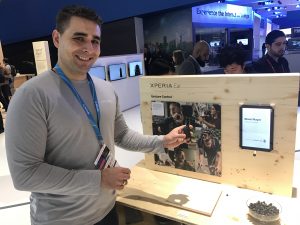
Sony Xperia Ear, an earpiece which uses gesture recognition

Oddly enough, two of the biggest statements at the event emanated from New Jersey: Verizon and Nokia Bell Labs. Verizon’s stand was a show of innovation, from its telematics group to smart city and IoT solutions to the new holding company, Exponent, which will deliver service architecture for other carriers. The company’s envrmnt studio, and end-to-end VR/AR offering, will be part of Exponent.
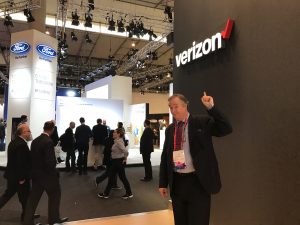
Me at the Verizon stand. The company made a major statement through its envrmnt VR/AR studio

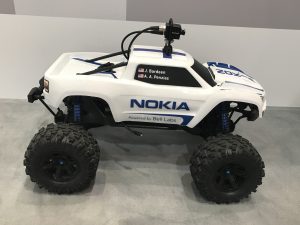
But, overall, the most stunning statement made at the show was from Nokia. Its stand was a testimony to new ideas and even a new attitude. Bell Labs shined with its race track demo, which had radio-controlled cars (cheekily named after Bell Labs luminaries, including Claude Shannon) powered over 4G and 5G networks, showing the efficacy of network controls. Nokia, which acquired Bell Labs and the old Alcatel-Lucent entity last year, has already rebranded and repowered Bell Labs, and it was evident at MWC 2017.

We can only hope that the coming year will deliver more experiences powered by network innovation, which was quietly the star at MWC 2017.
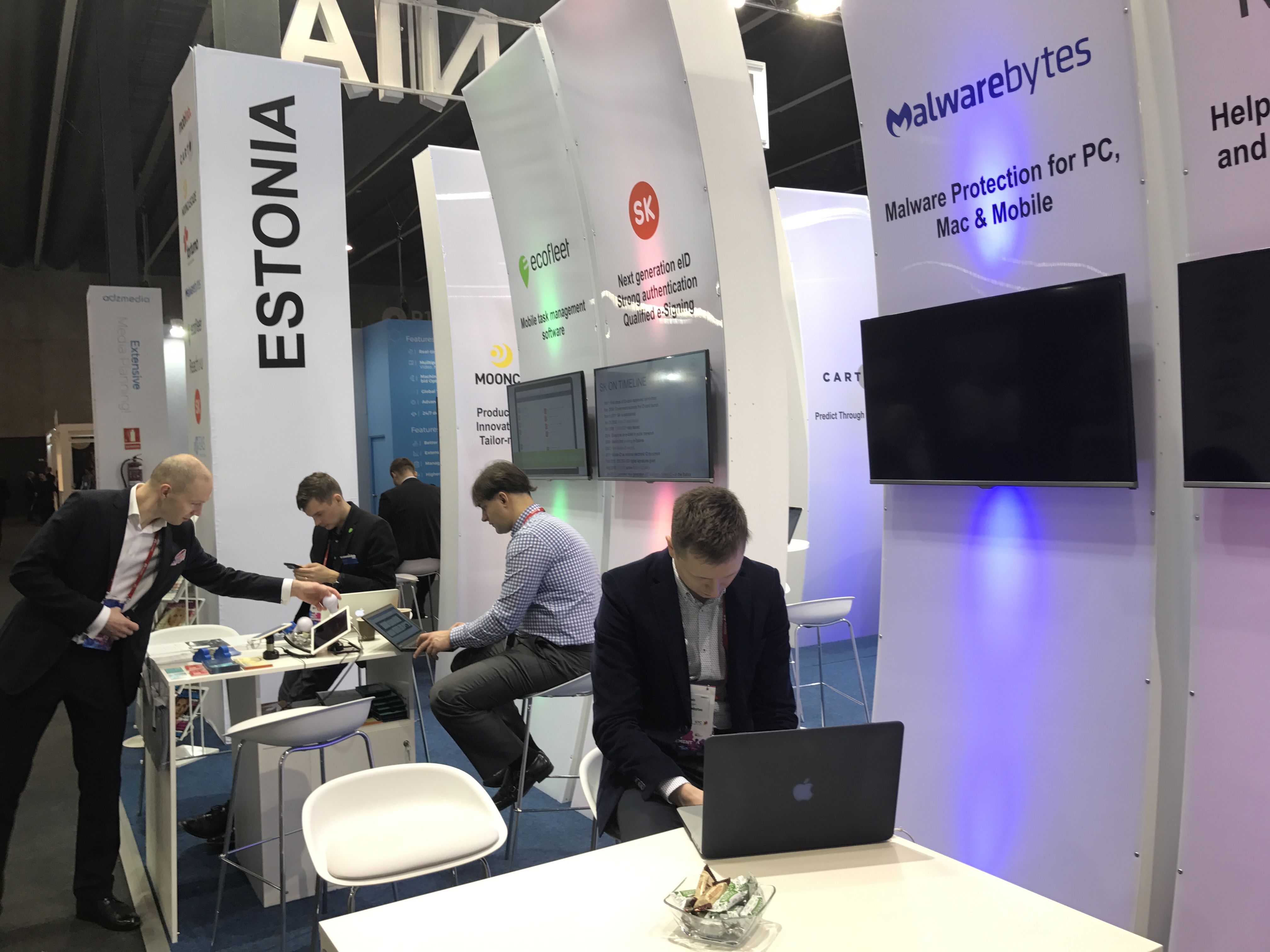
 

Estonians hard at work, first thing in the morning, on Day #3 of MWC 2017
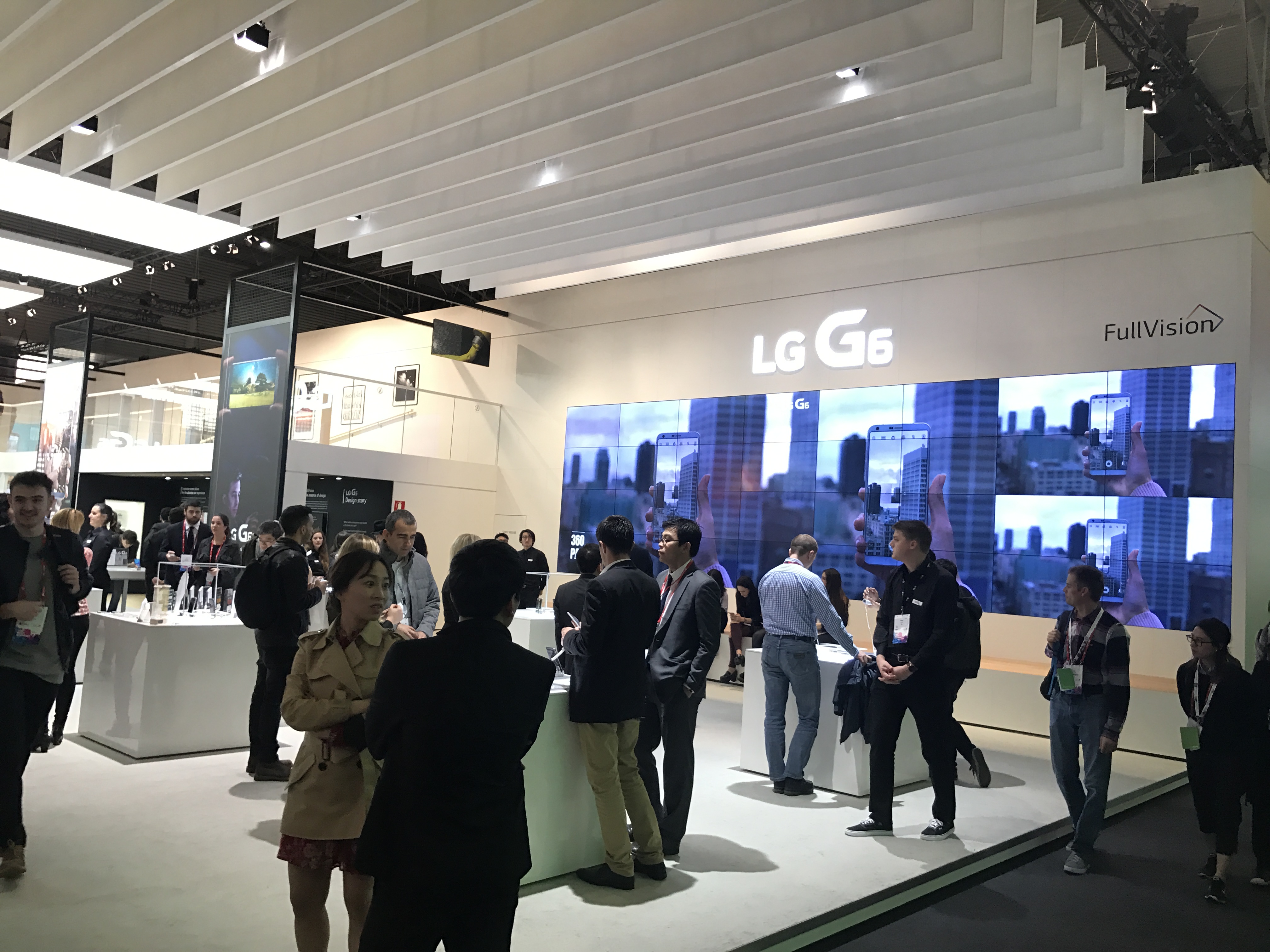
LG was a quiet presence at MWC 2017
Samsung bristled with energy; its Galaxy Note 7 disaster well in the rearview mirror

IBM’s Watson story has increased since last year, and drew flocks of people to its psychedelic-meets-Deco booth, complete with the “cognitive dress,” which is designed based on user’s moods and whims.
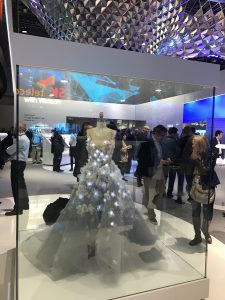
IBM’s “cognitive dress”
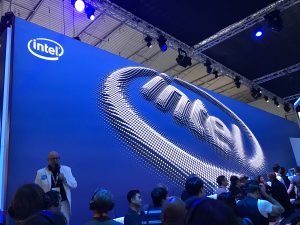
Intel’s mega-pixel wall
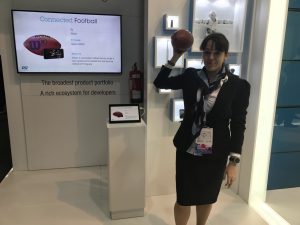
ST Microelectronics’ “smart football” – the Wilson X Smart Football – brings IoT to the sports world
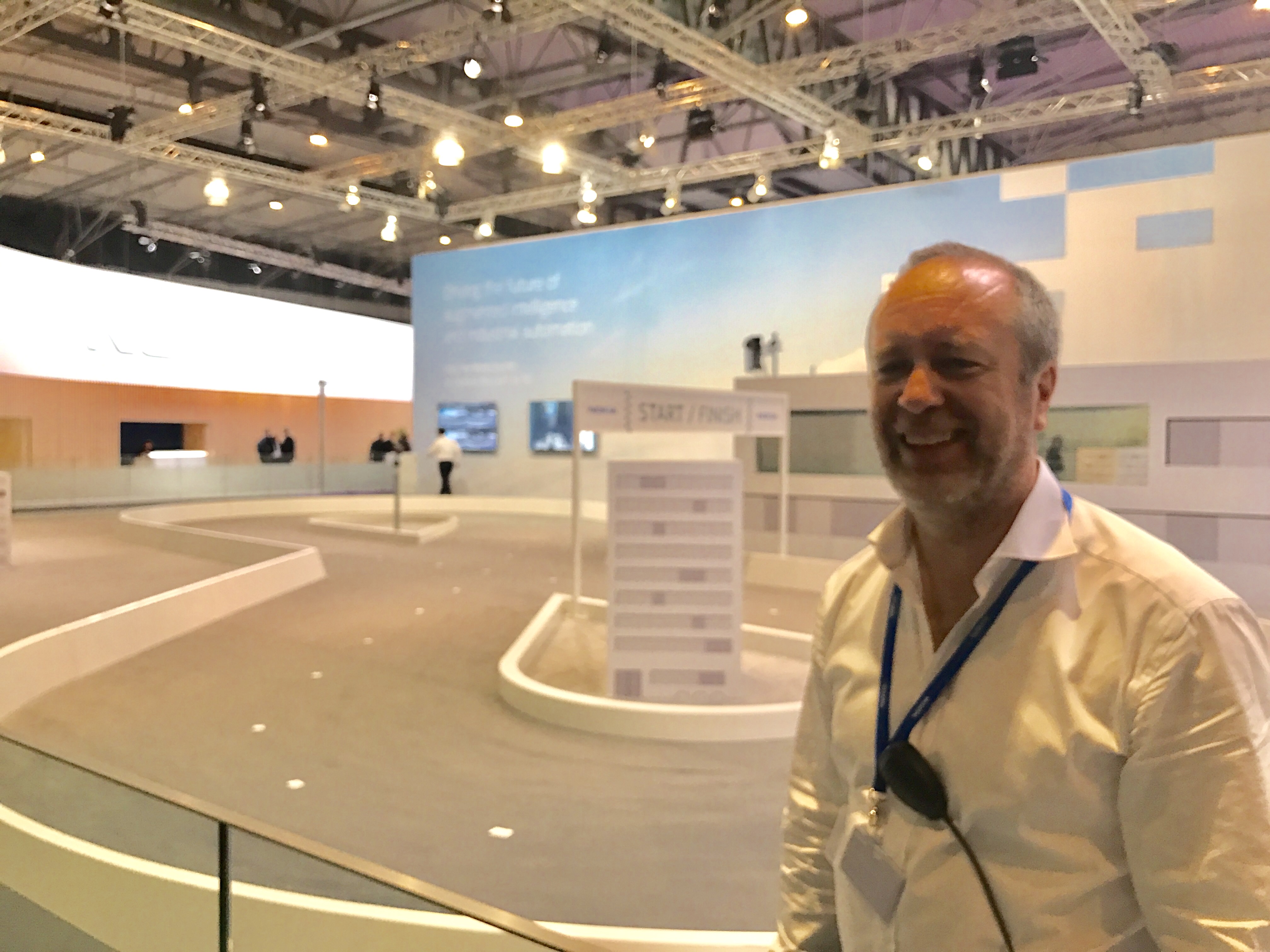
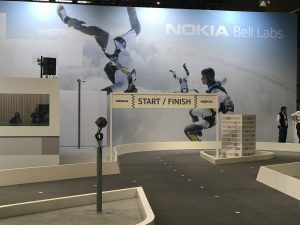


Kim Mathews mans the Nokia Bell Labs race track; scenes of the track and one of the radio-controlled cars, featuring the names of Bell Labs Nobel laureates John Bardeen and Arno Penzias
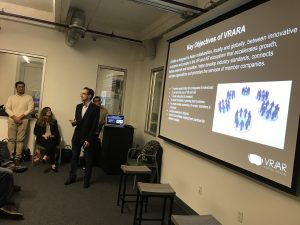
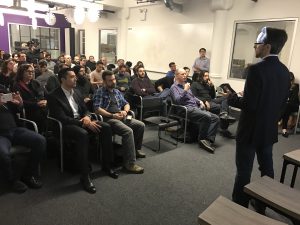
 

VR/AR Association Event, ‘VR for Producers’ Features Verizon envrmnt, Littlstar, and Associated Press at NYU Data Futures Lab

By • Posted & filed under Uncategorized

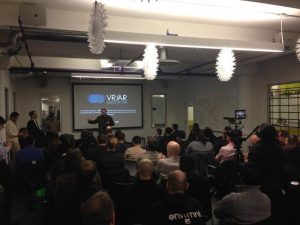
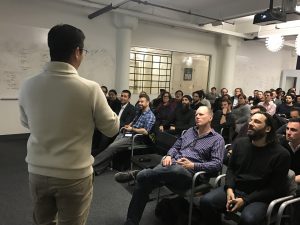
The first VR/AR Association New York Chapter event of 2017, ‘Virtual Reality for Producers: How to Create and Deliver for the New Content Frontier,’ took place last Wednesday night, February 15th, at the NYU Data Futures Lab, and it delivered not only a full standing-room-only crowd of 95 people, but some of New York’s finest producers working the VR scene.

You can watch the video of the event at:

https://drive.google.com/open?id=0B58D21m9dOMOdFJJSGE1UWMzVzA

Kris Kolo, New York chapter head of the VR/AR Association, introduces the goals and benefits of the organization

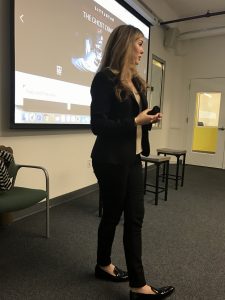
As more New York producers learn the craft of producing in VR, the industry will grow concomitantly. Wednesday’s session was an ideal session for learnings from the likes of Paul Cheung, direct of interactive at Associated Press (AP); Alissa Crevier, global head of partnerships, at Littlstar, and Christian Egeler, director of VR/AR product development with Verizon envrmnt.
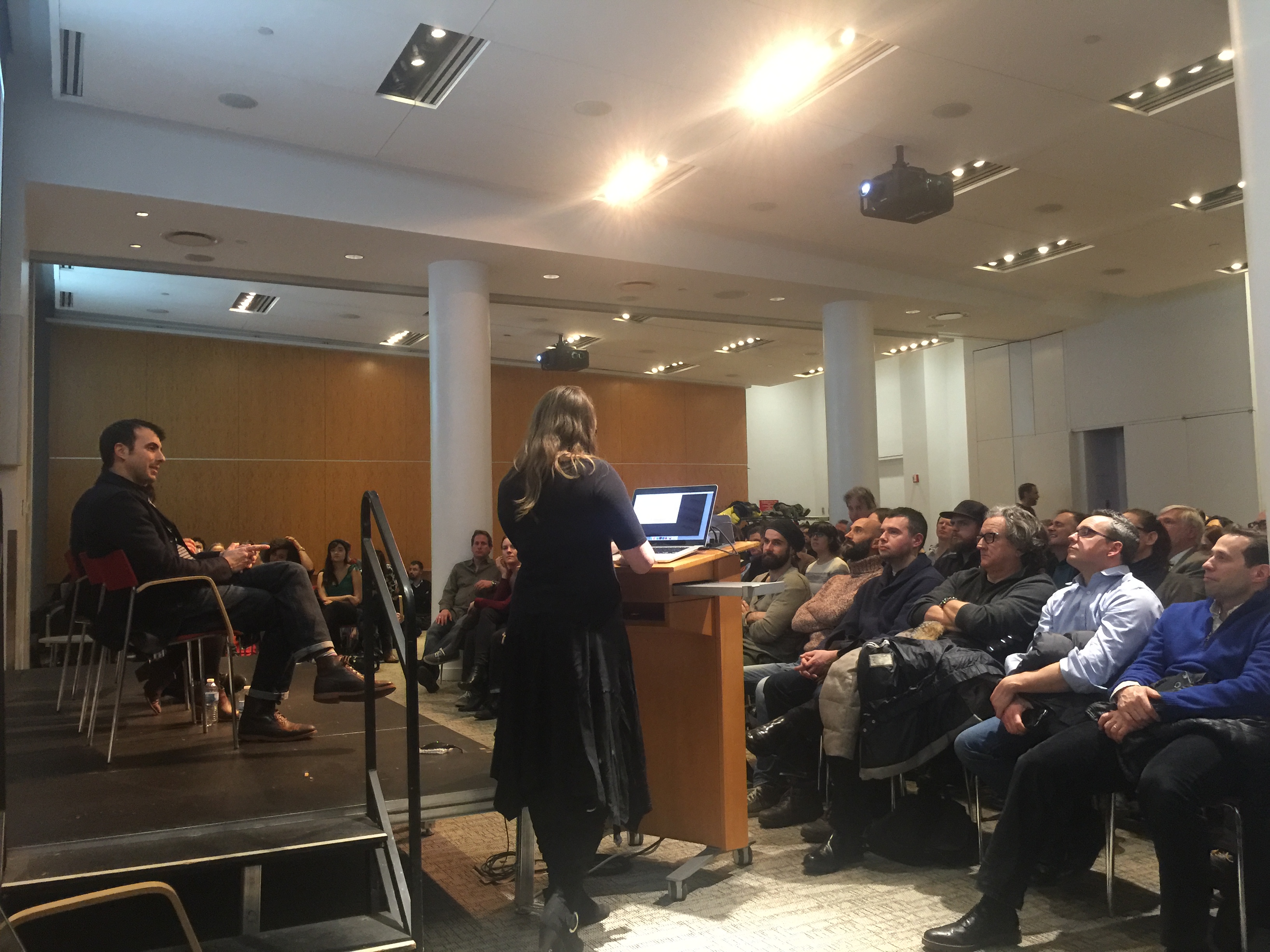
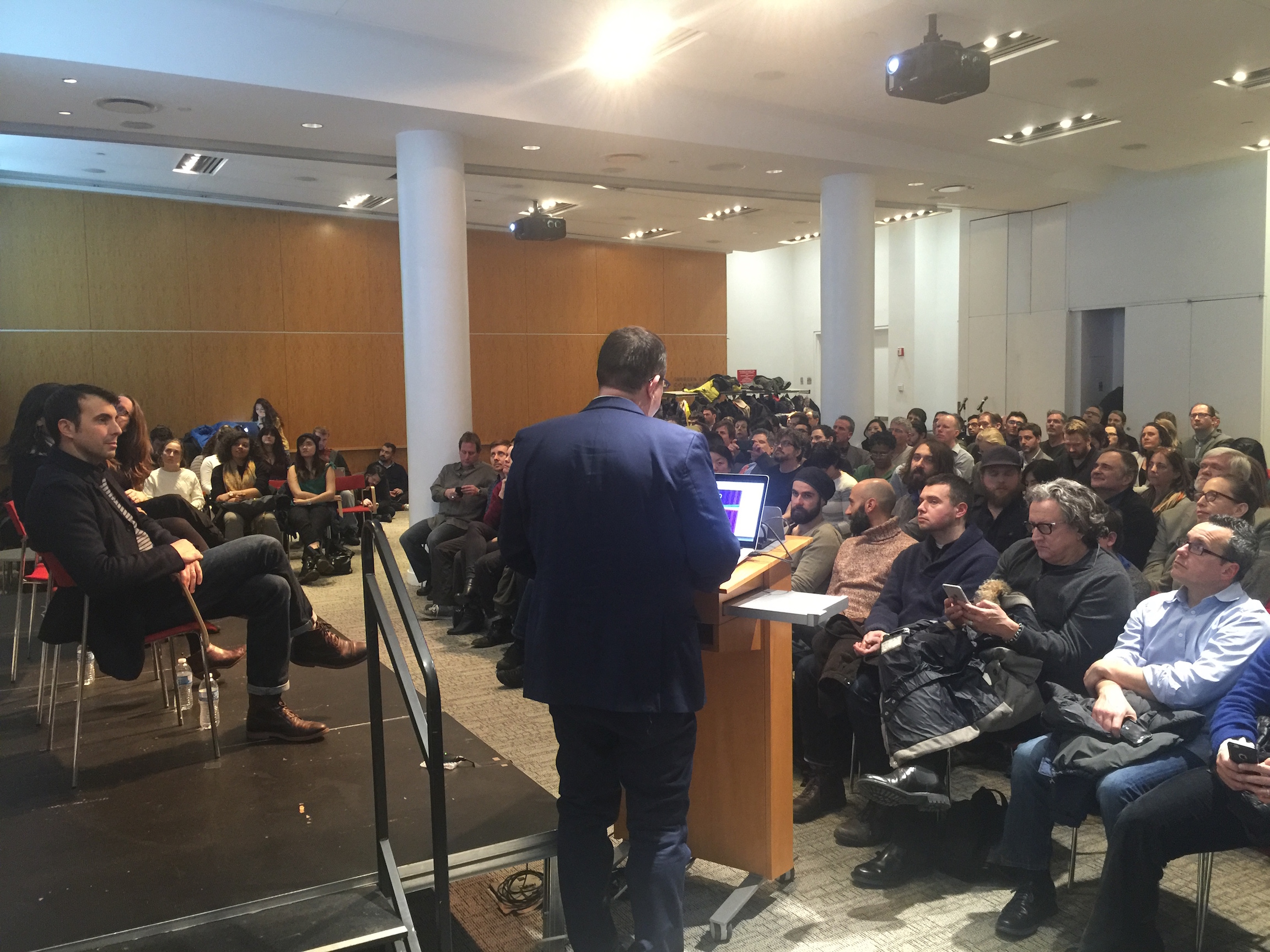
Chris Pfaff introduces the speakers and sets up the event

Paul Cheung guided the audience through his learnings with the almost dozen VR cameras that he and his team have tested. He discussed some of the work that AP has done with branded content partners, and how to adapt the standards of the AP (an organization that literally developed the journalistic standards known as “AP Style” over the past 180-plus years) to VR production. In other words, while shooting a scene, do you keep the DP and/or the producer in the shot, or matte that out? For AP, that choice is obvious: leave the production team in the frame. Cheung described some of the learnings in VR as they apply to the overall production work that his interactive has to deal with, enabling a smoother workflow scenario.

Paul Cheung discusses the range of VR cameras that AP has tested and and used

For Alissa Crevier, Littlstar’s work has grown to the point where the company is as much a platform for content as it is a stand-alone producer of VR content. This has created a new kind of channel for VR partners, and the Littlstar roster of clients includes the who’s who of major content distributors, including Disney/ABC, Discovery, Nat Geo, Showtime, and the Wall Street Journal, among others. Crevier’s experience with Spotify, and the music industry in general, have helped her navigate clearances and understand the vagaries of the live music scene, and live streaming, to understand the value of WebVR versus individual VR platforms, such as Oculus, Gear, or Vive, among others.

Alissa Crevier presents Littlstar’s productions and its content platform model

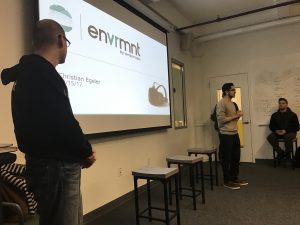
Christian Egeler took the audience through the Verizon envrmnt learnings, and how they have applied to the studio’s growth in areas that include their Social VR platform. The envrmnt cross-platform SDK has gained traction in the industry, including with the March, 2017 issue of Cosmopolitan magazine, which includes an AR app, a native app, and integrated envrmnt SDK so that trigger images are easier to recognize. Egeler also showed an Alpine Village demo with dynamic updates (first showed at the Amazon Web Services Invent and Nvidia conferences). He hinted at the possibility that envrmnt might release a “build your own” 3D engine later this year. A VR experience produced for Super Bowl LI was also demonstrated.

Christian Egeler shares learnings from Verizon envrmnt’s studio work, and showcases new work, including its Social VR platform

The audience, mostly comprised of producers, was intrigued by the experiences that the three presenters had. The lively panel discussion dove into issues surrounding the growth of an industry that still has yet to standardize areas of production and post-production, as well as the growth of WebVR, in the wake of a still-early headset market.

Paul Cheung during the panel discussion

Mina Salib (right, speaking), program manager at the NYU Futures Labs, introduces the audience to new opportunities at the Labs

Paul Cheung (rear of photo, against window), and Alissa Crevier (right front), address audience questions after the ‘VR for Producers’ event


Augmented Reality for Producers Event Packs the House at NYU Data Future Lab

By • Posted & filed under Uncategorized

The latest augmented reality (AR) technology, and some of its leading producers, packed the house at the NYU Data Future Lab last night in SoHo, at Chris Pfaff’s ‘AR for Producers: Bending the Arc in Real Life’ event, presented with the VR/AR Association, New York Chapter. The event was held at the end of the first day of Advertising Week New York 2016, and brought together technologists and producers alike for demos and discussions regarding AR’s application to multiscreen content.

img_7142

Ariff Quli, chief commercial officer, Americas for Blippar answers a question at ‘AR for Producers’ at the NYU Data Future Lab


A full house of more than 75 people crowded into the Think Tank at the lab, and witnessed a presentation of Provision’s Holovision holographic display unit, which is used by several leading consumer brands. Ted Iannuzzi, creative business technologist with design and development firm Ixonos detailed the product’s significance in the context of his long history in emerging technologies. Ixonos is currently working with Provision to design the next generation of the Holovision experience, which will incorporate the first ‘touchless’ touch screen.

img_7110-2img_7141

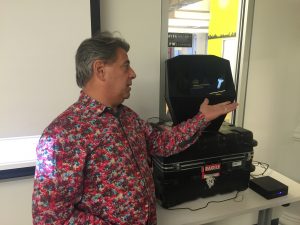
Ted Iannuzzi, creative business technologist with Ixonos, demos the Provision Holovision holographic projection kiosk, and discusses past visions of AR


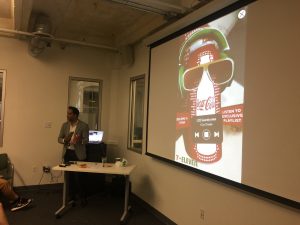
Blippar’s US director of commercial operations, Ariff Quli, led off the event, showing how the Blippar app drives interactive engagement for brands including Spotify (a playlist driven by Blippar from a Coca-Cola can) and others. Ariff even pulled an audience member aside to draw a picture, which was then rendered elegantly using Blippar’s recognition technology.

img_7125img_7121img_7122butterfly-shot-blippar

Ariff Quli demos Blippar; activated Spotify playlist, tagging physical objects, and bringing audience member’s drawing to life (a butterly!)

Diego Florentin, head of business development for Montevideo, Uruguay-based Squadability, showed some of his company’s industry-leading AR work for brands, including the Harry Potter exhibit at Universal Studios. He made a passionate pitch for producers to drive more content with AR tags and hooks, to enable greater development.

img_7130

Diego Florentin, from Squadability, inspires the audience with demos of AR work for brands and media companies

Futurefly’s founder and chief product officer Ozz Hakkinen discussed his career as a successful game publisher, who wanted to move into game development, and how that spurred his latest work, the RAWR app, which applies contextual content hooks to an avatar-based experience that enables a new kind of chat.

img_7135img_7133

Ozz Hakkinen, founder and chief product officer of Futurefly, demos the RAWR app, with contextual emojis for avatar chat

Much discussion ensued regarding the coming of Magic Leap’s platform; head-up displays (HUDs), including Osterhout Digital Group’s glasses, and the incredible impact that Pokémon Go has made on the AR industry. Much discussion took place around the latest developments in AR from the likes of Apple, Google, Facebook, and Amazon.

img_7145


Chris Pfaff, CEO of Chris Pfaff Tech Media LLC, and Ted Iannuzzi, before the event

img_7113

Paul Wilford (gesturing), research director at Bell Labs, talks about VR as a Service (VRaaS) before the event

img_7117

Mina Salib, manager of the NYU Data Future Lab, welcomes the audience

PGA event at Newseum, ‘Virtual Reality, Storytelling, and News’ Assembles an All-Star Panel of VR Producers in Journalism

By • Posted & filed under Announcements, Uncategorized

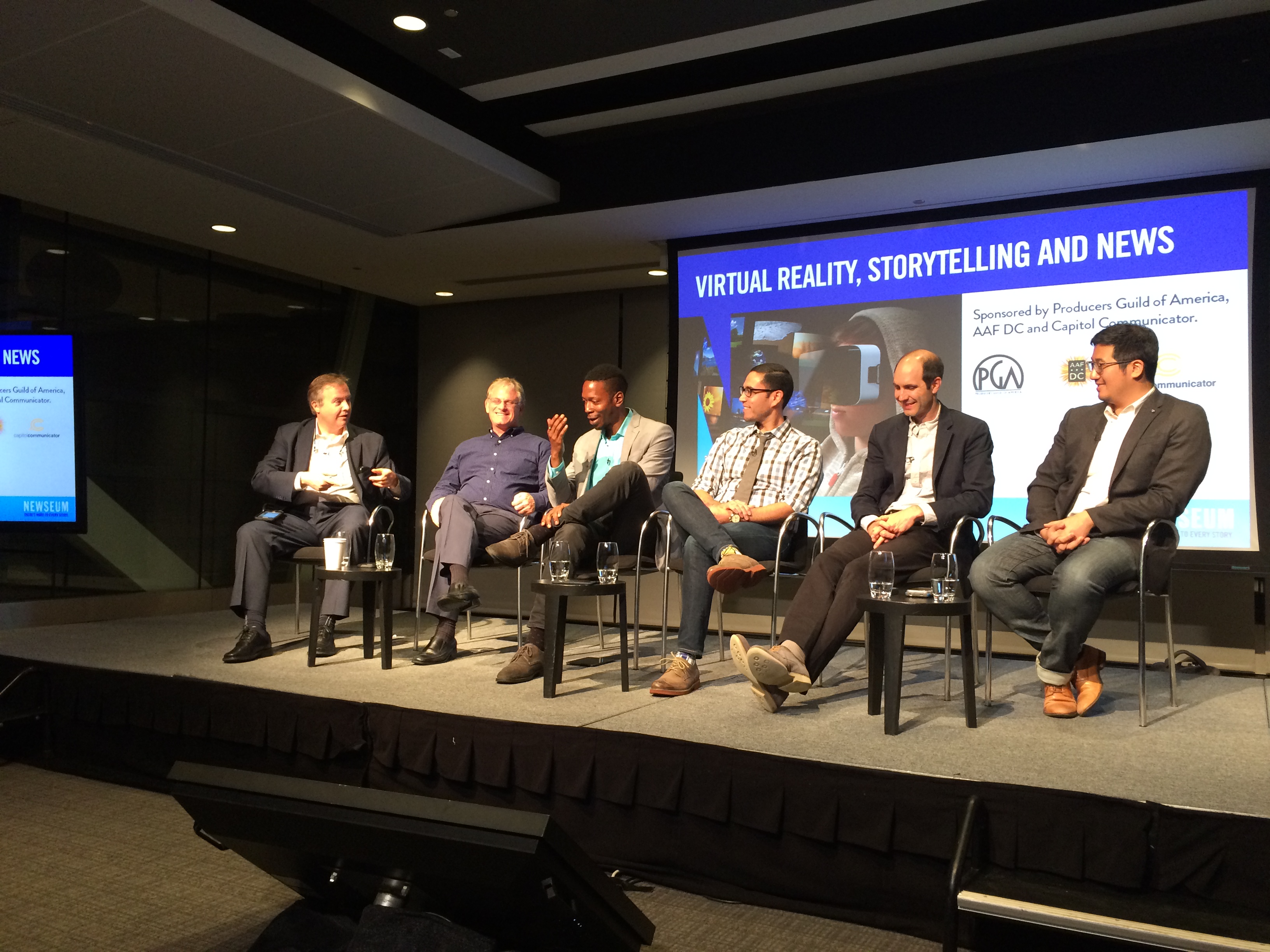
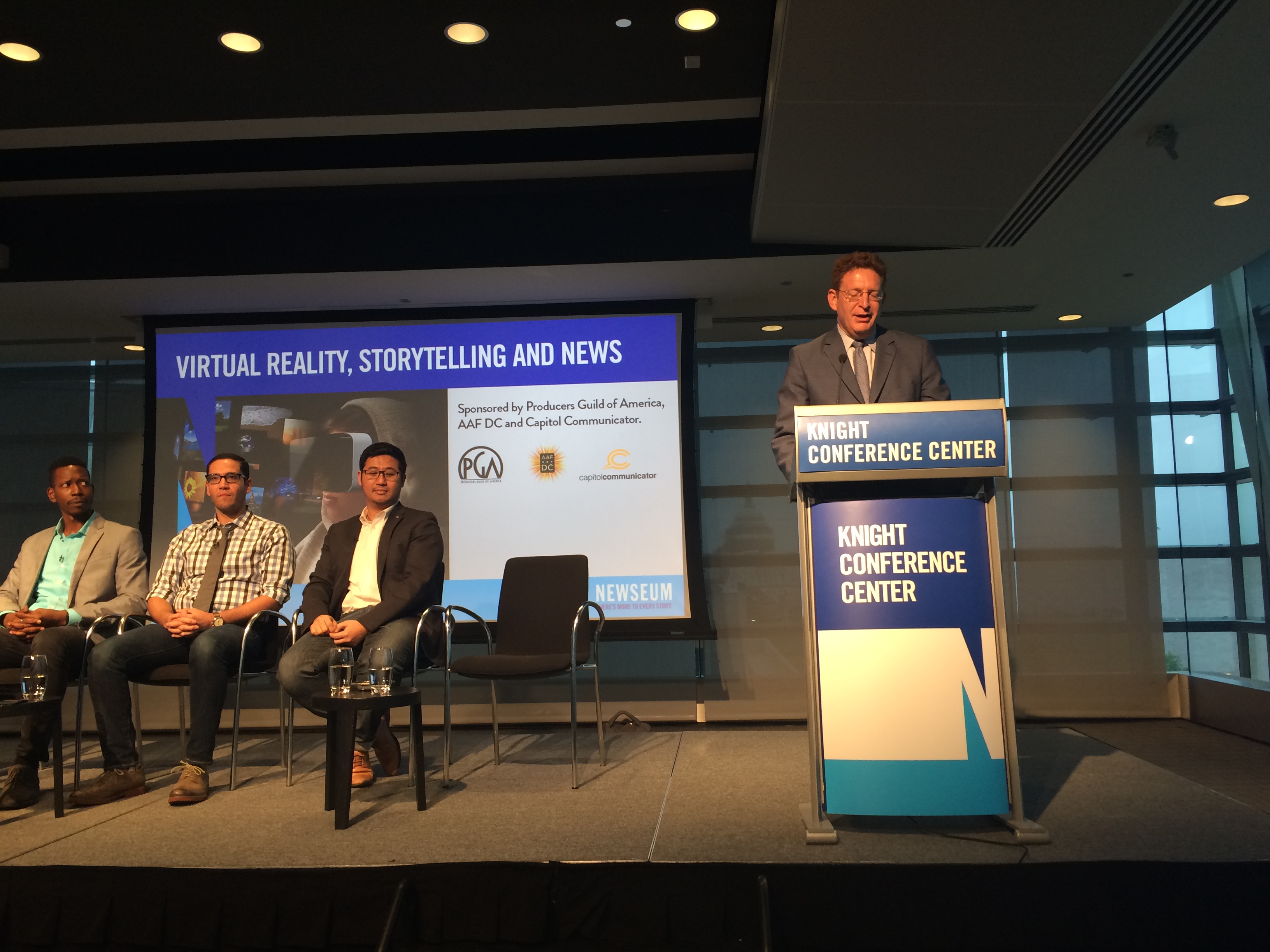
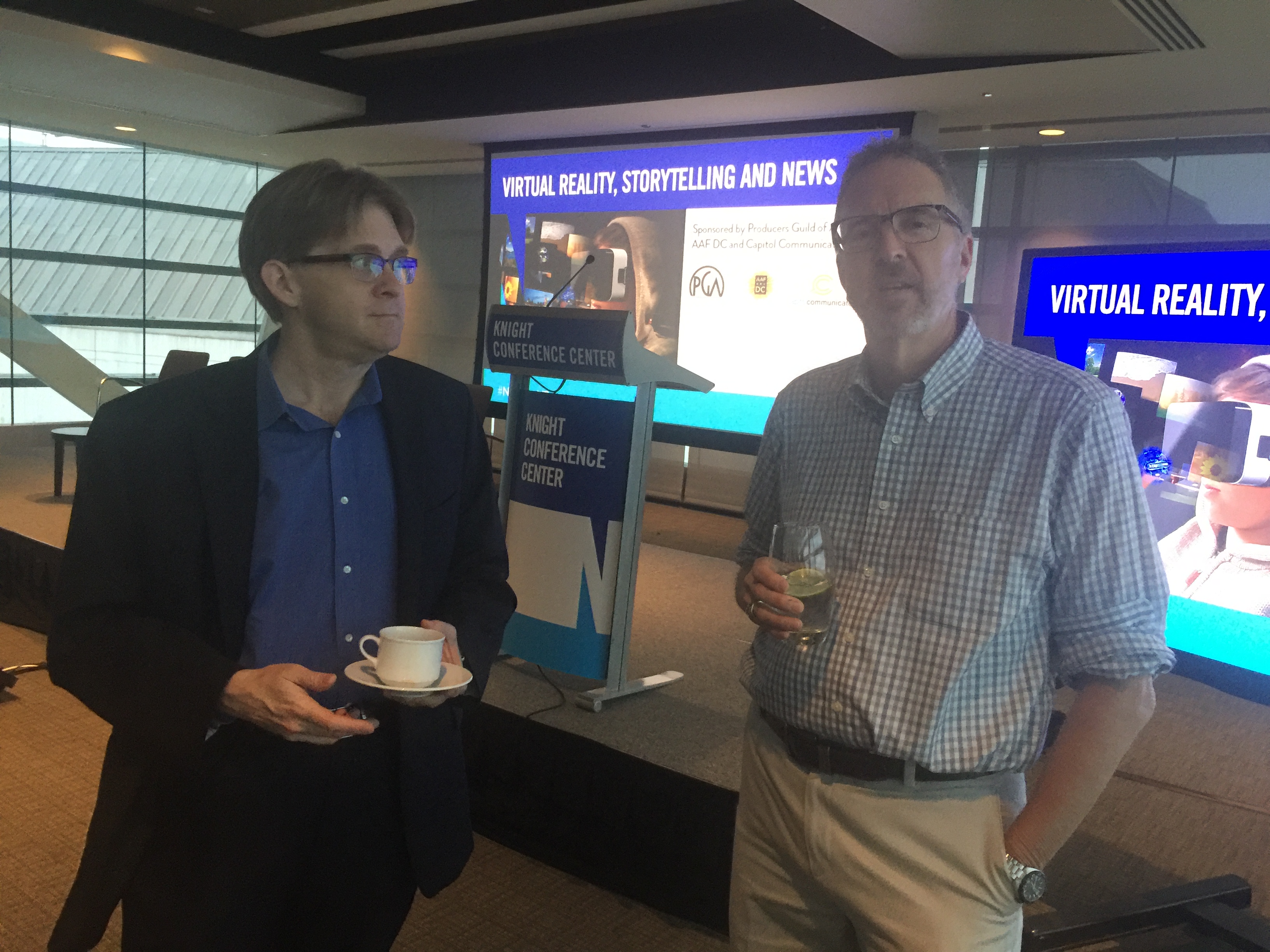
On a rainy Thursday in late-April, history was made in an institution that is dedicated to history, namely, the Five Freedoms of the U.S. Constitution’s First Amendment. The first Producers Guild of America (PGA) New Media Council East event at Newseum, entitled ‘Virtual Reality, Storytelling, and News,’ brought together the who’s who of virtual reality (VR) in the journalism industry, and sparked conversations that detailed the need for standards in virtual reality production.

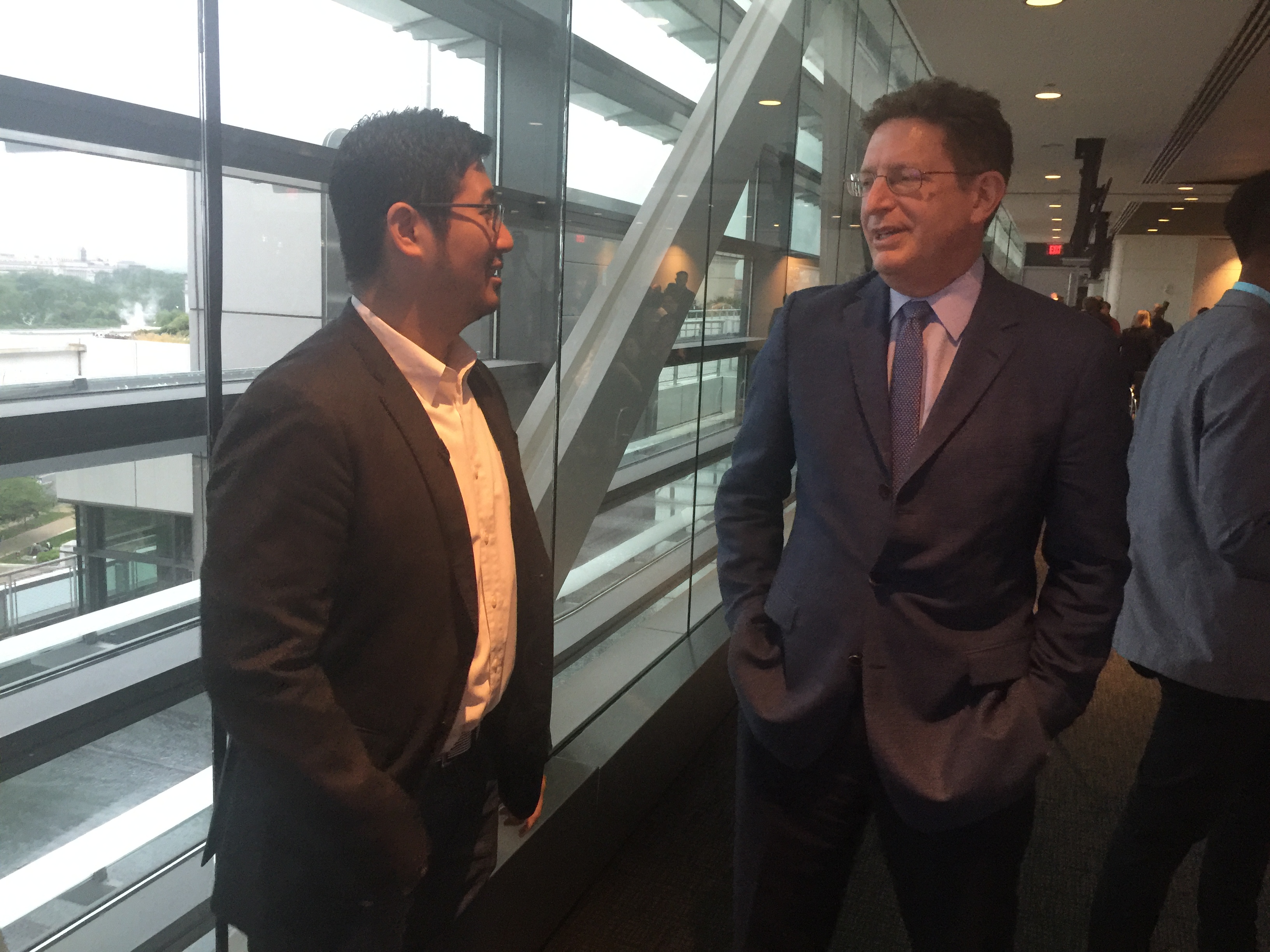
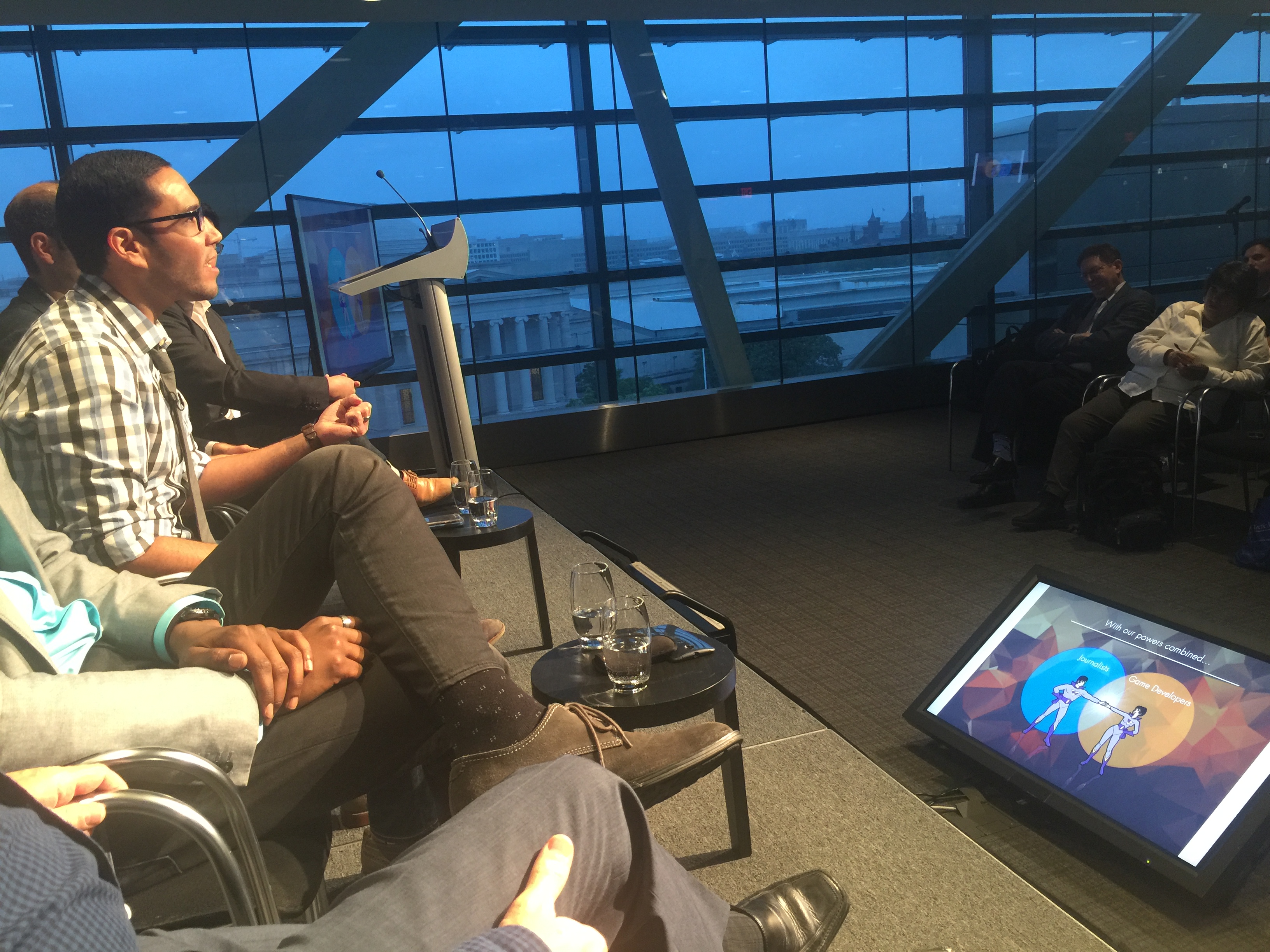
Hosted at the Knight Conference Center at Newseum, with demos from the Knight Foundation; Washington Post; Associated Press, and Gannett Digital, the panel demonstrated the exceptional leadership in VR that journalists have exhibited. Knight Foundation’s Mitch Gelman; Washington Post’s Cam Blake; USA Today Networks’ Robert Padavick; Gannett Digital’s Ray Soto, and Associated Press’ Paul Cheung discussed a variety of topics, including the need to understand deadlines for VR (which, obviously, takes longer to produce); the need to understand how audiences perceive storytelling in VR, and the need to work on local levels for VR.

Watch the full video at https://youtu.be/iVOrFpJwfj8.

Moderated by Chris Pfaff, one of the founders of the PGA New Media Council, and a former vice-chairman of the PGA New Media Council, the discussion ranged from lessons learned in technology, including how to stitch images so that objects and crew members do not appear – or do appear – in the frame; what camera rigs are doing to help shape storytelling; how apps are enabling a more democratic approach to VR, and how this exploratory period of VR journalism will open up new opportunities for documentarians and reporters.

The audience of more than 80 people asked astute questions, including why Web 1.0 VR companies, and their technologies, took so long to re-enter the scene, and how the “new digital divide” might be addressed by the panel.

The event was produced by the Newseum team, including Jeffrey Herbst, Cathy Trost, John Maynard, Scott Wiliams, and Jonathan Thompson, along with the PGA’s Renee Rosenfeld and Chris Pfaff.

This will likely be the first in a series of PGA-Newseum events addressing the VR arena. Stay tuned.


2016-04-28 20.27.49

Chris Pfaff, (left), moderates the panel at Newseum


Jeffrey Herbst, CEO of Newseum, welcomes the crowd at the PGA-Newseum event.

Jeffrey Herbst, CEO of Newseum, welcomes the audience


Paul Cheung, director of interactive for Associated Press, and Jeffrey Herbst

Paul Cheung, director of interactive for Associated Press, and Jeffrey Herbst


IMG_4759

Ray Soto, Gannett, demonstrates the Gannett AR/VR program


IMG_4762

Jeffrey Herbst and Paul Jastrzebski, developer relations manager with Oculus

IMG_4752

Brian Savoie, director of technology education and outreach, and David Layer, senior director, advanced engineering, NAB

IMG_4766

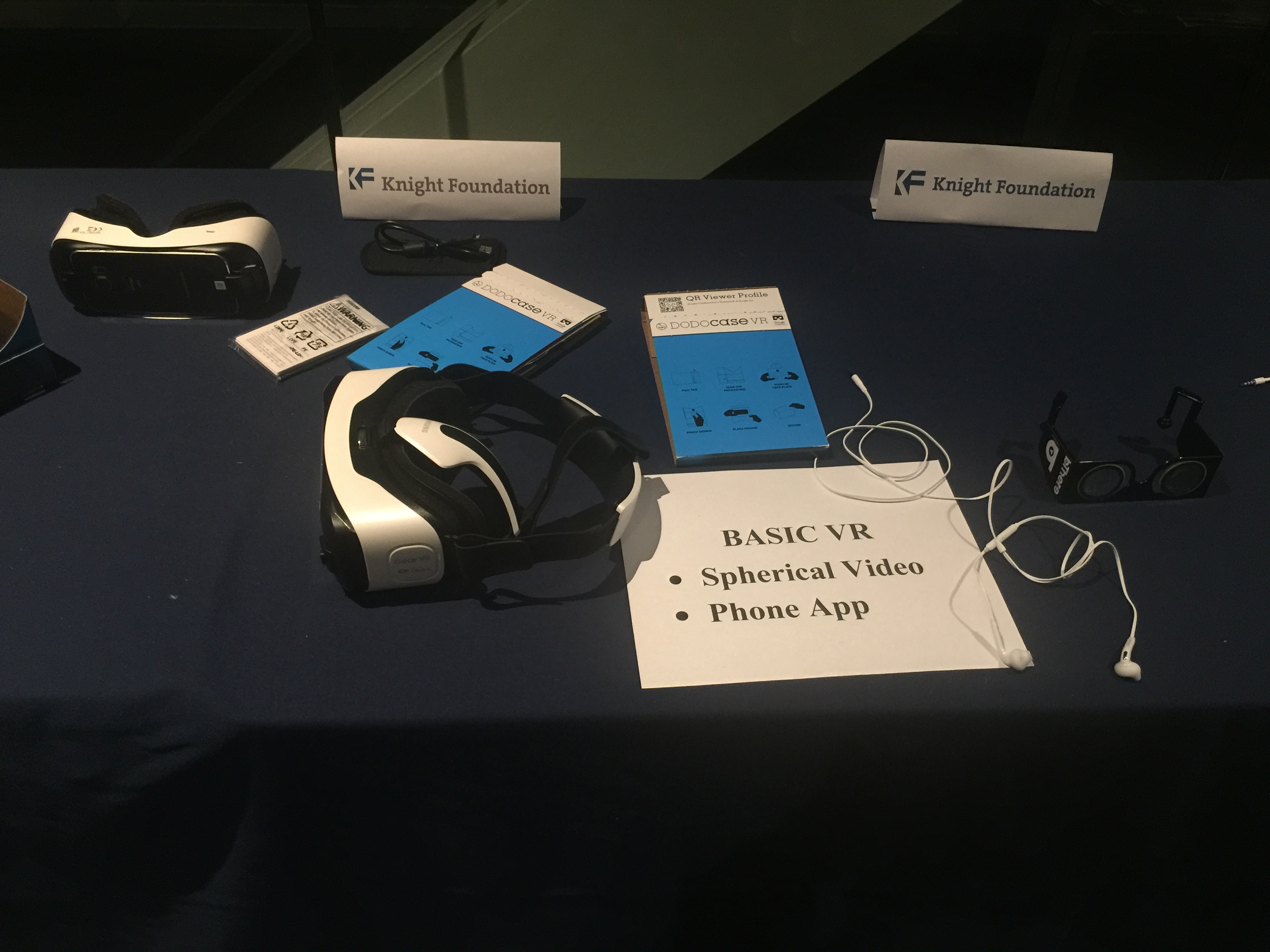
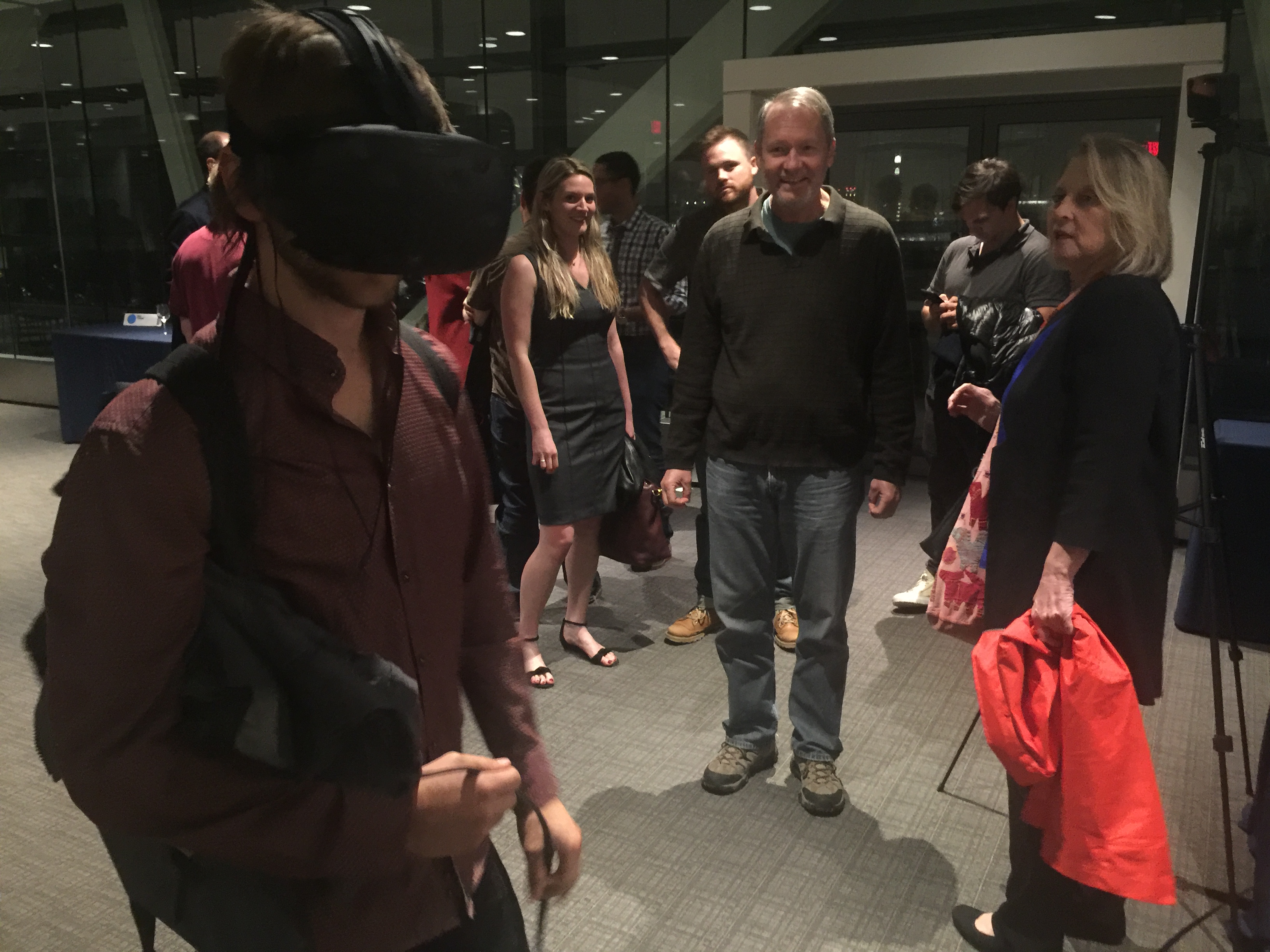
The Knight Foundation’s VR demo area at the event

IMG_4768

Jon Harmon, filmmaker, experiences VR at the event

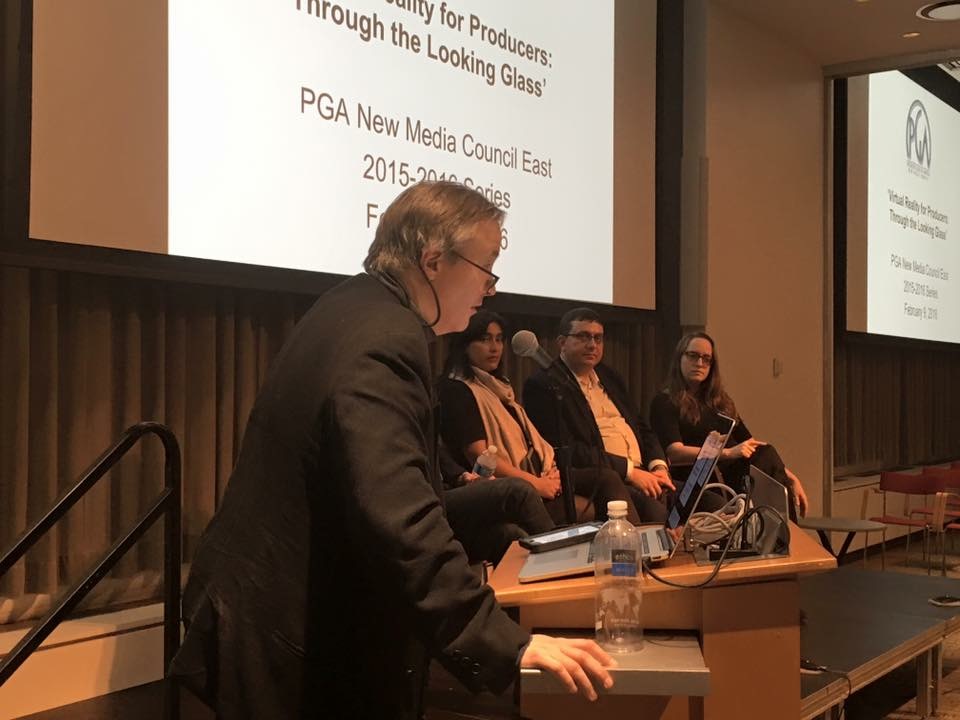
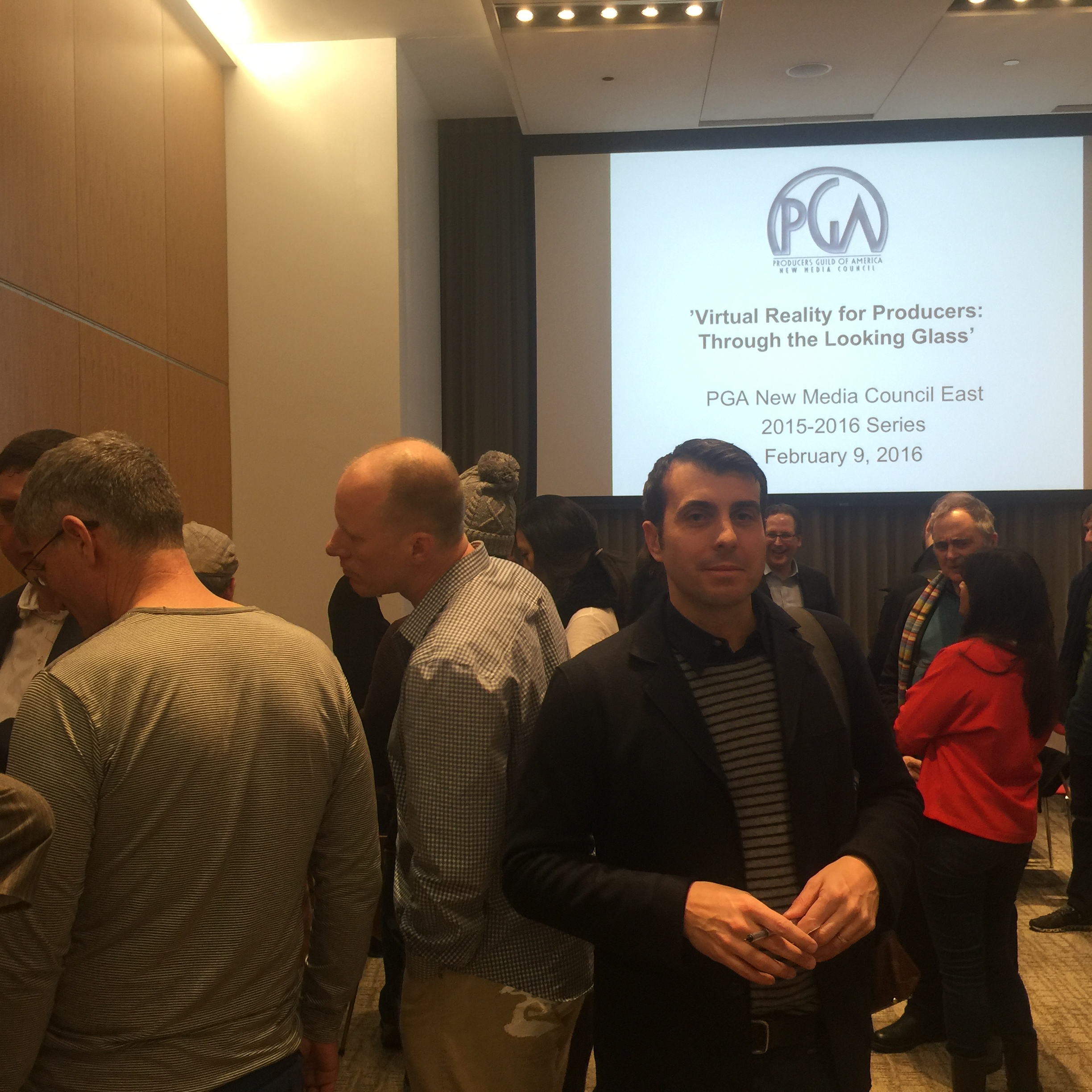
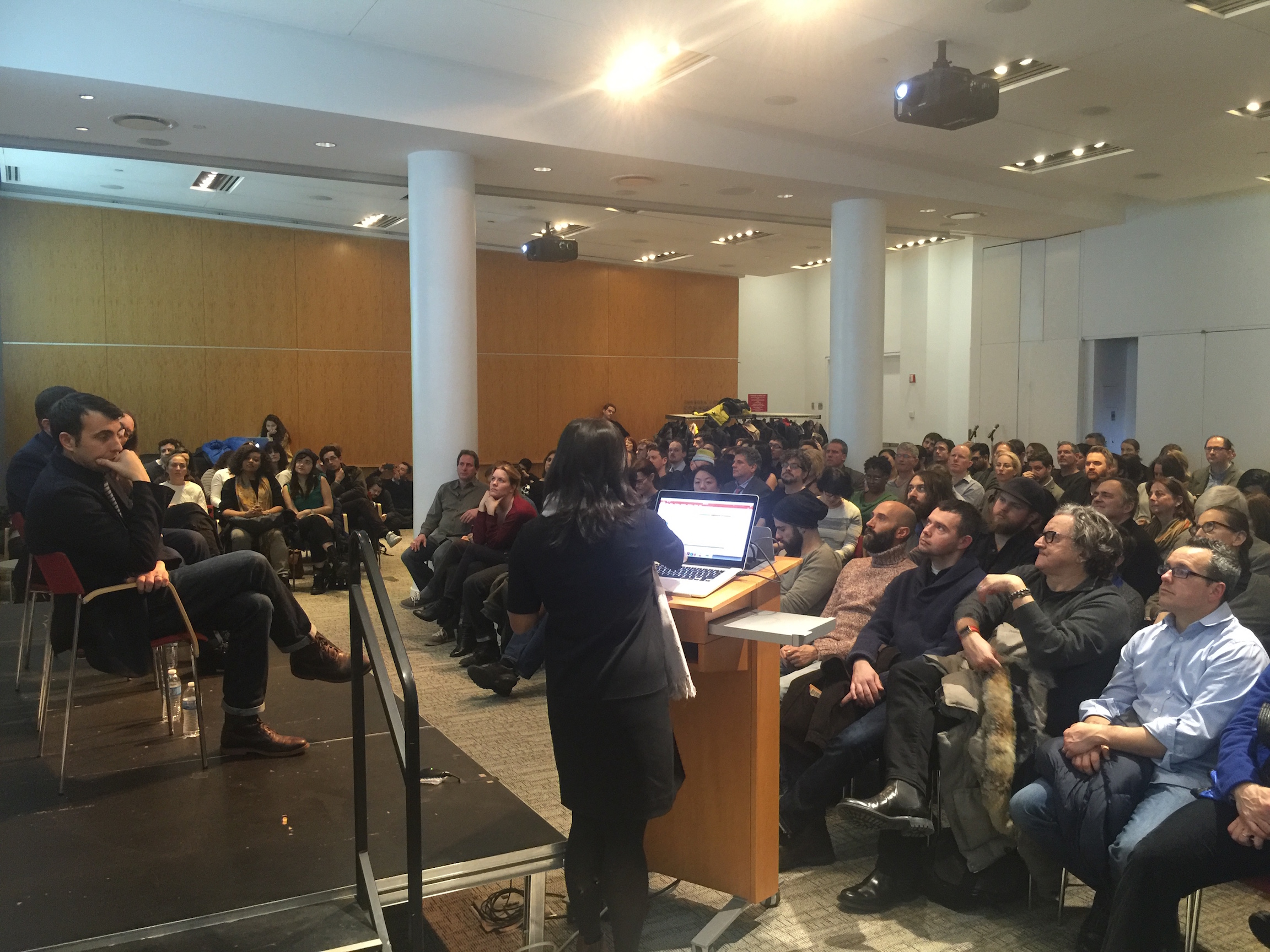
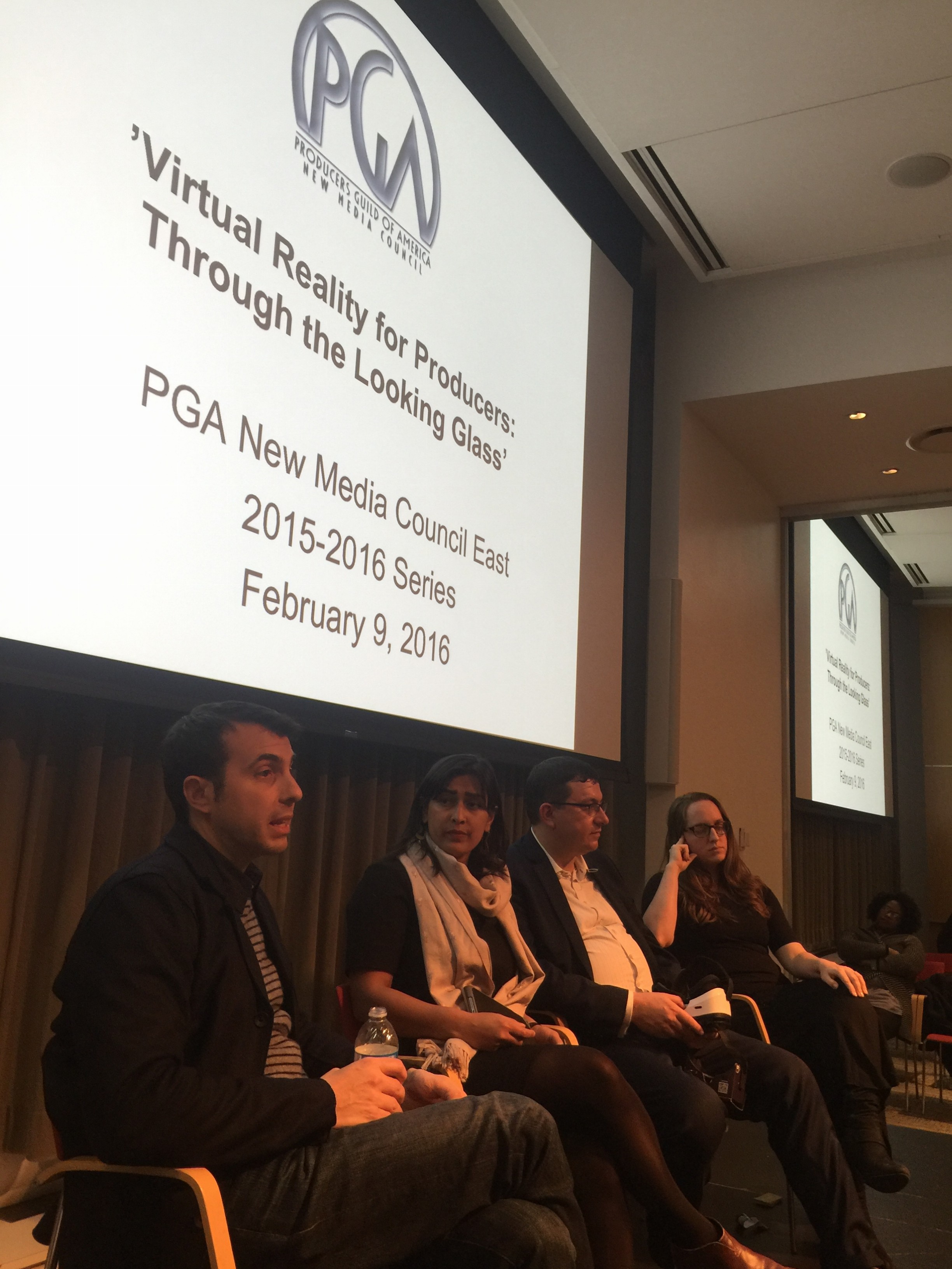
Producers Guild of America New Media Council East event, ‘Virtual Reality for Producers: Through the Looking Glass,’ gathers the VR creative tribes at The New School

By • Posted & filed under Uncategorized

The power of virtual reality (VR) platforms is now fully realized in the explosion of creative content that is being delivered to headsets, PCs and smartphones every day.


The producers who are delivering new experiences for VR comprise a profile that is part-pioneer, part inventor, and all storyteller. This encapsulates the panel that was convened at The New School’s Lang Auditorium on Tuesday, February 9th, as part of the Producers Guild of America (PGA) New Media Council (NMC) East salon series.

IMG_3670

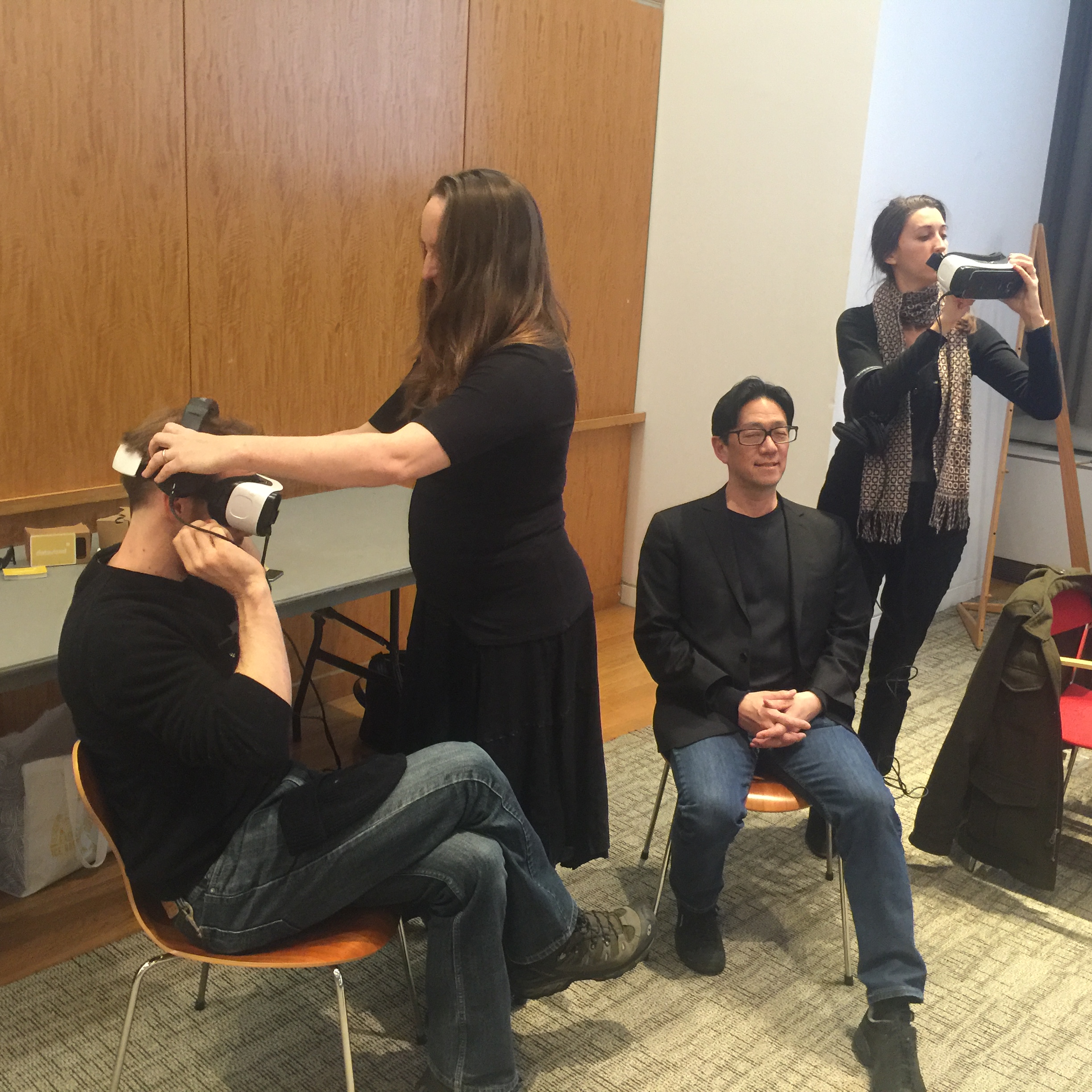
datavized’s Caitlin Burns and Deborah Anderson prepare demos for attendees


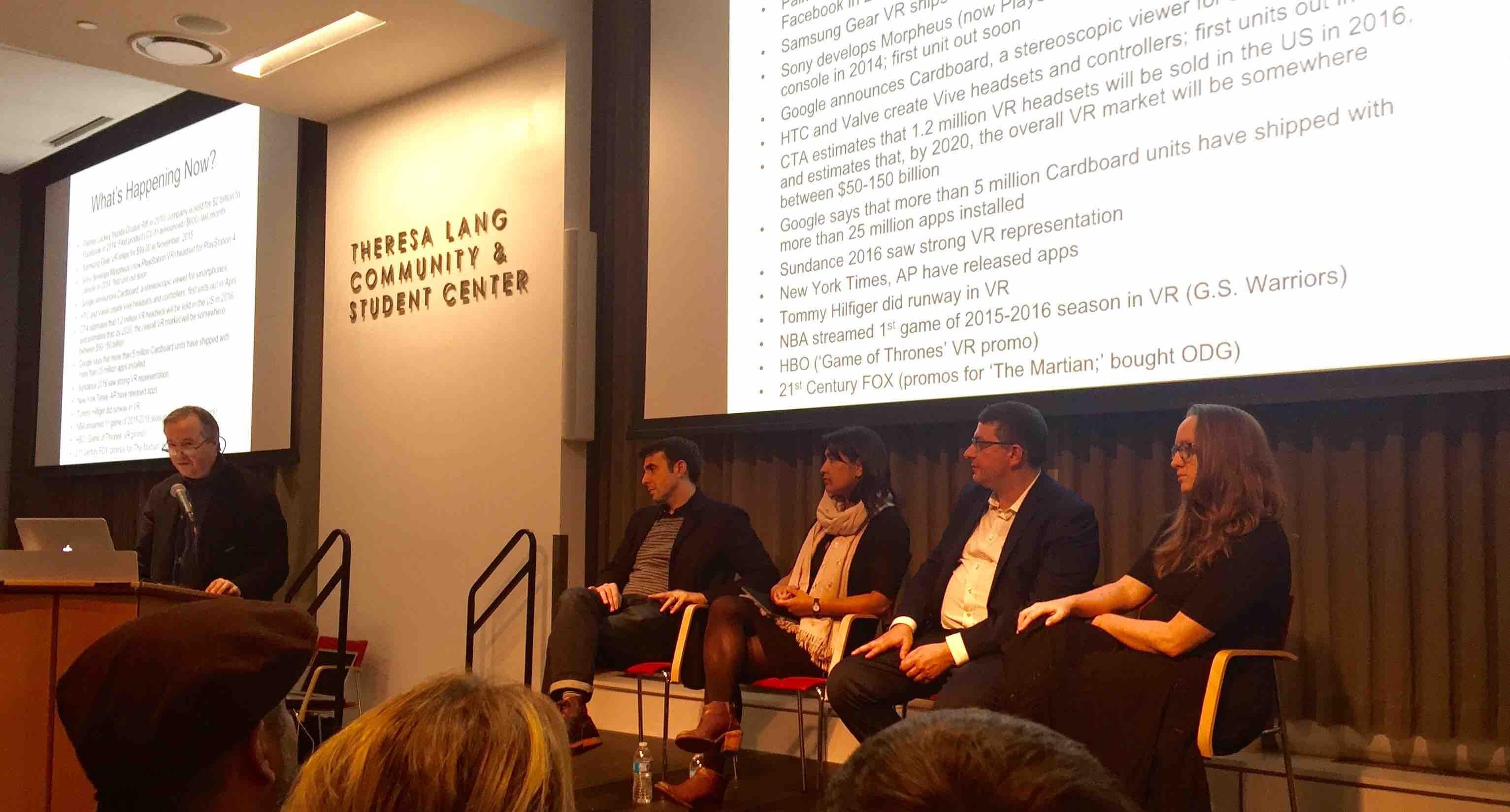
With the recent introduction of the $99.00 Samsung Gear VR headset, the announcement of the Oculus Rift CV-1 headset, and the innovative apps that are powered by low-cost (as low as $10) VR glasses and Google Cardboard, VR is creating a new market for production companies. With customized camera rigs, stereoscopic lenses, and streaming applications, producers are creating new experiences for brands (Tommy Hilfiger); news organizations (Associated Press, CNN, The New York Times), and media companies (HBO; 21st Century FOX, NBA), as audiences prepare to dive into content in ways not felt, or seen, before.
The Consumer Technology Association (CTA) estimates that 1.2 million VR headsets will be sold in the US in 2016, and estimates that, by 2020, the overall VR market will be somewhere between $50-150 billion. As VR content moves onto mobile devices and cost-effective headsets at an increasing pace, producers will be in greater demand for new forms of immersive storytelling.

IMG_3671

Dennis Adamo (right), COO of daydream.io, demos his virtualizer platform for an attendee


Produced and moderated by Chris Pfaff, one of the founders of the PGA New Media Council, and a former national delegate to the PGA NMC board; former delegate to the PGA National Board of Directors, and head of consultancy Chris Pfaff Tech Media LLC, the panel featured Caitlin Burns, COO of datavized, a VR production company that has developed new forms of WebVR content; Shazna Nessa, director of journalism for the John S. and James L. Knight Foundation; Marco Ricci, director of EdgeDNA, and Dennis Adamo, COO of daydream.io.

IMG_3697

Chris Pfaff welcomes the audience at the PGA New Media Council ‘Virtual Reality for Producers’ event at The New School


IMG_3678

Marco Ricci, director with EdgeDNA, prior to the event

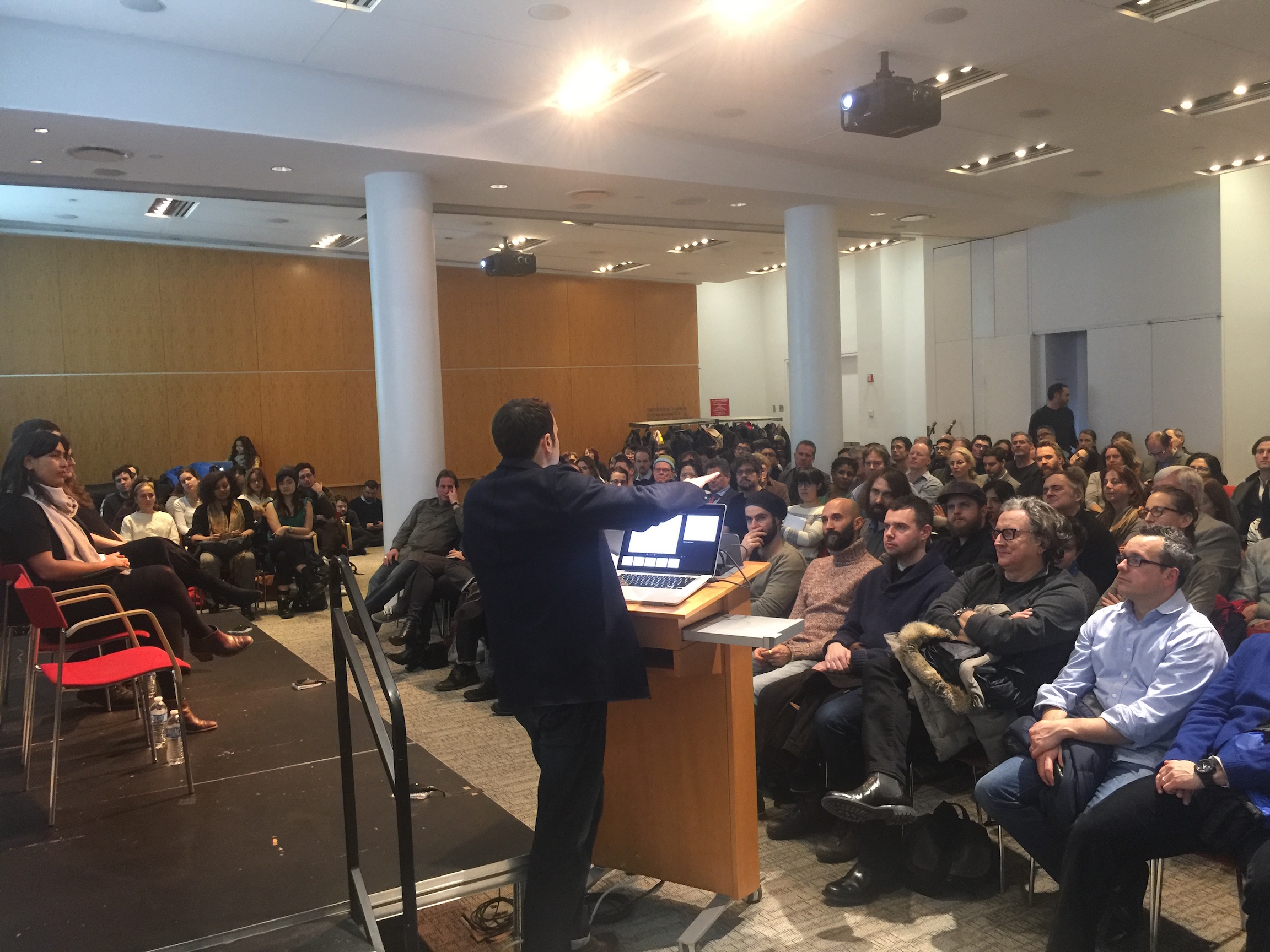
The event featured a packed house of more than 180 people, mostly PGA members and guests, as well as many stalwarts of the New York 3D, VR, and immersive industry. Demos were provided for the audience, pre-show, by datavized and daydream.io.

PGA VR Event at New School, Bill Platt Photo, 02.09.16

Chris Pfaff leads discussion on the VR industry

IMG_3685

Marco Ricci, from EdgeDNA, presents


Caitlin Burns discussed the need for VR workflow and post-production protocols for VR, detailing how difficult it is to pull frames to conform to Samsung Gear VR headsets. Together with Prime Focus Technologies, she and her team have created what is one of the first VR post-production workflows in the industry.

IMG_3689

Caitlin Burns, from datavized, presents

Dennis Adamo showcased daydream.io’s virtualizer technology, which renders individual user’s smartphones as VR engines for their own content.

IMG_3687

Dennis Adamo, from daydream.io, presents


Marco Ricci gave what amounted to a tutorial on how to prepare for VR shoots, and what to expect from VR clients. The proverbial “I want the world…for $5,000” conundrum was discussed amongst the panelists.

IMG_3686

Shazna Nessa, from the Knight Foundation, presents


Shazna Nessa gave an in-depth look at how journalists are using VR, with an overview of how the Knight Foundation has nurtured storytelling from outlets that include the Des Moines Register, among others.


IMG_3692

Marco Ricci during the Q&A session

The Q&A session, always a staple of PGA NMC East events, included questions regarding the challenge of overcoming user nausea with VR; the New York State Start-Up New York program (from which daydream.io has benfitted), and the growth of New York VR production.


The number of attendees who represent VR production companies, or are working on VR projects, comprised at least half of the audience. With the vast majority of media buyers; agencies; brands, and media outlets in New York, VR should reflect a New York attitude, if it doesn’t already.


Chris Pfaff on popular iTunes podcast, ‘Wall Street Unplugged’ with Frank Curzio – January 29, 2016

By • Posted & filed under Uncategorized

Curzio-header-01

I had the great pleasure of appearing as a guest on Frank Curzio’s ‘Wall Street Unplugged’ podcast last week. Frank’s podcast is one of the most listened-to podcasts on iTunes in the business/investing section, with more than 125,000 downloads each month.

Frank and I got into a good discussion on what was happening at CES 2016, and themes from companies including Intel and Apple, among others.

Have a listen at: https://itunes.apple.com/us/podcast/ep-382-tech-expert-shares/id341813080?i=361462355&mt=2

My interview starts at the 11:40 mark.

Frank Curzio is at www.frankcurzio.com.

Chris Pfaff Tech Media at CES 2016: the 21st Century has Finally Arrived

By • Posted & filed under Uncategorized

The 1964-65 New York World’s Fair was the touchstone of a futuristic vision that predicted videophones, connected devices, and advanced – if not flying – automobiles. It has taken, literally, 50 years for that vision to become some sort of reality. And, in very palpable terms, that is what was on display at CES 2016 in Las Vegas last week. From Samsung’s SmartThings platform – with connected refrigerators – to the Faraday Future FFZero1 concept car – 1,000 horse power electric vehicle that makes Bruce Wayne’s Batmobile look like a tricycle – the CES 2016 floor and suites gushed with technology that now begins to flesh out a picture of the 21st century as we knew it…in the 1960s.


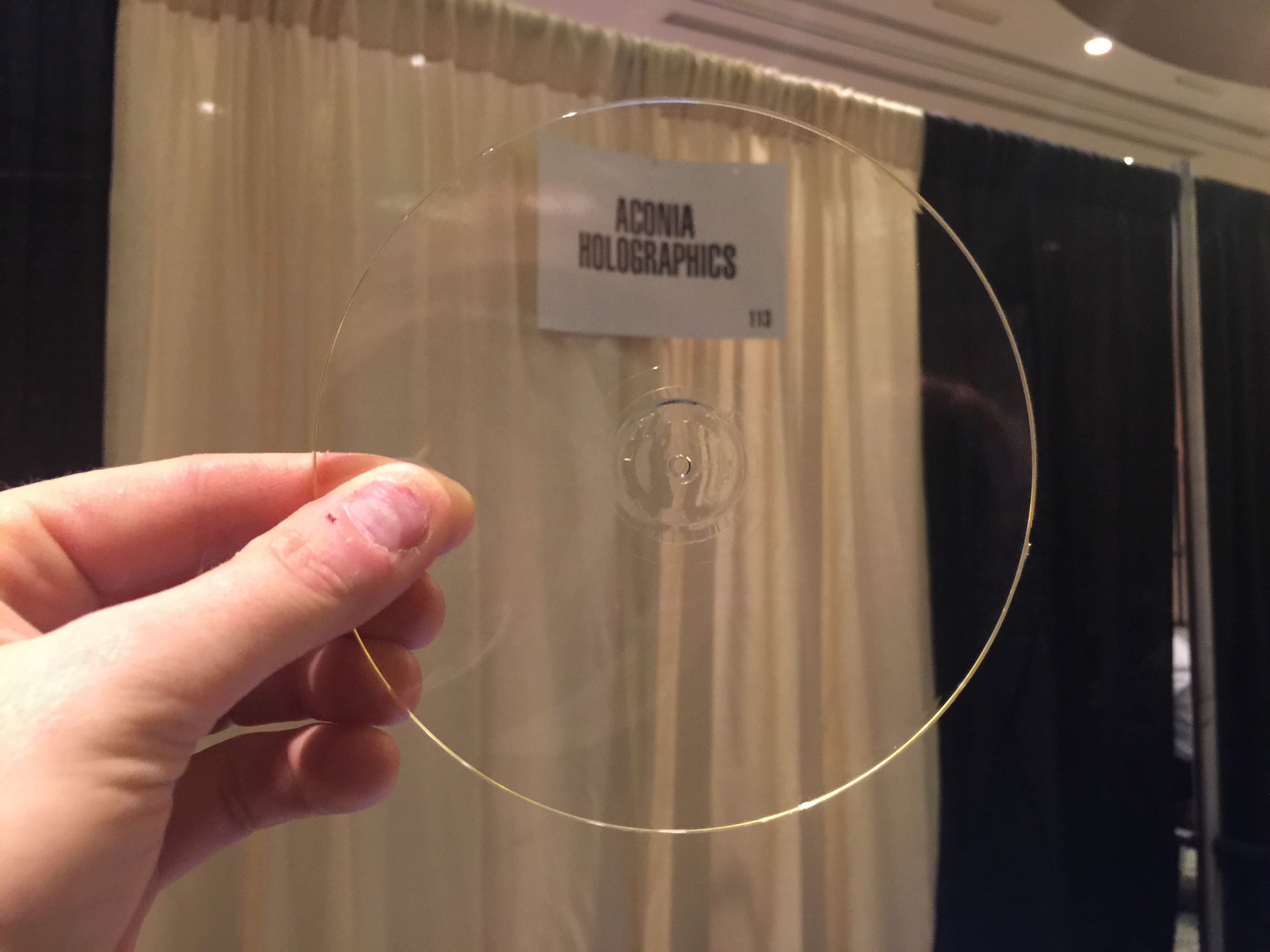
It was a long and productive week for Chris Pfaff Tech Media at CES 2016. We arrived on Sunday, January 3rd, just in time to see Chinese New Year’s displays going up at the Bellagio. I moderated a session at Storage Visions, at the Luxor, on Monday the 4th, ‘Epic Proportions: Storage for High Resolution Content Capture and Production,’ which featured an all-star panel of industry experts (Avid’s Gary Green; DDN’s Molly Rector; EMC’s Tom Burns; Panasas’ David Sallak) discussing the need for ever-larger storage workflows for production and post-production. With 4K content the big buzz at the show, storage should have had a larger presence, but the fact is that it is now more relevant than ever. The “consumer cloud” that envelops all of us is an outcropping of the enterprise storage world that enables blockbusters such as ‘The Martian’ and ‘Mad Max: Fury Road’ to lock picture. I prefaced my introductions by encouraging the audience to repeat after me: ” I am. Storage Sexy.” The industry segment that has long been the grey face of progress (even though the likes of Box.net and Dropbox consume more syllables on CNBC than just about any other twosome) is now in a powerful perceptual position. I had the chance to catch up with ex-InPhase Technologies execs Will Loechl and Ken Anderson, who now lead Akonia Holographics, the descendant of the holographic company that we represented for 8 years. Akonia is moving forward with its drive and media, and should have something on the market in 2018.


IMG_3394

The Akonia Holographics media, at Storage Visions 2016, at CES 2016, at the Luxor Hotel


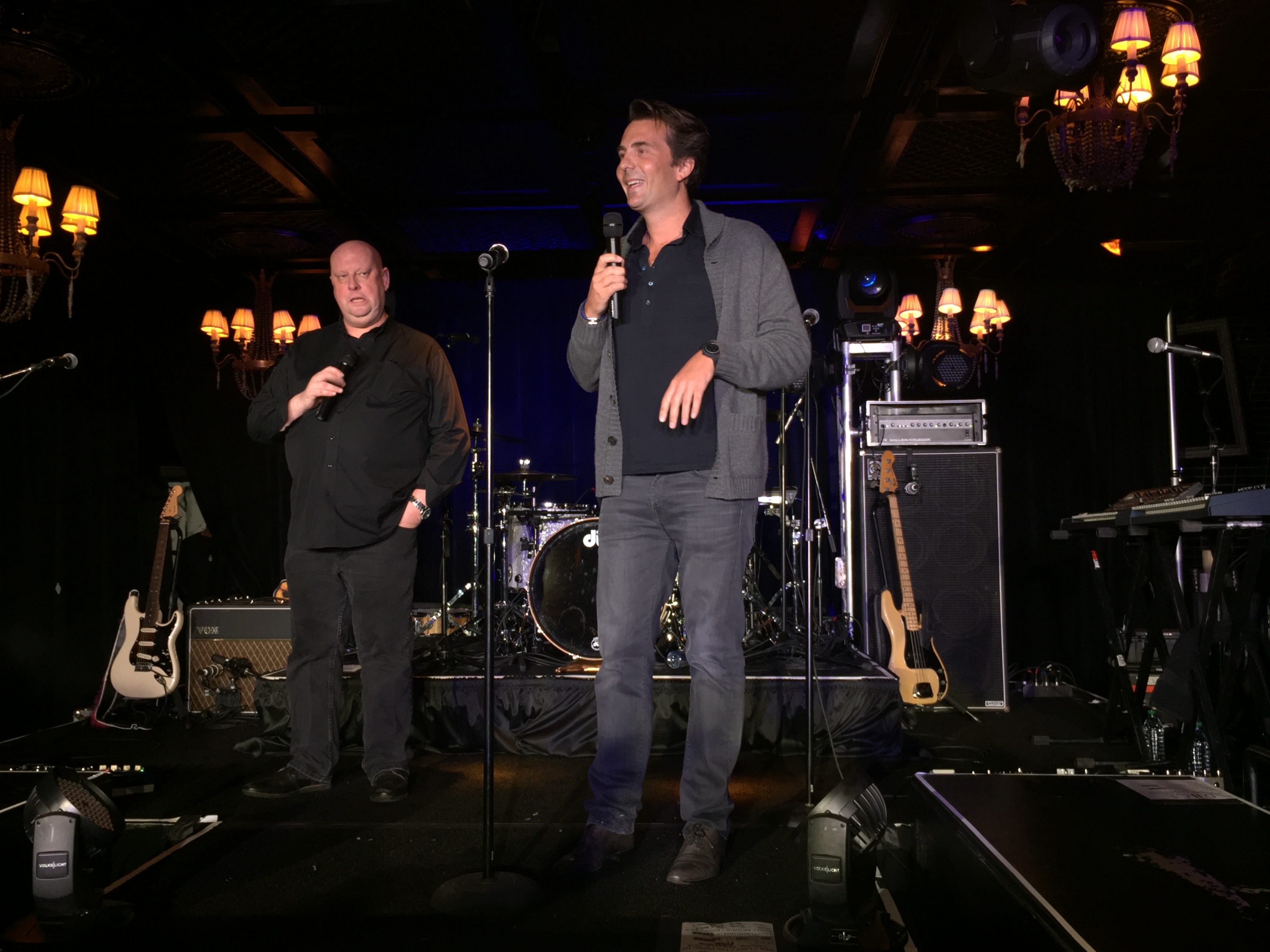
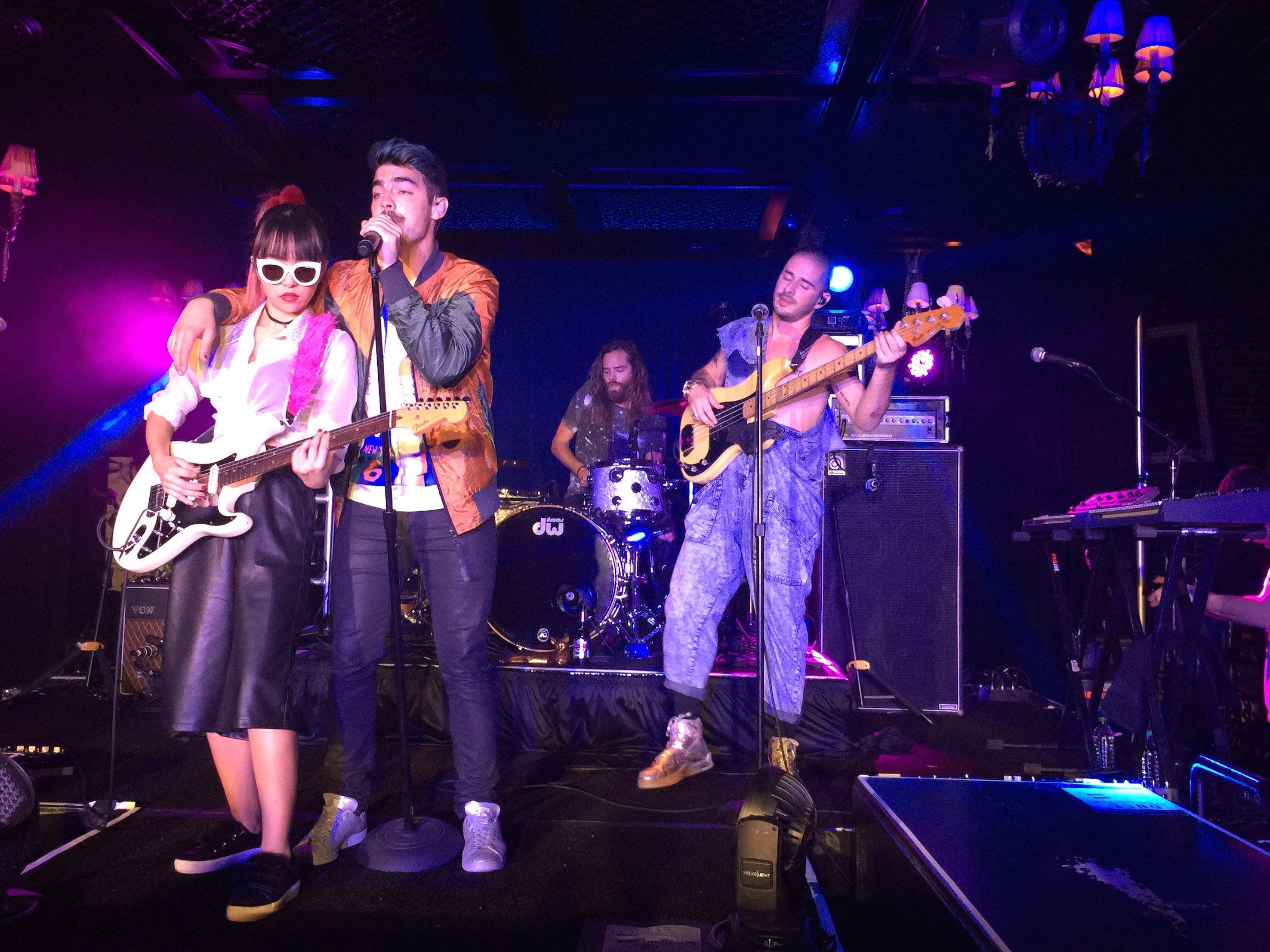
It was a busy week, otherwise, with meetings all over Las Vegas, and well into the night. The best party, hands-down, was the Havas Media event at the Palazzo on Tuesday night, which featured Joe Jonas’ new band, DNCE (courtesy of Havas’ relationship with Universal Music Group), a tight quartet that blended bouncy pop-funk material with some expert covers. Havas CEO/chairman Yannick Bolloré and UMG’s Mike Tunnicliffe were emcees for the soiree.

IMG_3426

Mike Tunnicliffe, EVP, Business Development & Partnerships, USA for Universal Music Group, and Yannick Bolloré, chairman and CEO of Havas, at the Palazzo Hotel

Joe Jonas and DNCE at Havas Media Event at CES 2016, 01.05.16

Joe Jonas, 2nd from left, and his band DNCE, at the Havas CES 2016 party at the Palazzo Hotel

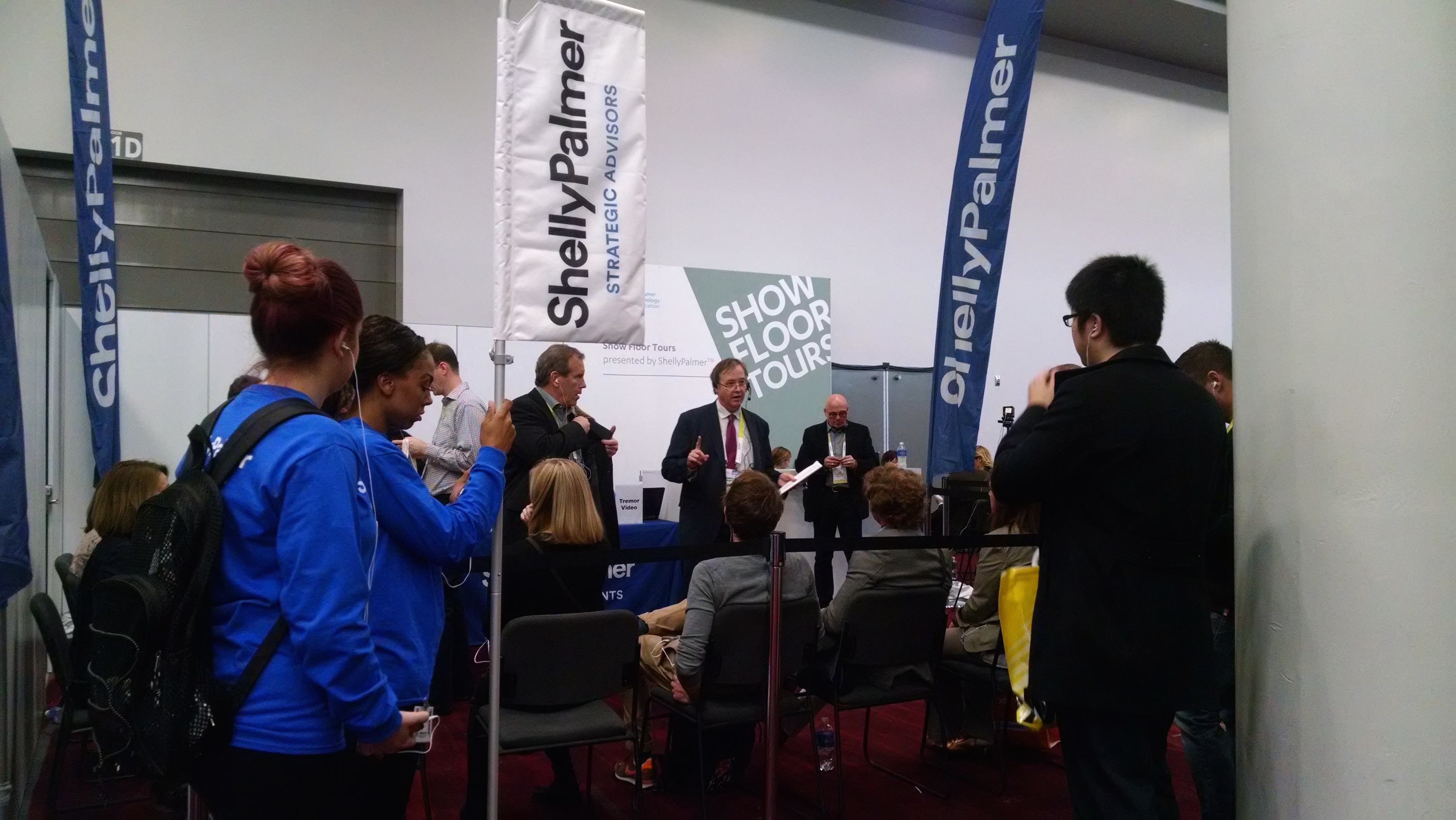
For the second time, I joined the incredible (and growing) team of experts – including NBC Universal Media Labs execs – that Shelly Palmer assembled for the official CES Trendspotting tours on the CES show floors. While I covered the “Tech East” (read: Las Vegas Convention Center) arena with colleagues, another team covered the “Tech West” (read: Sands/Venetian convention centers) arena.


IMG_20160106_153626274

Chris Pfaff addresses a CES 2016 VIP Trendspotting tour in the Las Vegas Convention Center

IMG_3465

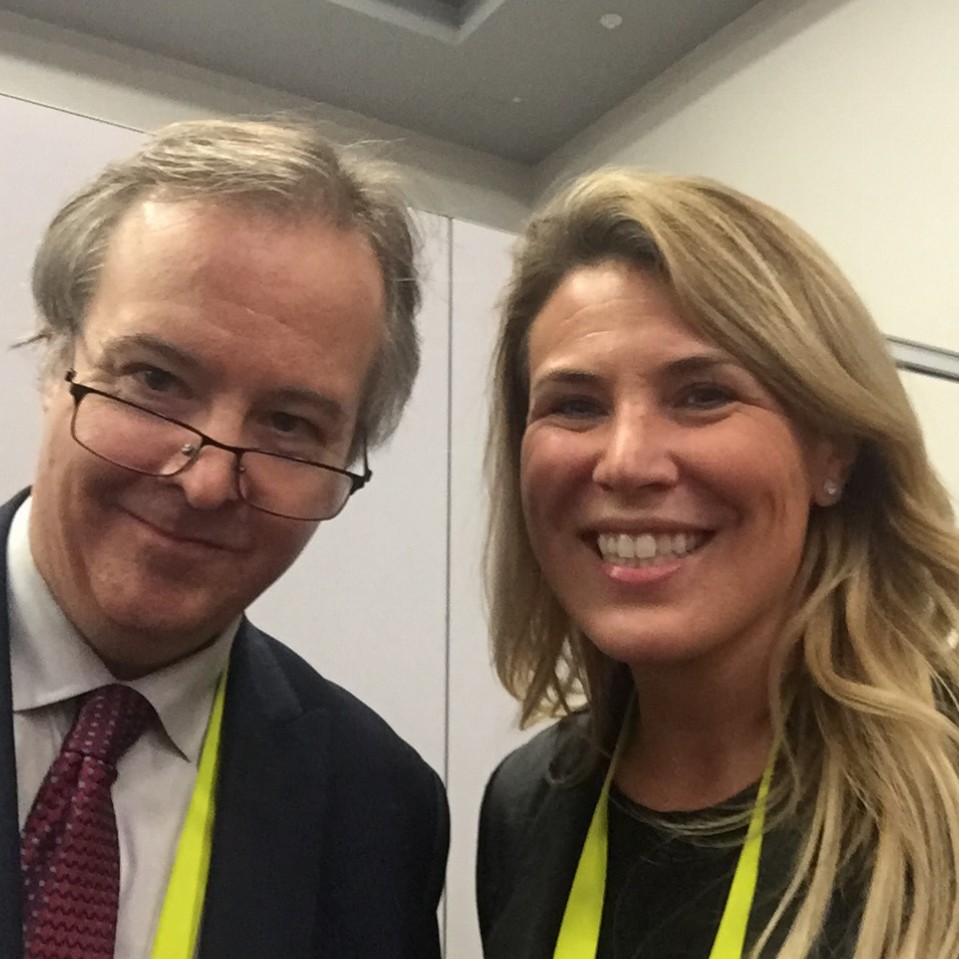
Chris Pfaff and Fielding Kidd, manager of innovation programs at NBC Universal

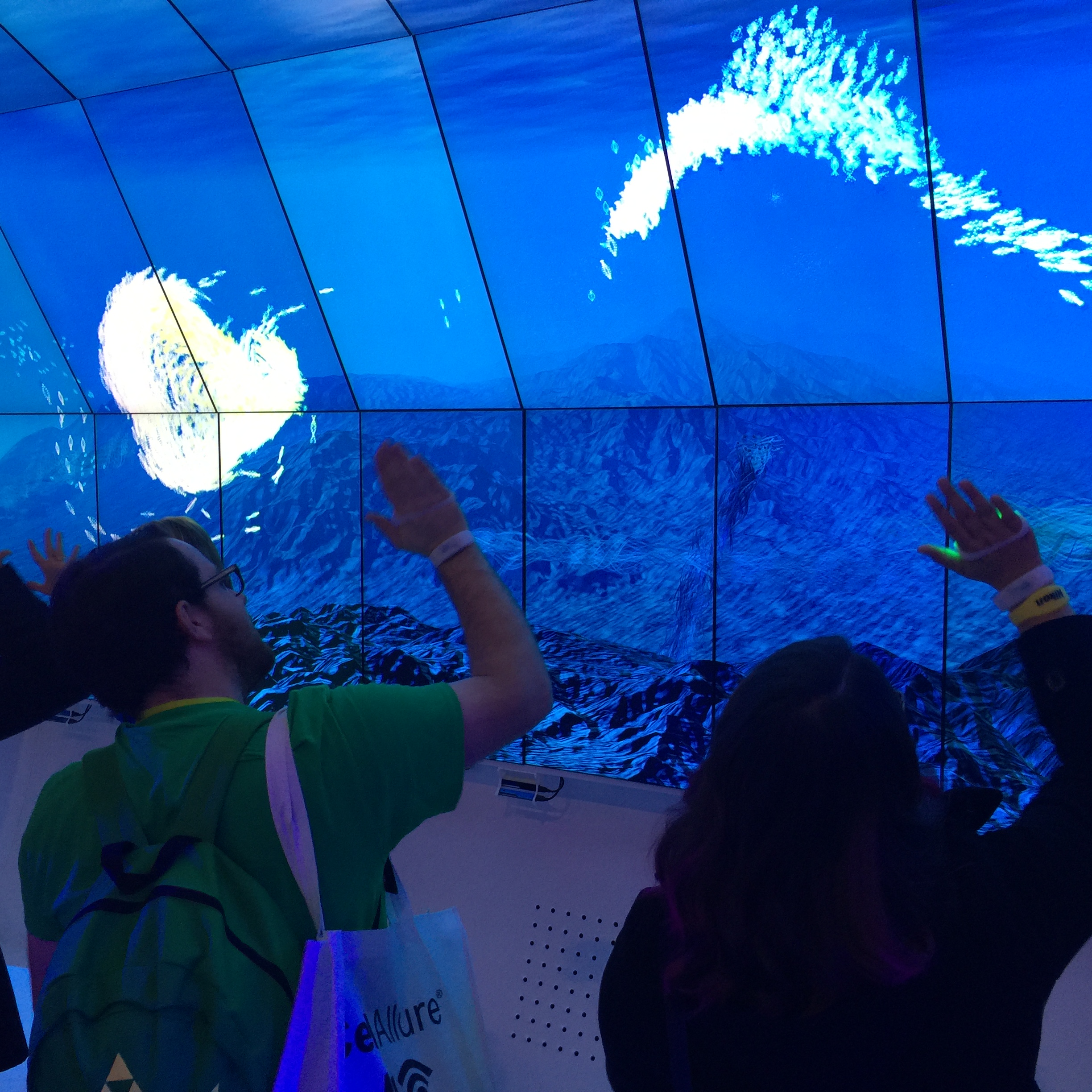
This year’s mind-blowers included the amazing Intel RealSense/Curie content display with a video wall of digital “fish” that responded to Curie chip-enabled bracelets and RealSense cameras that tracked movements. “Air Instruments” of bungee chords that produced tonal music rounded out the experience. Intel made a big splash with its announcement of the $10 Curie chip – a button-sized System-on-a-Chip (SoC) that is low-power and high energy.


IMG_3463

Intel RealSense and Curie demo at the Intel booth at CES 2016


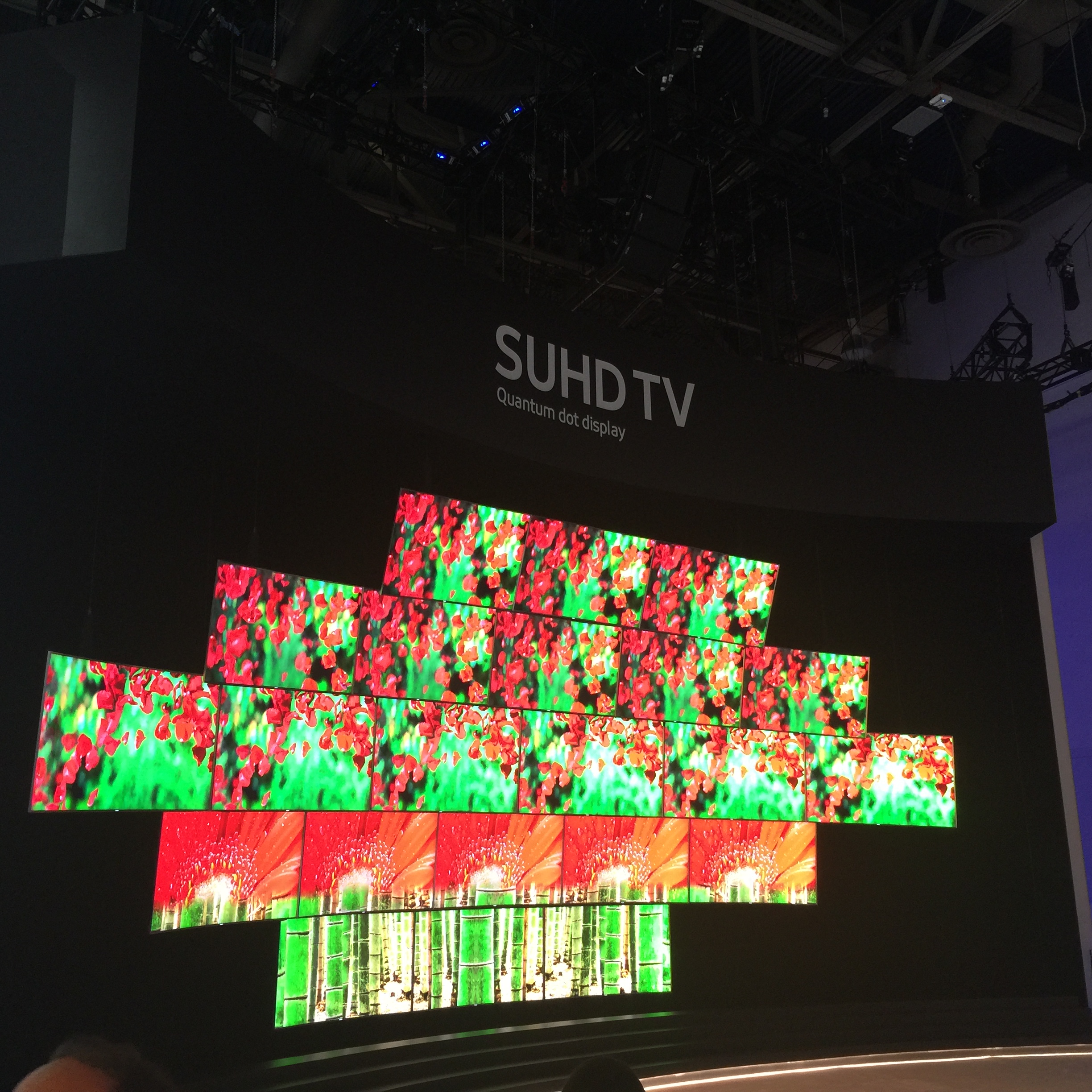
Samsung featured a riot of new things, including a sensorround display of its Samsung Gear VR product, which had previously been released in Q4 ’15 for $99.00. But the biggest relevation was its Soundbar product, a Dolby Atmos-enabled answer to the Amazon Echo speaker. The Soundbar was featured in one of the best home theater demos I have ever seen, which paired a Samsung SUHD 4K television with the Soundbar, producing a powerful immersive cinema experience.


IMG_3449

Samsung’s SUHD TV 4K content display at CES 2016


Internet of Things (IoT) solutions were everywhere at the show, and nowhere was this more evident than in the automotive section in the North Hall, with Toyota announcing its $1 billion Toyota Research Institute, a partnership that includes Stanford and M.I.T. Toyota also showed off its ultra-cool Kikai (which means “work” in Japanese) concept car, a Rube Goldberg-inspired vehicle.


Toyota Kikai Car at CES 2016

The Toyota Kikai concept car at CES 2016


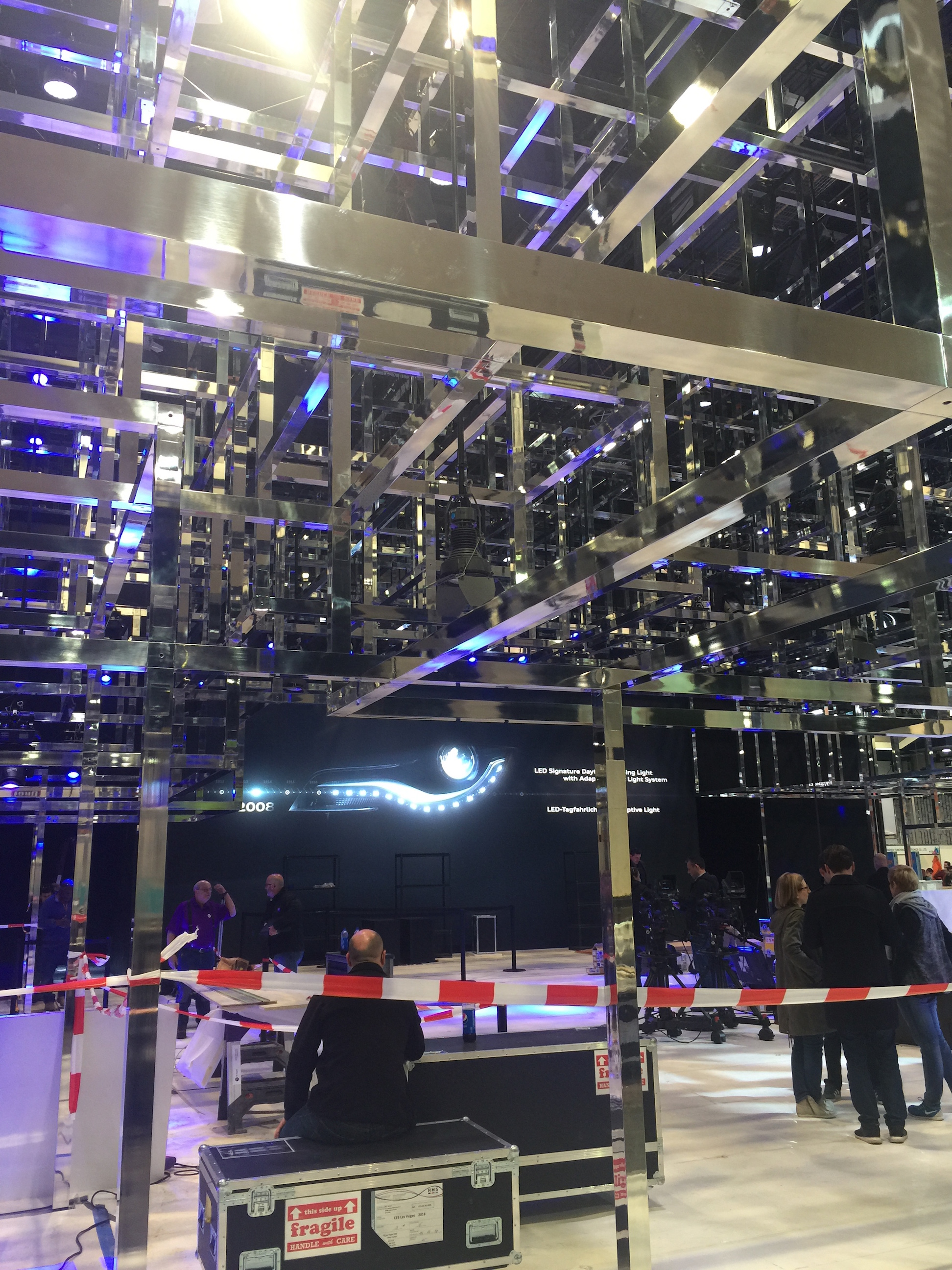
Ford had a massive booth that showed off its LiDar-enabled concept car, and touted its partnership with Amazon’s Alexa platform. Ford’s mobile partner, Blackberry, had a presence in the North Hall with its ONX platform. Audi had the best-designed booth at the entire show, and Kia showed up for the first time.


Audi Booth at CES 2016

Audi’s booth at CES 2016 was a mechanistic orgy of chrome piping


But, the winner in the automotive sector at CES 2016 was the Faraday Future FFZero1 concept car, a 1,000 horsepower electric vehicle that is a single-occupant vehicle. Faraday Future became the first automotive company to launch a new car at CES. This is significant: car introductions are almost exclusively the province of automotive shows. Faraday Future made a secret launch in a parking lot off the Las Vegas Strip, and then assembled its booth in the North Hall in 6 hours, with the car in tow. Faraday Future is backed by the Chinese conglomerate LeTV, which announced a $1 billion factory launch in Las Vegas for its cars. Watch this company.

IMG_3506

Faraday Future’s FFZERO1 concept car (1,000 horsepower electric vehicle) at CES 2016


Speaking of LeTV, they had a strong presence at the show, with a booth in the South Hall that displayed their power in telecom, consumer electronics, film/TV, and gaming. They are moving into the U.S. market in a big way, and will become more of a force in the coming year.


LeTV Booth at CES 2016

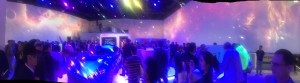
Panoramic shot of the LeTV booth at CES 2016


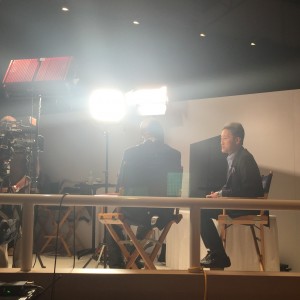
On the other end of the dial, Sony Electronics – while sporting a newly designed, and friendlier booth – looked somewhat forlorn, and we captured CEO Kazuo Hirai in a pre-show interview on the first day looking rather wan.

IMG_3446

Sony’s CEO, Kazuo Hirai, during an interview in the Sony booth, pre-show on Day 1 of CES 2016


The Sands/Venetian halls were filled with even more wearables companies, expanding the health and sleep-tech sectors, and 3D printing was as hot as ever. But the real revelation was a vastly expanded Eureka Park start-up zone, which was located downstairs, and featured more than 500 start-ups. One of the coolest things I saw at the show was from UK firm Kino-Mo, which showed off its projectable hologram solution. This was an eye-catcher, and of real interest given that the company is now selling its solution to retailers. Other cool bits in Eureka Park included Plussh, a newly-launched mobile video platform that was part of the massive French start-up contingent at this year’s show. For the 2nd straight year, France had the largest national presence, next to the U.S., at CES (remember, people – “entrepreneur” is a French word). There were far more countries represented in Eureka Park this year, and the university accelerator section was also expanded. This is a healthy sign, indeed.

IMG_3541

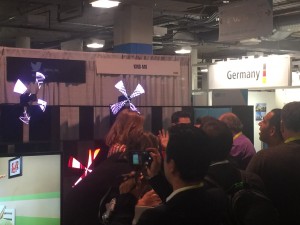
Kino-Mo shows off its holographic projection technology at Eureka Park start-up zone at CES 2016


While this year’s CES was the largest ever (more than 176,000 attendees), it has become more of an “information” show in its envelopment of the advertising and media industries. While fewer celebrities attend the show on behalf of exhibitors or studios/networks, CES is of huge interest to the advertising congloms that need to show relevance to their clients. And, of course, this enhances the overall experience for technology developers. We hope to see next year’s show increasing the media/marketing presence.


That’s a wrap from CES 2016. Now, we have to get out there and start living on the promise of that New York World’s Fair – which finally arrived, in some form, in Las Vegas this year.

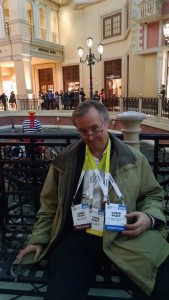
Chris Pfaff at Venetian Hotel Grand Hotel, CES 2016

He who wears the most badges wins: Chris Pfaff at the Venetian Hotel Grand Canal, at the end of CES 2016


Slush Investor Ingenuity Event a Major Success; First Launchpad USA Event Features Funderbeam Co-Founder Urmas Peiker

By • Posted & filed under Uncategorized

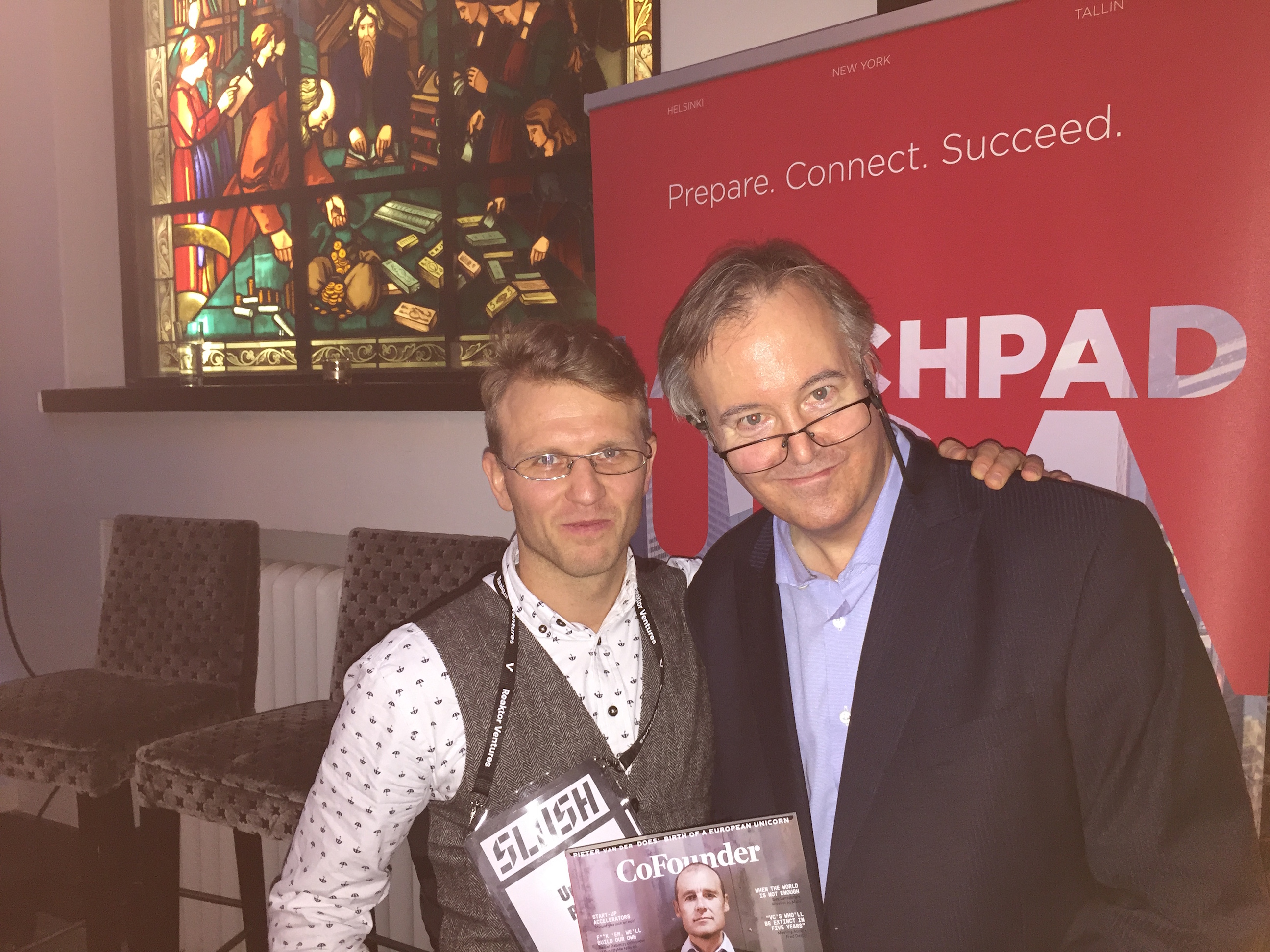
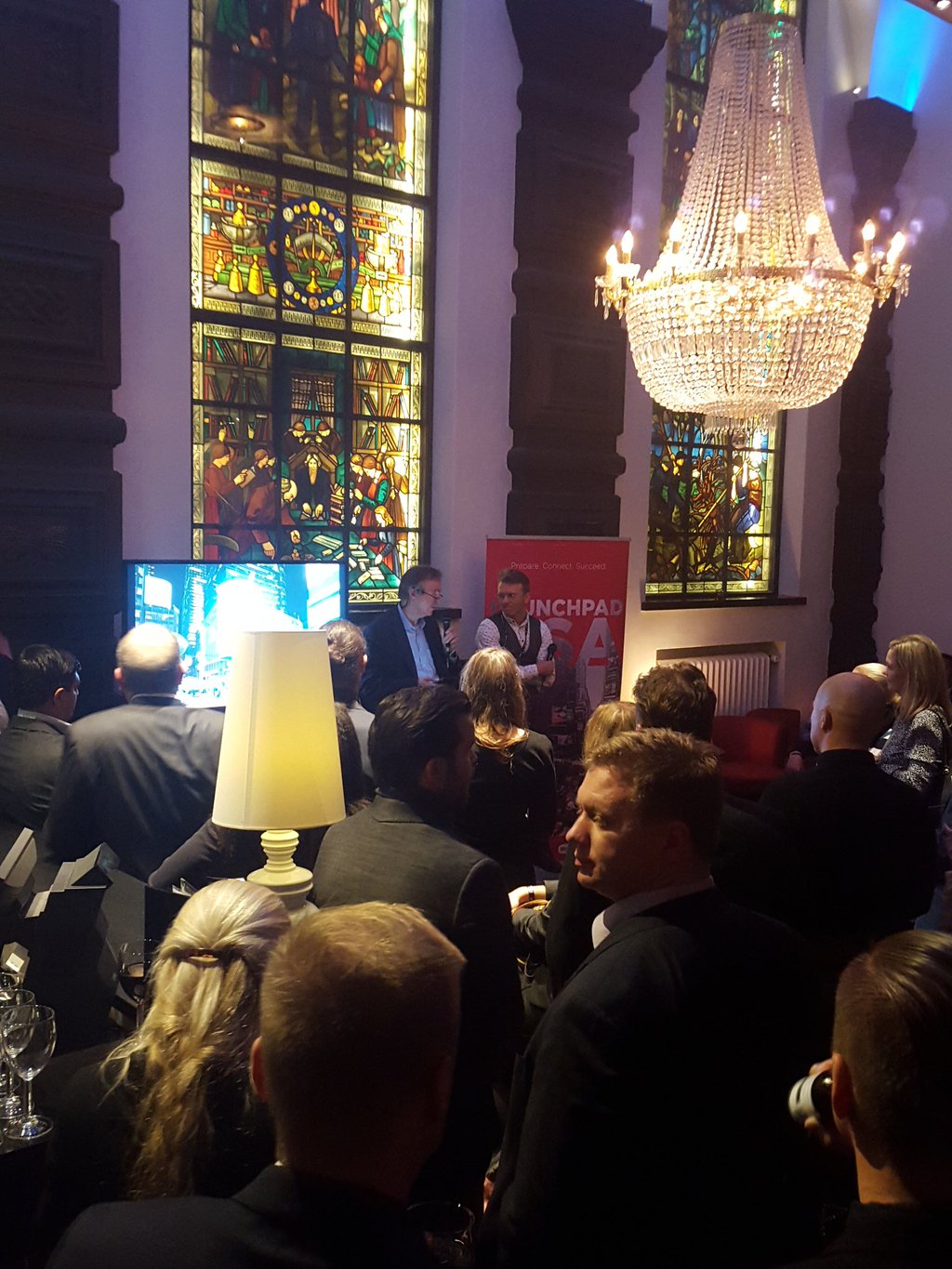
The Radisson Blu Plaza Hotel’s Bling Bar, in the proud century-old structure located near the Helsinki train station, was the site for the 1st Launchpad USA event, at Slush 2015. Hosted by Mike Klyszeiko, director of AmCham Finland’s Launchpad USA program, which helps prepare Nordic/Baltic ventures for the US market, and Erika Sauer, director of AmCham Finland New York, the official Slush side event, ‘Slush Investor Ingenuity,’ featured a one-on-one with Chris Pfaff and Urmas Peiker, co-founder of Funderbeam, the Estonian venture that provides a dashboard for start-up insights and a blockchain trading platform.


Watch video of the first part of the conversation at https://youtu.be/xHz8DiYoQO0.


Urmas Peiker, co-founder of Funderbeam, and Chris Pfaff, CEO/founder of Chris Pfaff Tech/Media LLC, at the Radisson Blu Plaza, Helsinki, for the Slush Investor Ingenuity event, 11.11.15

Urmas Peiker and Chris Pfaff at the Slush Investor Ingenuity event


More than 90 entrepreneurs and investors crowded the Bling Bar for food, drink, and conversation. And the conversation with Pfaff and Peiker included the following topics and threads:

  • Funderbeam, as an Estonian venture, combines the fearlessness of the “Estopreneur” with an innovative way to disrupt existing markets
  • Urmas Peiker’s background as a regulator with Estonian’s financial supervisory group helped prepare him for the creation of the 2 1/2-year-old Funderbeam
  • Funderbeam was described as “what would happen if Bloomberg Angellist and NASDAQ had a baby”
  • Urmas Peiker described the opportunity for investors to trade, using blockchain, in their start-up investments almost immediately, thereby creating a more vibrant investment ecosyst
  • Funderbeam is looking carefully at the U.S. market, and examining the vagaries of the U.S. regulatory market to try and disrupt the venture community

Pfaff gave a major shout-out to Tarmo Virki, founder and publisher of Co-Founder magazine, which had its launch at Slush 2014. The quarterly publication’s 5th issue arrived at Slush on Tuesday, and features the Slush 100 start-ups. Virki had introduced Pfaff to Peiker.

IMG_2440

Mike Klyszeiko, director of the Launchpad USA program, and Erika Sauer, director of AmCham Finland New York/Launchpad USA, welcome the audience at the Slush Investor Ingenuity event at the Radisson Blu Plaza, Helsinki


Pfaff, who had coined the term “Finntrepreneur” in 2011 (initially to market his firm’s ex-Nokian clients who had made the plunge into forced entrepreneurship) coined the term “Estopreneur” at Garage 48 in Tallinn in 2014. Both classes of entrepreneurs are adept at creating essential start-ups with highly innovative concepts, and doing this with few resources.

CTjHUp1UsAA88V8.jpg-large

Chris Pfaff and Urmas Peiker discuss Funderbeam’s forthcoming launch at the Launchpad USA event at Slush 2015


The conversation with Peiker also touched on the co-founder’s passion for extreme athletics; Peiker has competed in the Ironman triathlon competition, in Hawaii. He compared the triathlon experience with start-up experience, stating that endurance and focus is required for both pursuits.


Funderbeam (www.funderbeam.com) will launch a beta soon.


IMG_2441

The inaugural Launchpad USA event was attended by more than 90 people during Slush 2015


Chris Pfaff to host session at Slush, Slush Investor Ingenuity, on Wednesday, November 11th at Radisson Blu Plaza, Helsinki

By • Posted & filed under Uncategorized

Chris Pfaff will host a one-on-one session, ‘Expanding EU Ventures into the US: Navigating Financial, Legal, and Intellectual Property Issues,’ with Urmas Peiker,

co-founder of Funderbeam (www.funderbeam.com), at the Slush Investor Ingenuity event, held on Wednesday, November 11th, from 7-9 pm, at the Radisson Blu Plaza, Mikonkatu 23, Helsinki, during Slush 2015.

Urmas Peiker

Urmas Peiker, co-founder, Funderbeam

Produced by Launchpad USA, the Slush Investor Ingenuity event is an exclusive opportunity for Nordic companies to meet with US investors; a chance to sit down, one-on-one, and talk with the right connections about international investment possibilities that could help foster your company’s growth. If you are interested in having discussions with veterans of the global venture community about ways to scale your business, please make sure to register for the event today using the RSVP link at https://www.lyyti.fi/group/SLUSH_1115_5982

For more information, see the event page at http://amcham.fi/event/slush-investor-ingenuity


/Radisson Blu Plaza Helsinki

Radisson Blu Plaza, Helsinki


Chris Pfaff moderates session, ‘Shooting from the Hip: Mobile Video for Producers,’ at inaugural StreamCon New York, Friday, Oct. 30th, 3:00 pm, at Javits Center

By • Posted & filed under Uncategorized

maxresdefault


I am producing and moderating a session at the inaugural StreamCon (http://www.streamconnyc.com) New York event, next Friday, October 30th, at 3:00 pm, at Javits Center. StreamCon, a New York version of Vidcon, features an Industry Summit on Friday, with fan days on the weekend.

Join me at my session, ‘Shooting from the Hip: Mobile Video for Producers,’ and my panelists, Gregory Strompolos (YouNow), Nick Cicero (Delmondo), Daniel Holmstrom (LiveRing), and Natan Edelsburg (Muck Rack/Shorty Awards). See more at http://bit.ly/1W11aFN