The CES 2018 that has come and gone will be remembered less for the things that we build and think that we can control – namely, AI systems, robots, and high-resolution displays – than for yet another instance of Mother Nature interfering with our well-laid plans, in the form of more than one inch of rain on Day 1 of the great CES show (Las Vegas receives around 4 inches of rain in an average year, so the Great CES 2018 Deluge was almost one-third of the annual intake. Many Las Vegans were quick to pridefully point out that “we just had 170 consecutive days without rainfall!”). And, oh yes, we will remember CES 2018 for the lights going out on Day 2 of the show (I was giving an executive VIP tour in the Intel booth when the power hit occurred). This produced a 2-hour shutdown of the Central and North Halls of the Las Vegas Convention Center. Somehow, we were given an indication of the things that we will soon be better prepared for – if only humans would listen.
But the humans were listening intently to the messages all over town during CES 2018: more autonomy; more AI; more machine learning. This may have been the year that it was clear how companies with well-developed, simply-focused point solutions could break through and show the way to not just new behaviors, but new industries. The big players – from Samsung to LG to Sony to Intel – were either moving in step to the trend, or were completely in thrall to the tune. CES acknowledged that the IoT and Smart Cities sectors were not just another way to bring in new crowds of well-funded companies, but a recognition of how the CE industry is now part of a larger industrial revolution, in which the device is – as we used to define it in telco speak – the “endpoint” on the greater network.
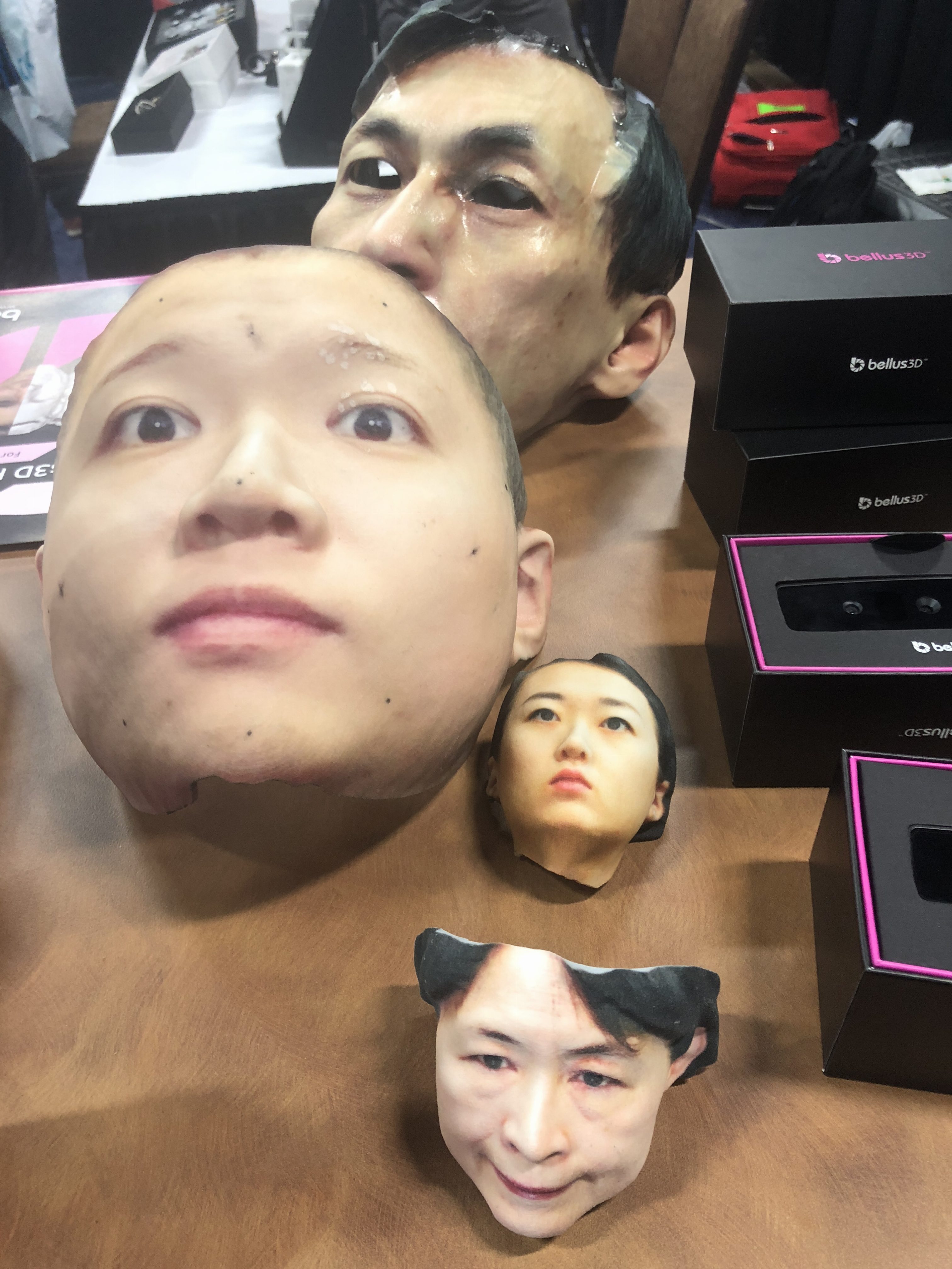
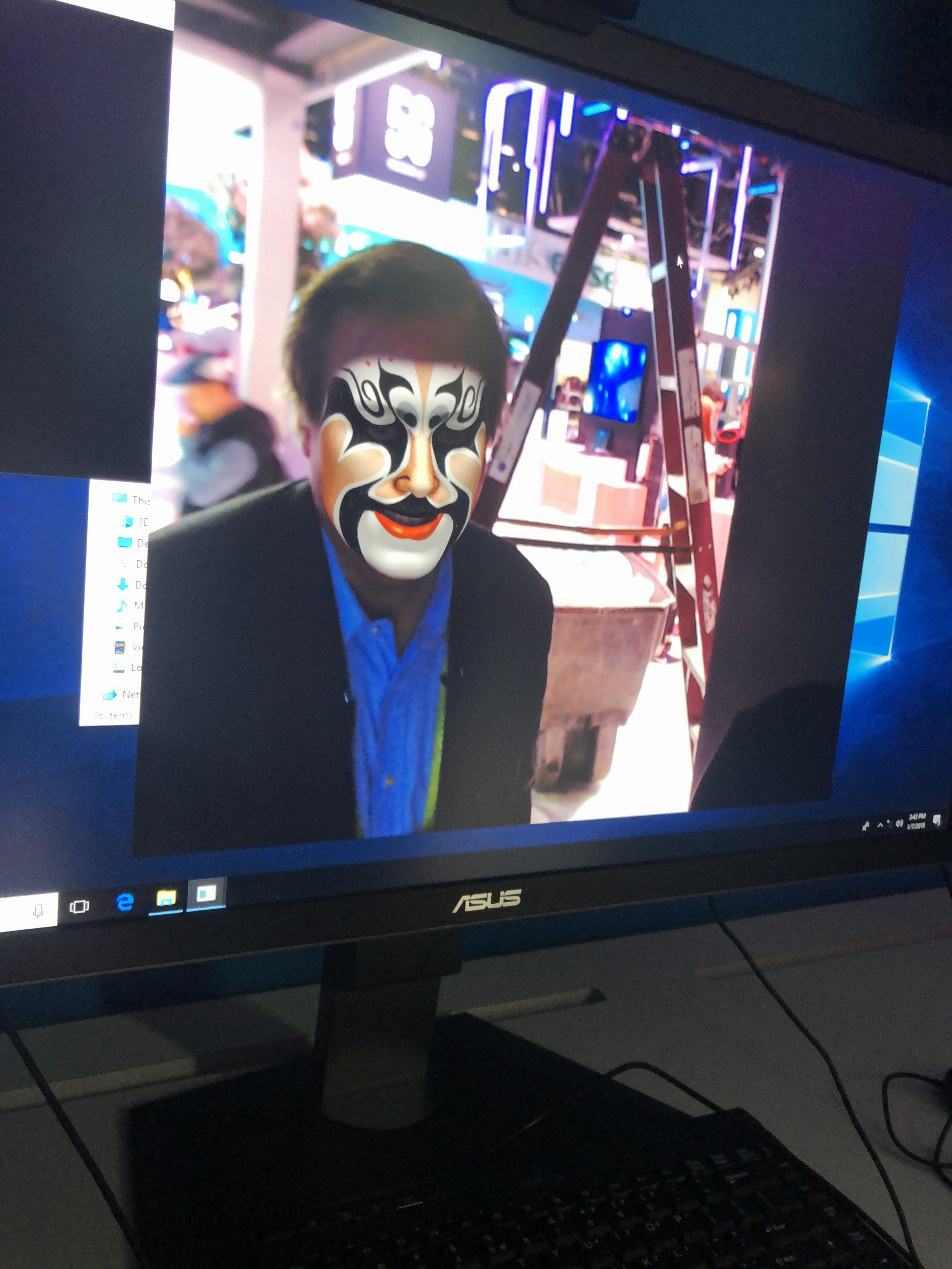
AR and VR were somewhat subdued at the show, even though HTC introduced its latest Vive headset with Wi-Gig, the Vive Pro, a nod to the emerging short-throw high-speed wireless transfer protocol as a way to untether headset wearers (getting the damn headset off their heads is the next step, but we’ll save that for another chat). But the likes of Vive and Oculus were not on the show floor, leaving more room for 3Drudder and others to show off new gear. CES Unveiled had its share of interesting start-ups, including Sniffy, a French platform for delivering fragrance on demand with touchscreens (see the demo at: https://www.youtube.com/watch?v=5dNPov0nsiA) and Bellus3D showed off its 3D face scanning camera for mobile devices.
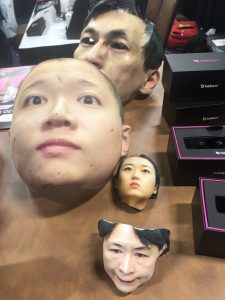
Bellud3D shows off some face masks made with its 3D face scanning camera for mobile devices
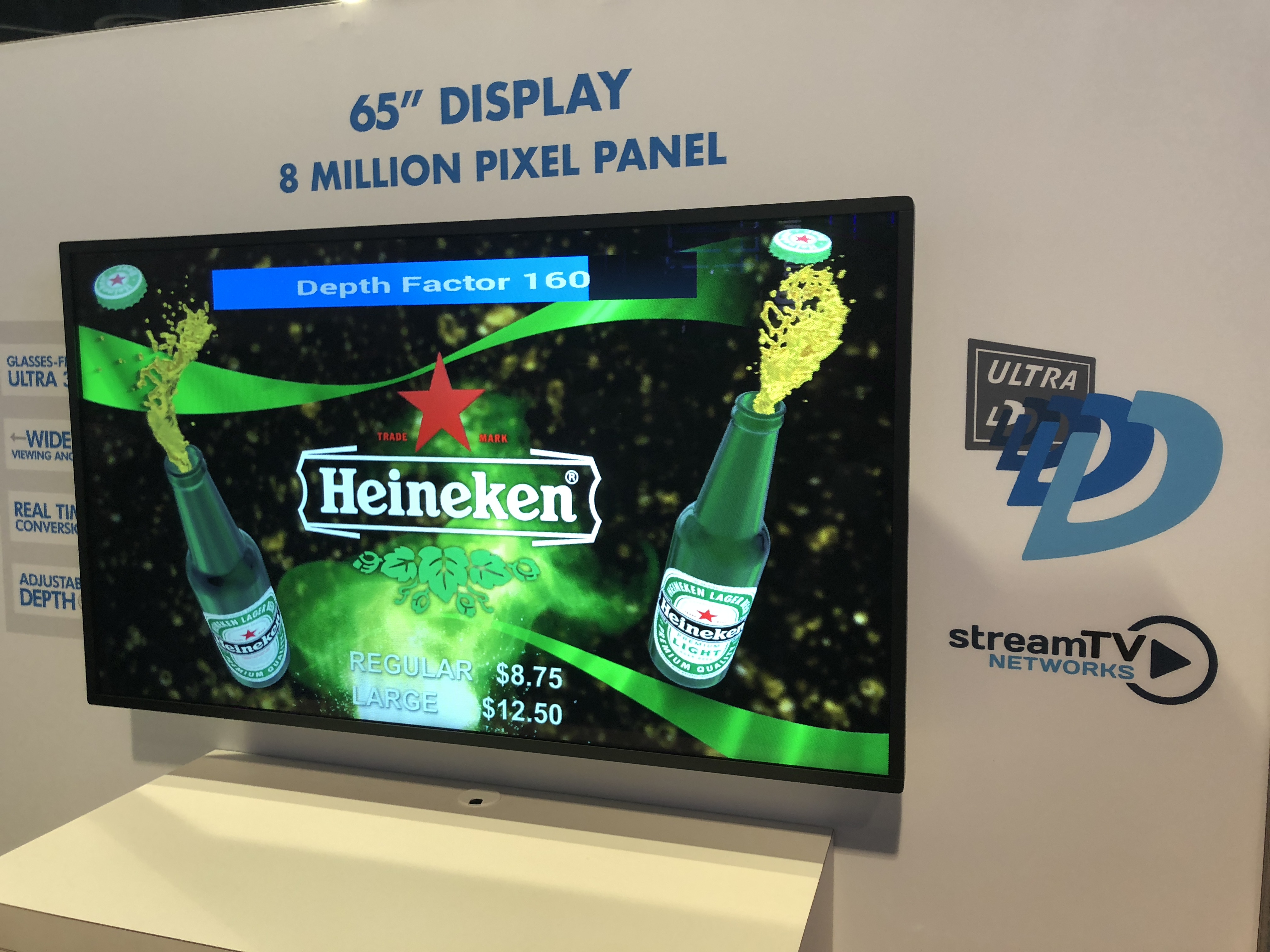
Autostereoscopic 3D displays made a big move forward with streamTV Networks, which showed off a 65-inch 8 million pixel display that comfortably rendered 3D images from a safe distance.
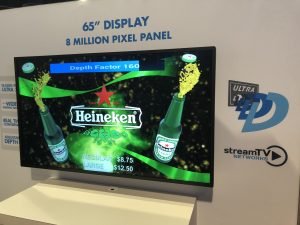
streamTV Networks demonstrated an impressive 65-inch 3D auto stereoscopic display
When it came to AR and VR at the show, Intel made the most impressive statement, demonstrating its TrueVR to great effect, showcasing 360 real-time processing for sports venues as well as real-time streaming Web VR for the upcoming Winter Olympic Games. Intel announced that it was making yet another foray into Hollywood with the launch of an LA-based studio that will manage the back-end processing of the live streams. Intel also created a full VR replica of its CES booth, available for consumers to download as a full Unity experience for Vive. This was an amazing use of the venue and the technology, as viewers could even interact with Intel experts from Intel technology centers around the globe. Intel also showcased its work in the 5G arena, setting up a 5G network in its booth, courtesy of an Ericsson base station and Nokia repeaters. 5G was not as dominant a theme at the show this year, even though the year started with great optimism from carriers, notably Verizon, regarding their 5G trials in 2018.
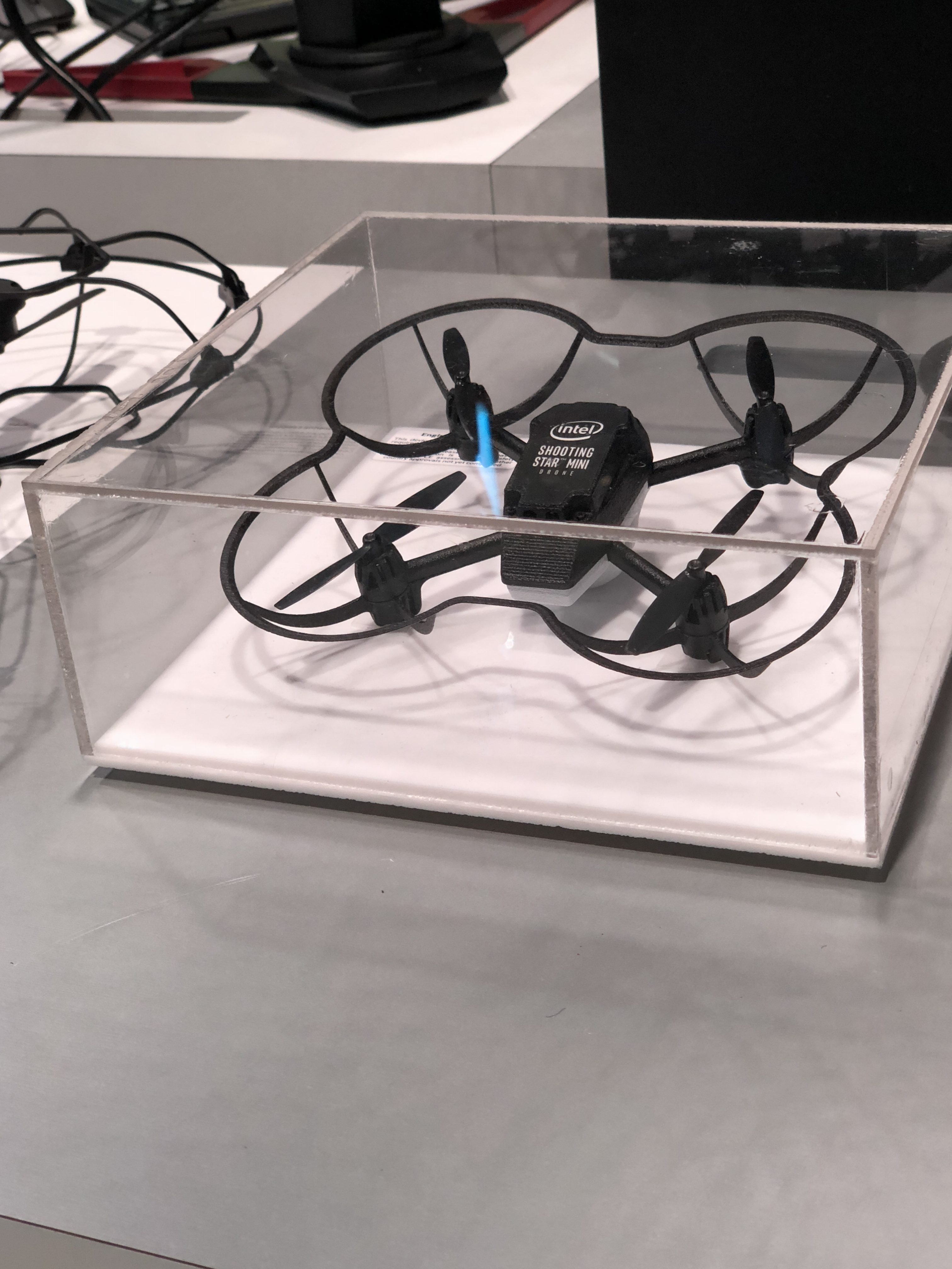
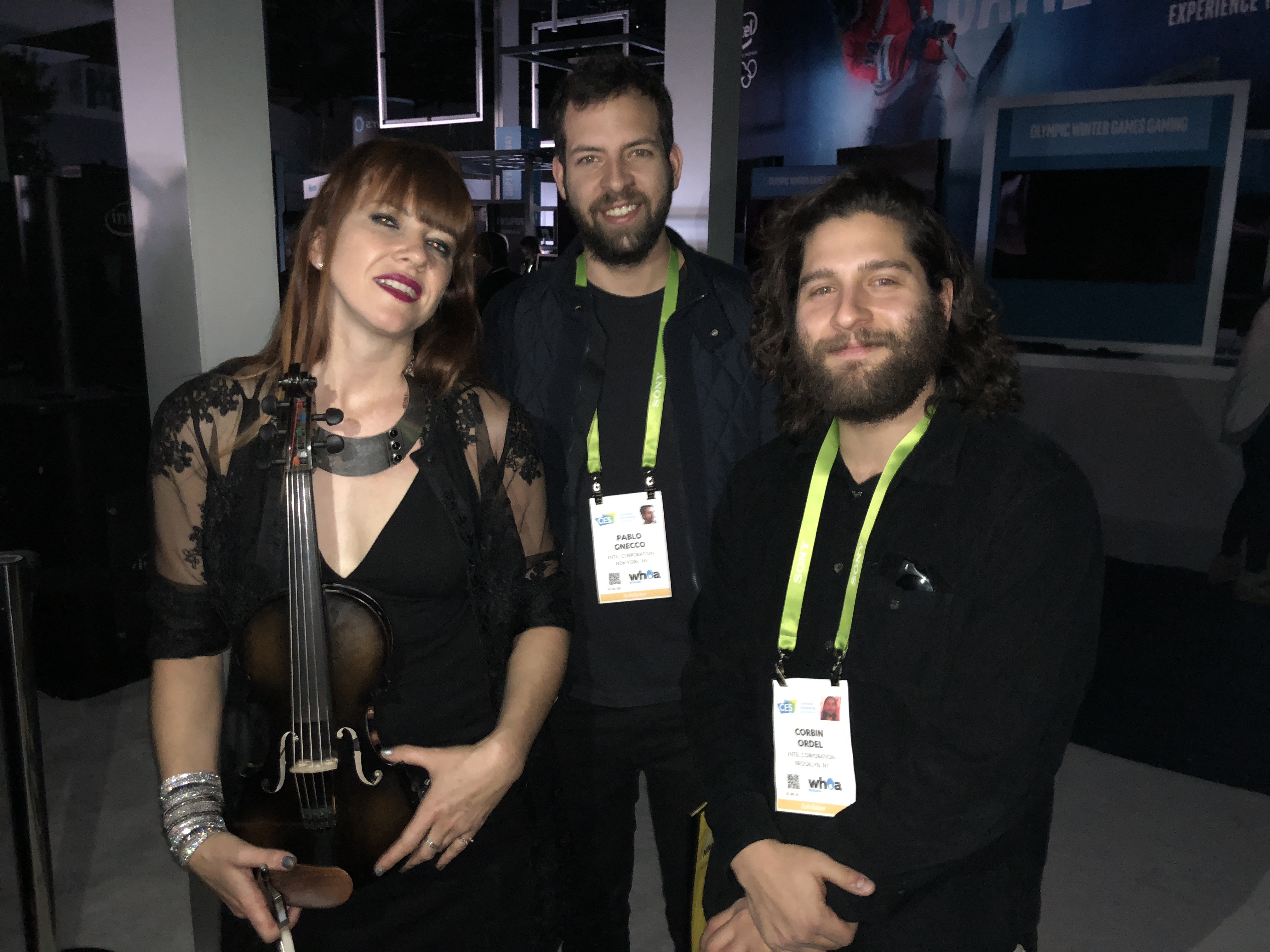
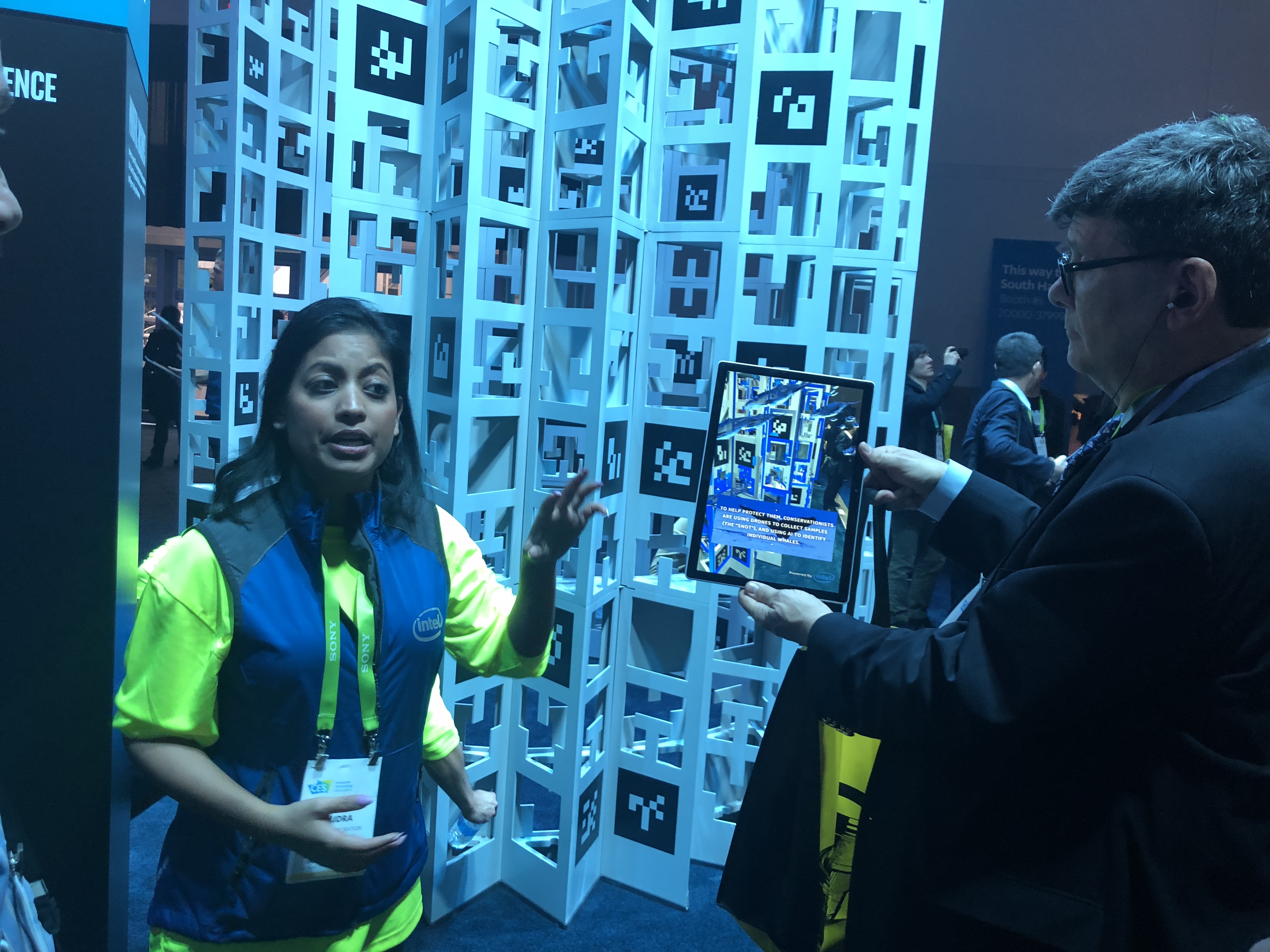
Intel showed off more of its drone family, including the new Shooting Star drone, which is optimized for synchronized flights, such as the one that accompanied the Bellagio’s dancing water experience after Intel CEO Brian Krzanich’s keynote address on Monday night. The Intel experience also included one of the coolest demos at the show, a real-time 3D facial effects demo from its Intel China lab, originally used to create effects for a popular Chinese singer’s performance. The demo, using a standard Logitech web camera with algorithmically derived real-time processing, produced vivid, engaging facial effects. Intel was one of many companies highlighting its AI efforts, with an “AI Tower” comprised of code-based images that triggered an AR demo, shown on a Surface Pro tablet, which detailed Intel AI projects, including a “snotbot” for tracking whales. Intel also surely won the “Great CES Blackout Entertainment Award,” when a violinist, Häana, who was part of a synchronized music and images performance strolled out to the stage and played a solo, proving that analog still rules (at least, in some instances).
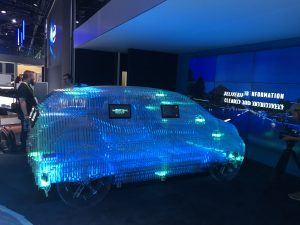
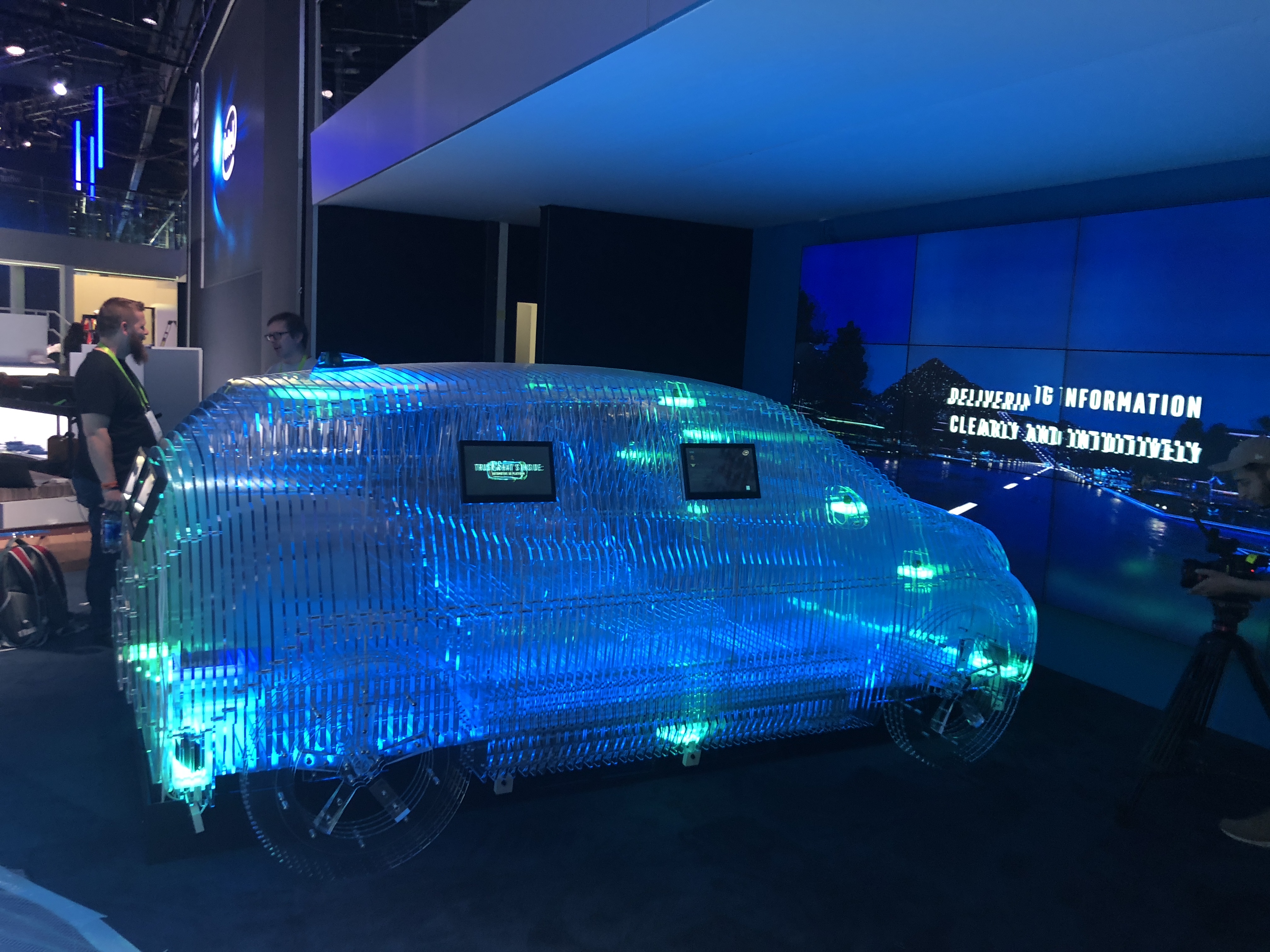
Intel’s Mobileye demo of smart sensors for vehicles
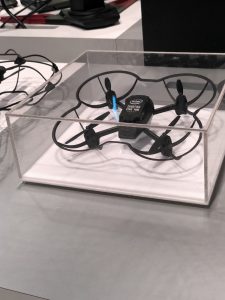
The Intel Shooting Star drone, optimized for synchronized flying
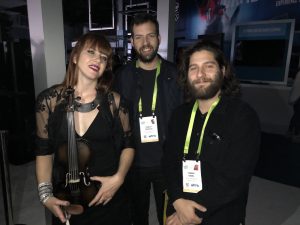
Häana, violinist who played a solo in the dark during the Great CES Blackout, and her trio mates, at the Intel booth. See video of her solo here: https://www.youtube.com/watch?v=R8JsMfnPOfc
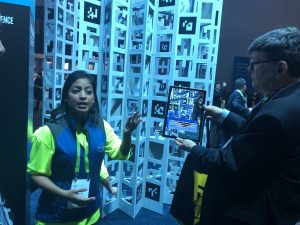
The Intel “AI Tower,” with Aditi demonstrating the AR-driven experience showcasing different Intel AI projects
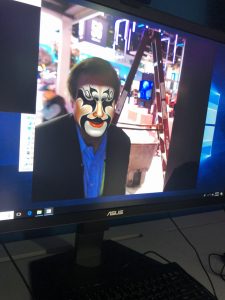
Intel’s real-time 3D facial effects demo. See video of the demo here: https://www.youtube.com/watch?v=R8JsMfnPOfc
AI at CES was mostly seen, in its most progressive form, in the North Hall – dubbed by some wags as “The Las Vegas International Auto Show” – but there were a number of leading AI companies conducting demos off the show floor, including Valossa (showing in the Sprockit Suite at the Cosmopolitan Hotel), which added new video insight features to what many in the industry consider to be the leading video AI platform.
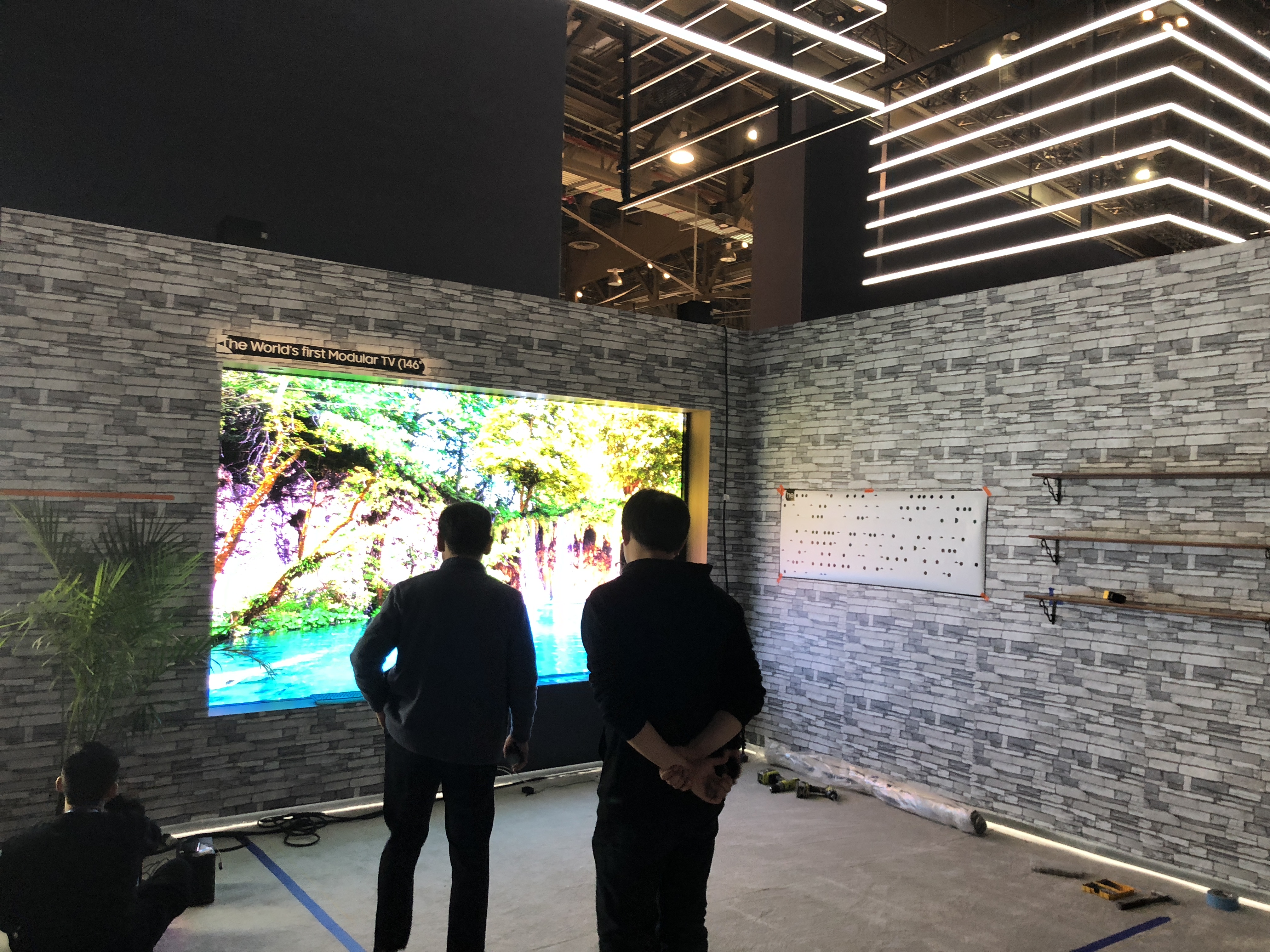
Samsung’s CES presence was a radical departure from past years, for several reasons. For one, Samsung seems to have given up its annual tit-for-tat with its Korean arch-rival, LG and instead focused less on individual product lines and more on the underlying technology and platforms necessary to effect the smart home, or smart society. Samsung even highlighted some of its work in telematics, featuring an impressive OLED screen as a dashboard that could show video feeds from your Samsung refrigerator to indicate what food you need to buy on the way home. Samsung played up the number of partners now working with its SmartThings platform, and focused on its messaging capabilities for the SmartHub – even sending messages to the front screen on its latest refrigerator. The most impressive demos were saved for its display area, which did not showcase QLED TV products, but rather highlighted concepts, including a 146-inch 4K display, ‘The Wall,’ which is the world’s first modular screen. This was an amazing conceptual demonstration: tiled screens that can be modularized, and even display different resolutions. This could be a revolutionary way to deliver on-demand viewing experiences. Imagine if you wanted to see the news in a lower resolution than your favorite TV drama, or wanted to see a film letter-boxed. Screens could be modularized to accommodate larger viewing audiences, or to satisfy particular content resolutions.
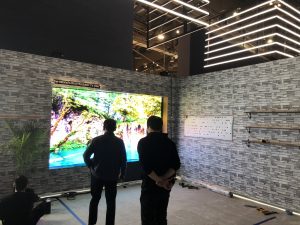
‘The Wall’ at Samsung’s booth – a 146-inch display, the world’s first modular display
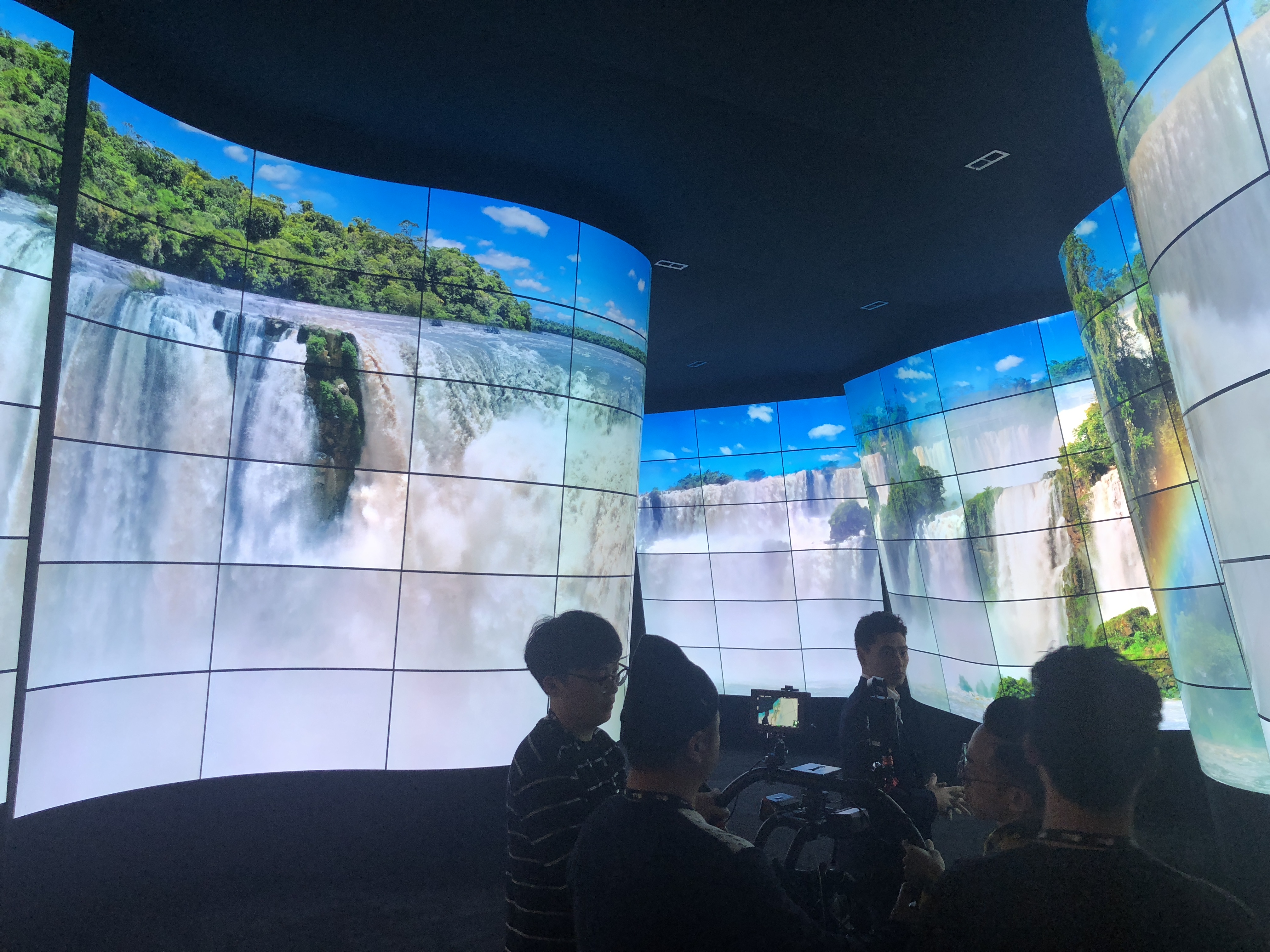
Samsung had a Video AI demo that showed some of the concepts on which it is working that hint at just these kinds of future product directions. Samsung, by the way, did not even try to outshine LG in the content display war. LG, which seemingly has won this battle for several years running now, continued to show incredible images in massive displays at the front of their booth.
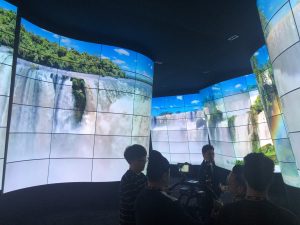
LG wins the high-res display wall war, again, at CES 2018
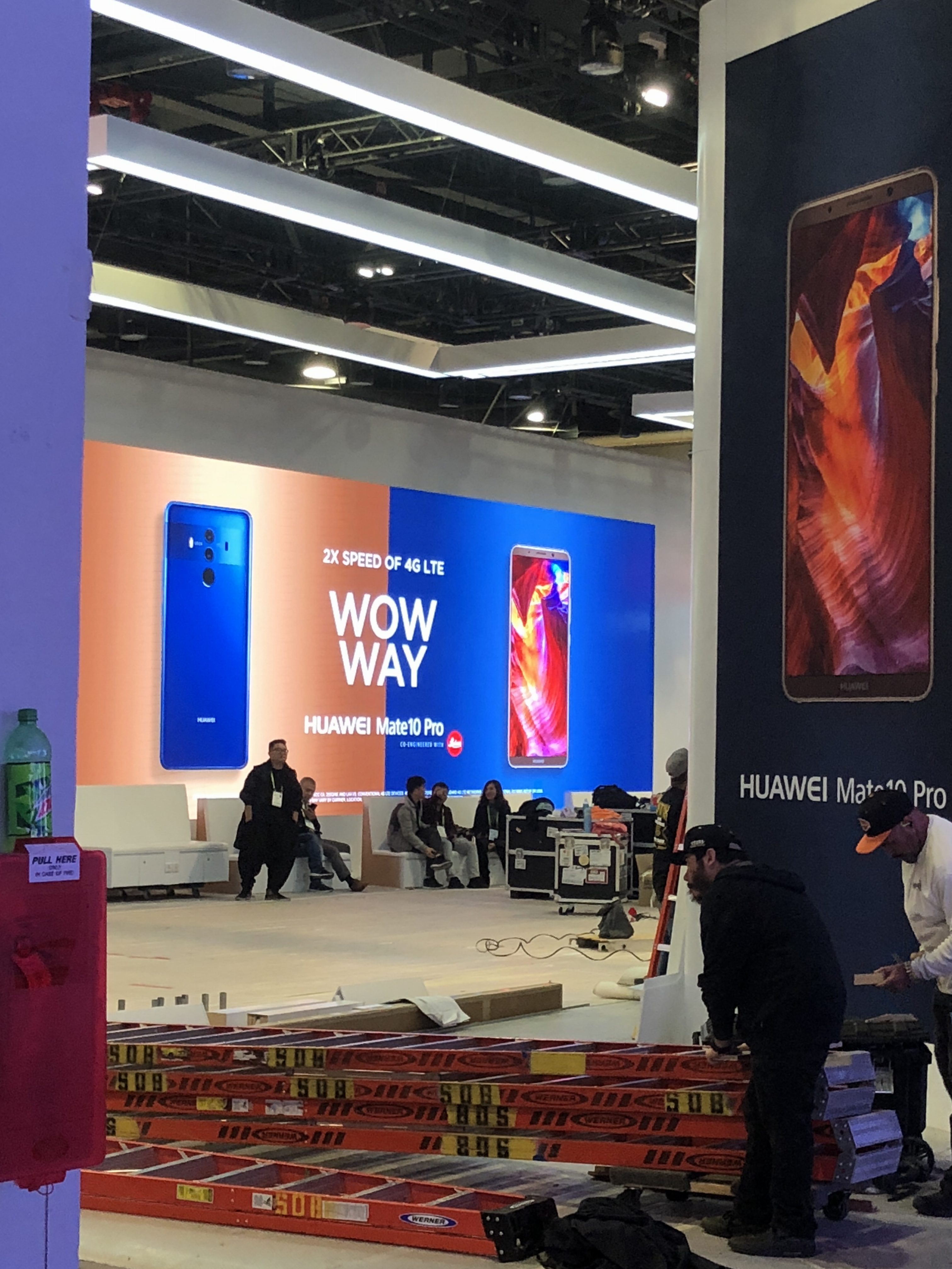
One of the other major news stories at CES this year had more to do with something that did not happen than something that did. I am referring to Huawei’s thwarted press conference with AT&T to introduce the Mate 10 smartphone, which AT&T was planning to sell in the US, marking Huawei’s official US market introduction. The day before the scheduled event, AT&T announced that it was pulling out of the deal, no doubt receiving heavy pressure from Washington. This put the brakes on the Huawei keynote address by Richard Yu, CEO of Huawei’s consumer products group, which saw him stumbling and mumbling his way through a lengthy sales pitch for the Mate 10. The phone itself is worth looking at (this was the “AI phone” that Huawei said it was working on last year), and breaks new ground in displaying relevant contextual content for users.
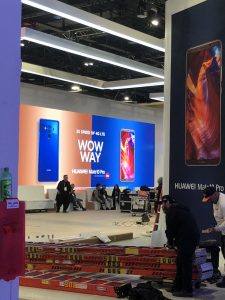
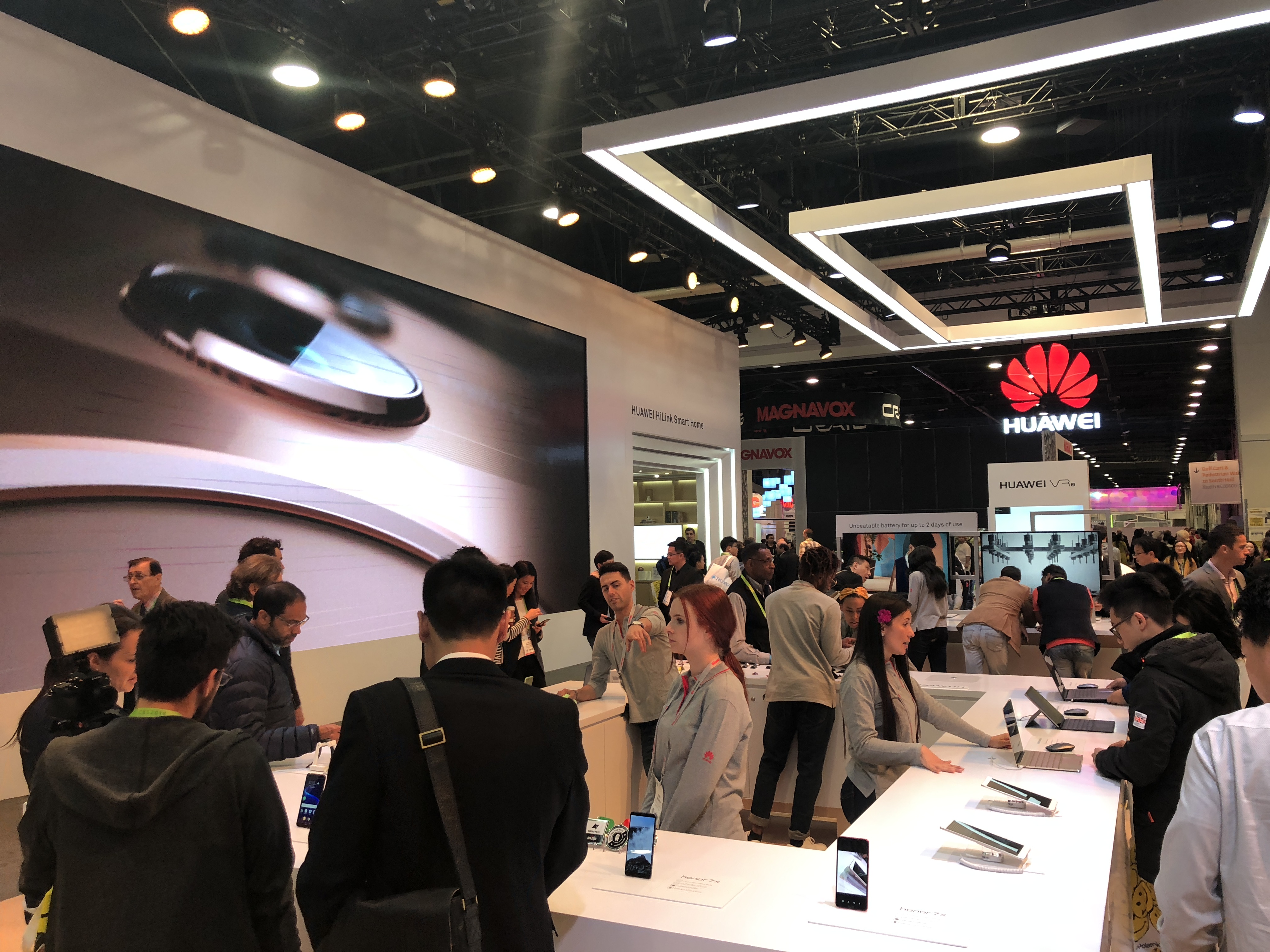
Set-up at the Huawei booth, which featured the ‘WOW WAY’ tagline
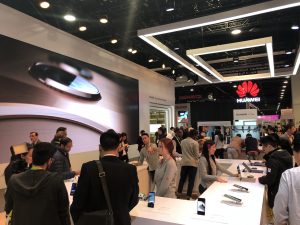
The Huawei booth at CES 2018. See demo of the Huawei Mate 10 smartphone here: https://www.youtube.com/watch?v=KGulQdjQwqw
The North Hall was all about enhanced features for autonomous vehicles (AVs), and aside from General Motors (who did not show, given that the Detroit International Auto Show was too close to CES this year), all the major auto manufacturers were on the floor. Delphi was back on the floor this year, after a foolish move at CES 2017 to draw traffic to a parking lot near the convention center. New faces, including Austin Electric Vehicles, were there as well.
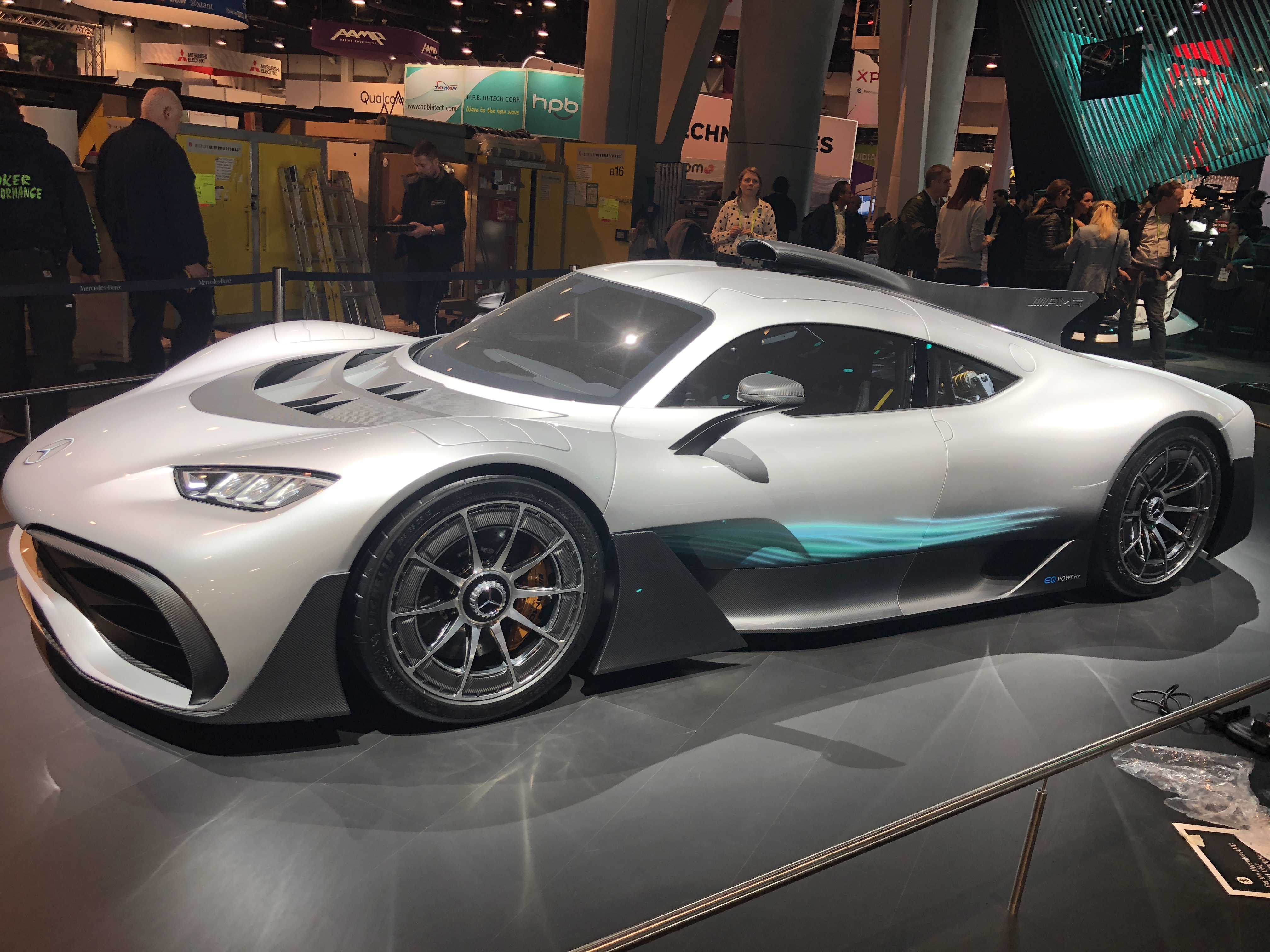
Ford did not shine this year, even though their Smart City moving video wall was an impressive work of art. Mercedes-Benz outperformed. Their MBUX (Mercedes-Benz User Experience) platform showcased personalization as the hallmark of every car they will sell going forward. One cool feature was from a London start-up, What Three Words, which delivers a new kind of navigation system based on three-meter blocks being crushed into three-word addresses (like “dog.banana.fish”). This is, according to Mercedes-Benz, a more accurate way to deliver directions and locations than GPS addresses. Mercedes-Benz also showcased the Project 1, a 1000 horsepower engine futuristic vehicle that will sell in limited quantities for $3,000,000.
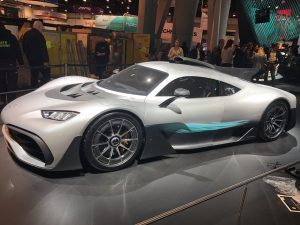
The Mercedes-Benz Project 1: a 1000-horse power engine and a $3 million price tag
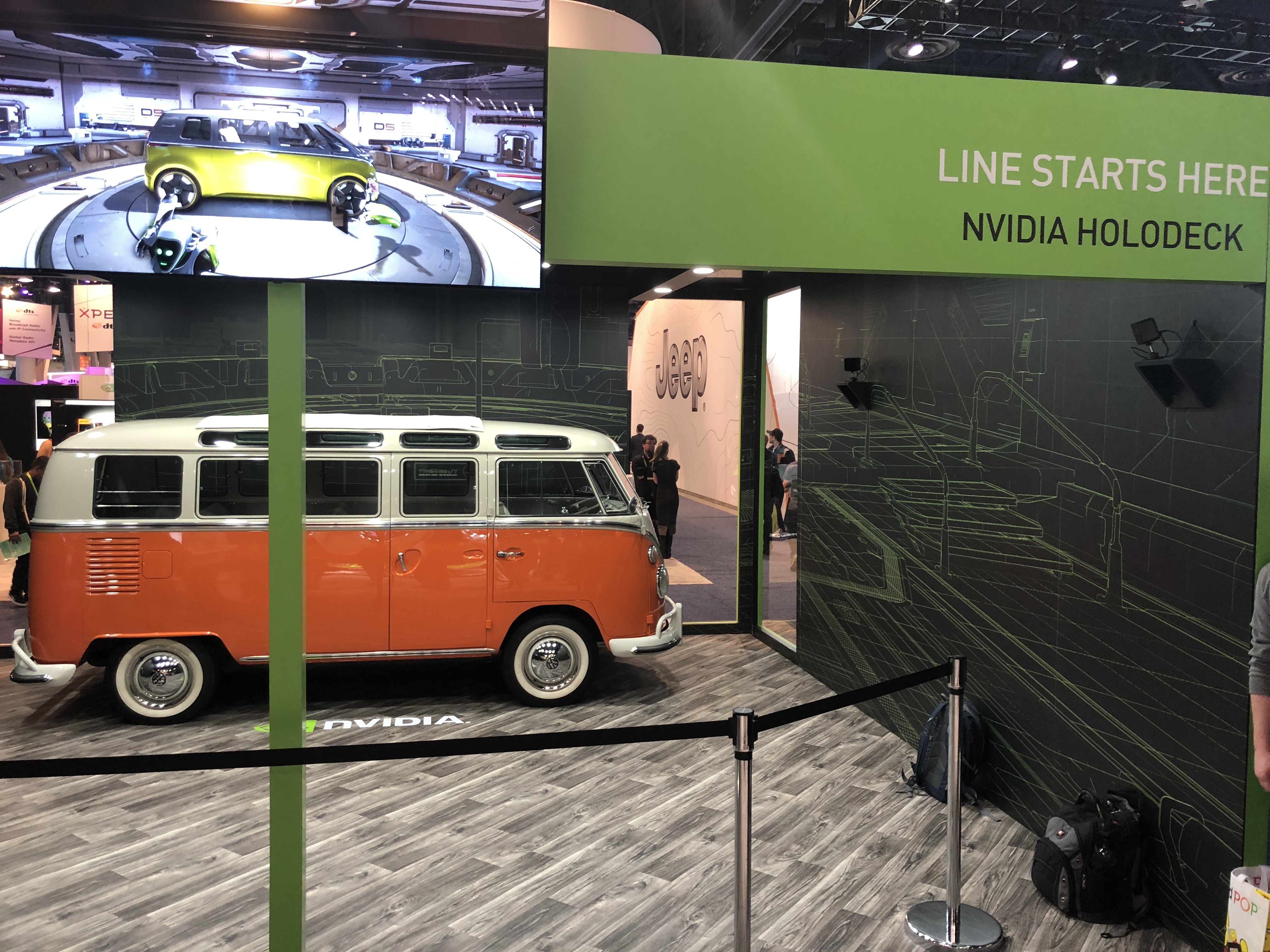
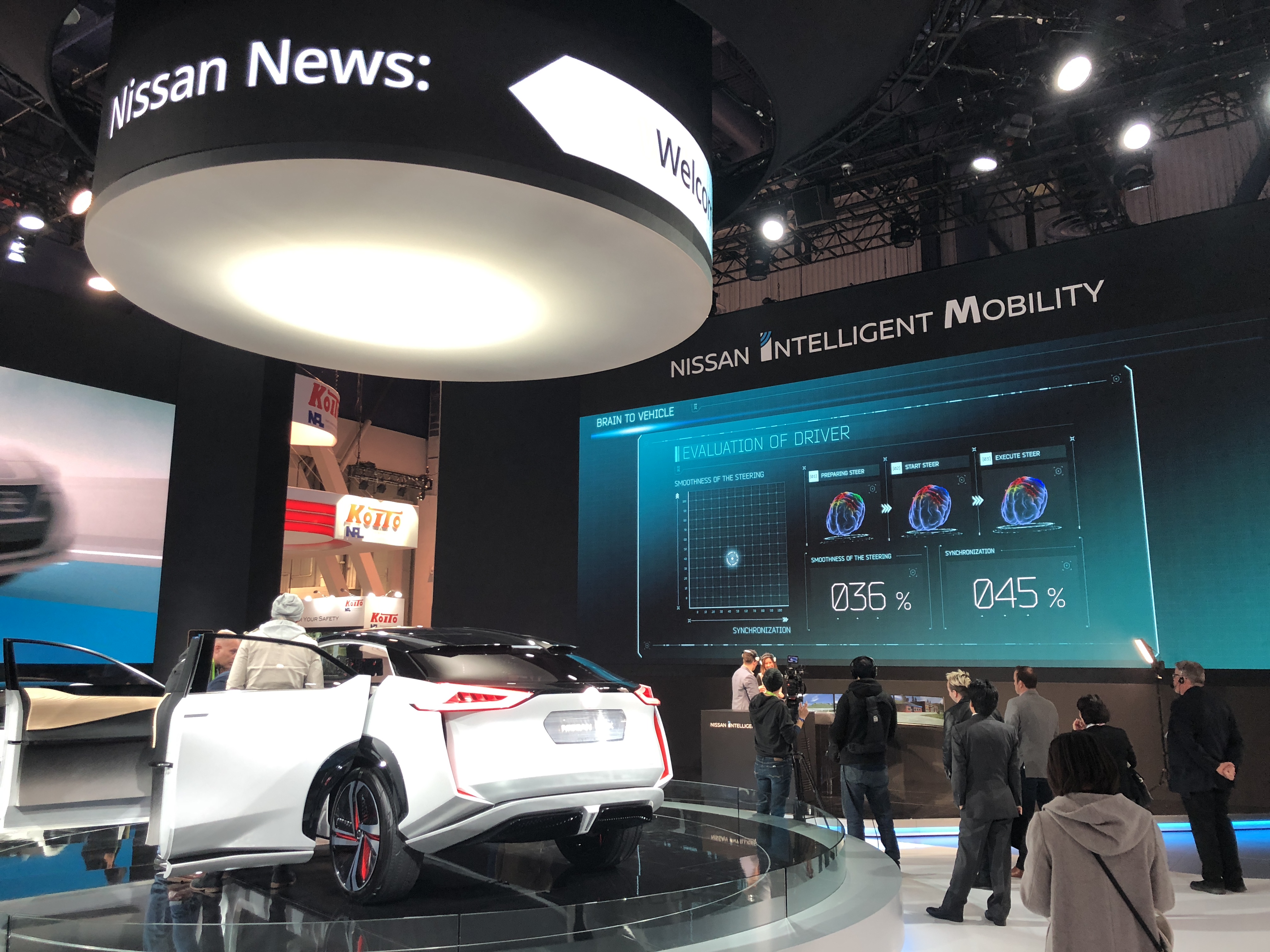
Nissan showcased its b2v (brain-to-vehicle) system, which reads brain waves through headrest detectors to help deliver better predictive moves. Nvidia showed off its new AV processor, which is capable of 320 trillion operations per second.
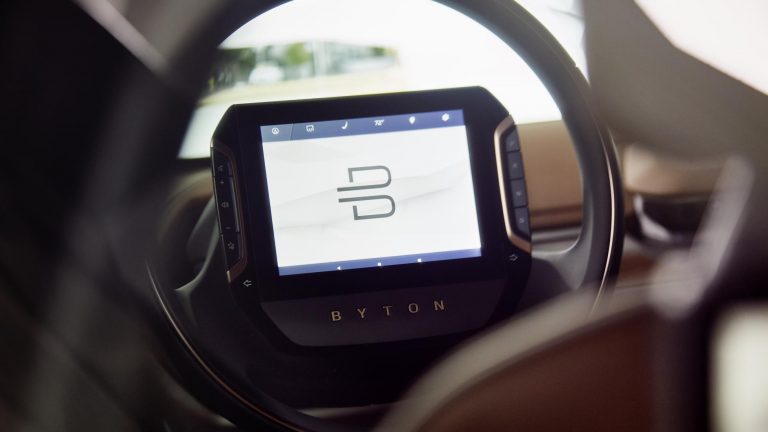
The biggest splash on the CES car show floor was made by Chinese firm Byton, whose S.I.V. – Smart Intuitive Vehicle – was introduced at the show, marking only the second time that a car has been introduced at the show (two years ago, troubled Chinese firm Le Eco’s subsidiary Faraday Future introduced a car, which may never see a street, but – oh, what a buzz it was!). Byton’s vehicle will sell, according to its press release, in the US in 2020. Priced at $45,000, in the Tesla ballpark, the Byton vehicle has biometric sensors, AI, and a single screen dashboard, along with a tablet in the steering wheel.
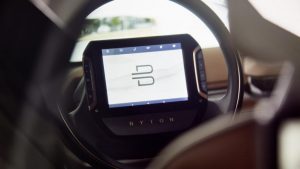
Byton, a Chinese car company, introduced its S.I.V. – Smart Intuitive Vehicle, at CES 2018
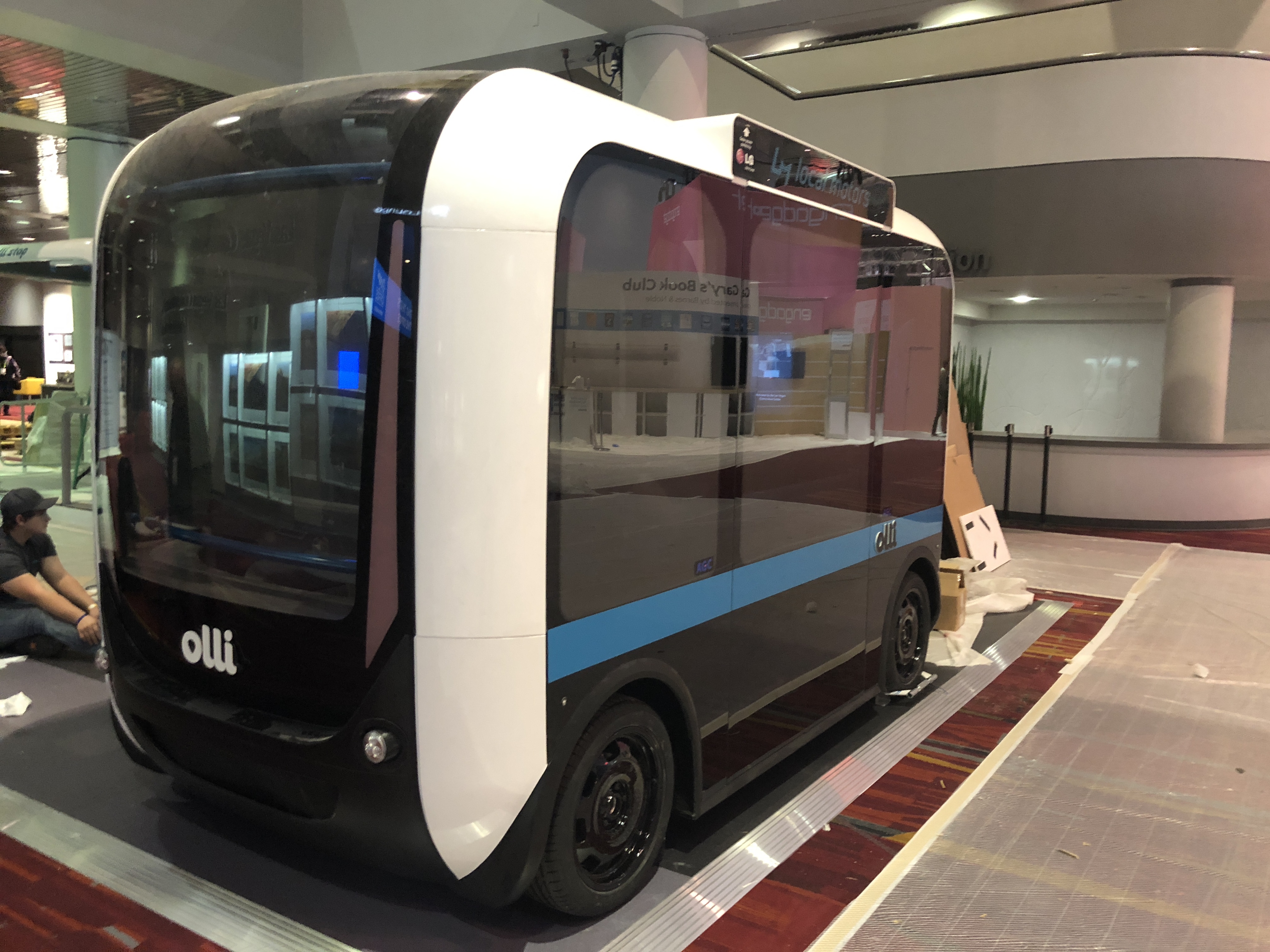
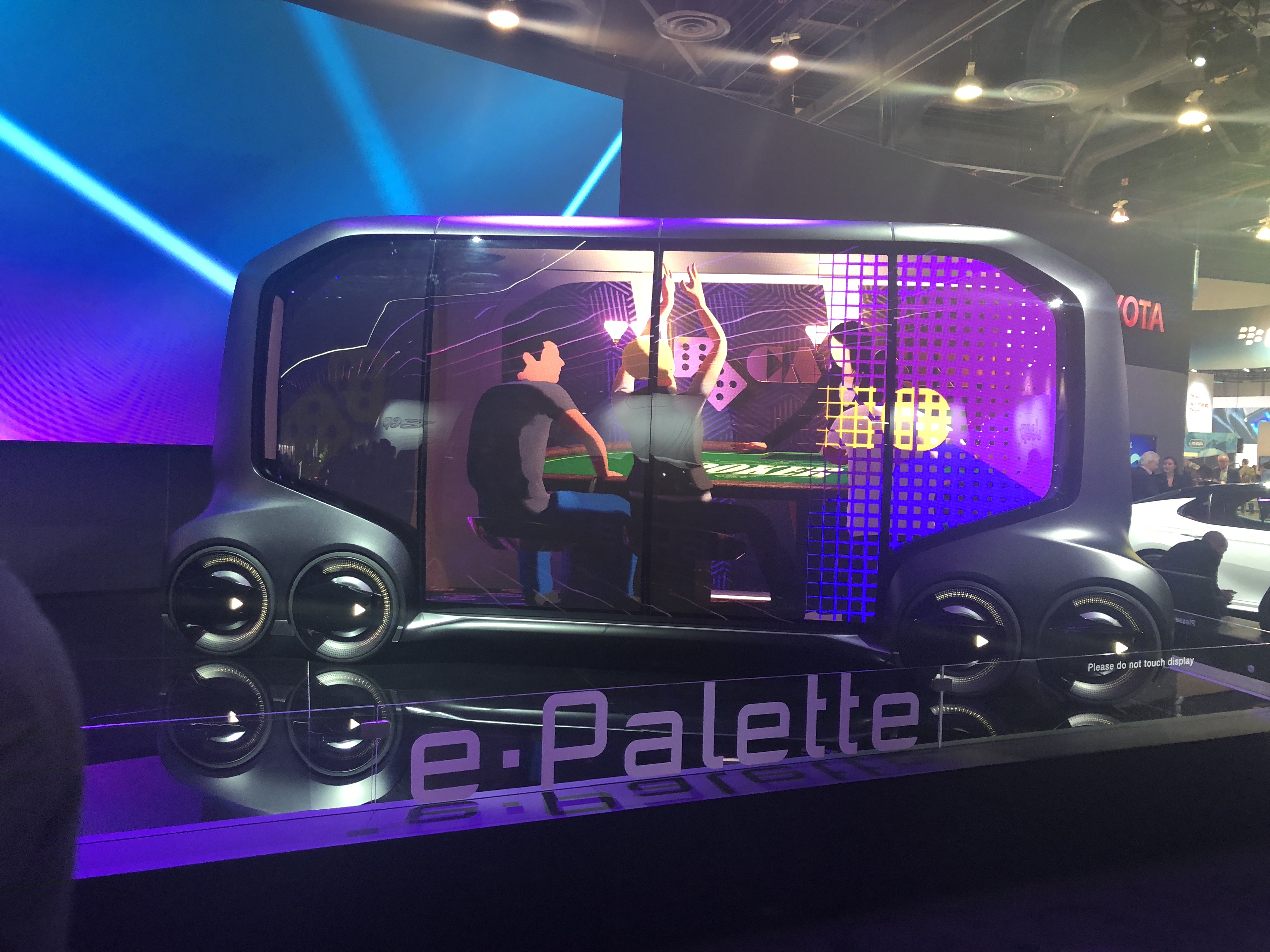
Kia Motors showed off a personal assistant, and also touted what it calls the first in-vehicle 5G connection, showing a content stream from Seoul to Las Vegas, using the HECAS low-latency mobile video platform. Honda showed off its robotics, and no cars, further emphasizing their focus on CES as an opportunity to sign up OEM partners. Toyota won the cool concept car award this year, with the e-Palette, an autonomous delivery van with smart screens for digital signage. The boxy vehicle was an interesting design play, and was somewhat reminiscent of the Accessible Olli vehicle – the world’s most autonomous accessibility bus – that was on display in the Central Hall concourse of the Las Vegas Convention Center. Accessible Olli is already on the road, and is a joint venture between the CTA Foundation, IBM Watson and Knoxville, Tennessee-based Local Motors, which 3D-printed the vehicle. Accessible Olli fits up to 12 people, has smart screens, can determine if a passenger is blind, and has an ultrahaptic air button for signaling stops.
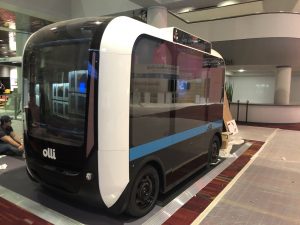
Accessible Olli – a smart, AI-powered autonomous accessibility bus
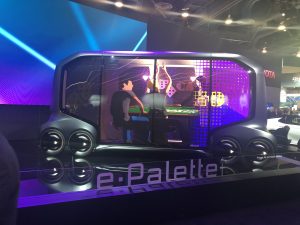
The e-Palette autonomous delivery van, a concept from Toyota
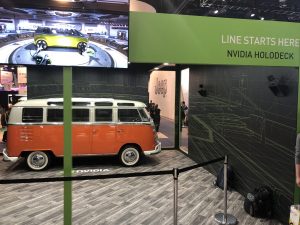
Nvidia introduced the first chip designed for AV use, capable of 320 trillion operations per second
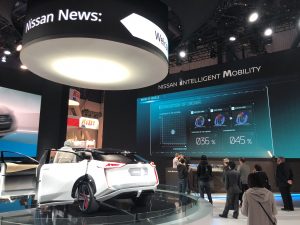
Nissan unveiled its brain-to-vehicle (b2v) platform at CES 2018
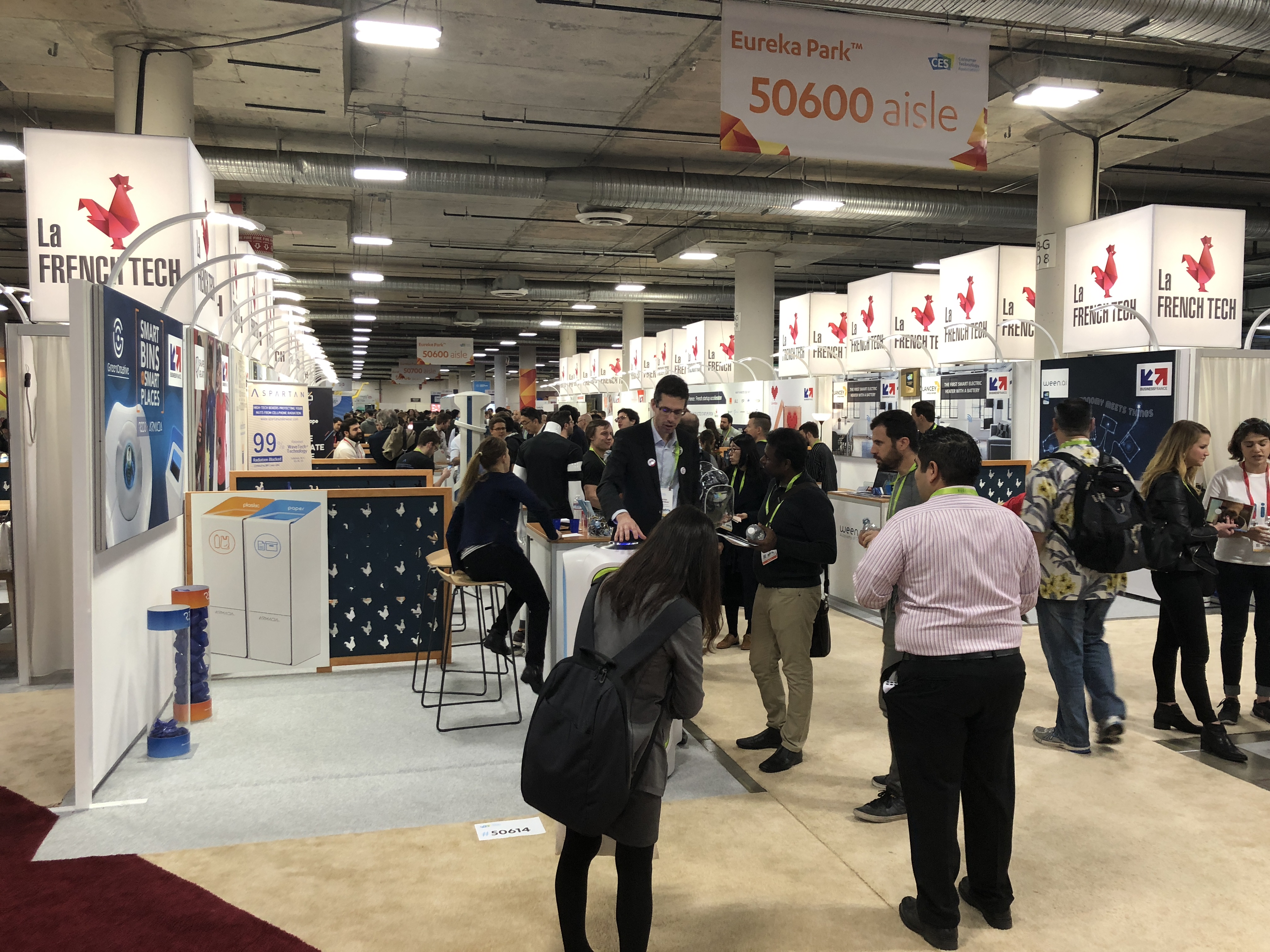
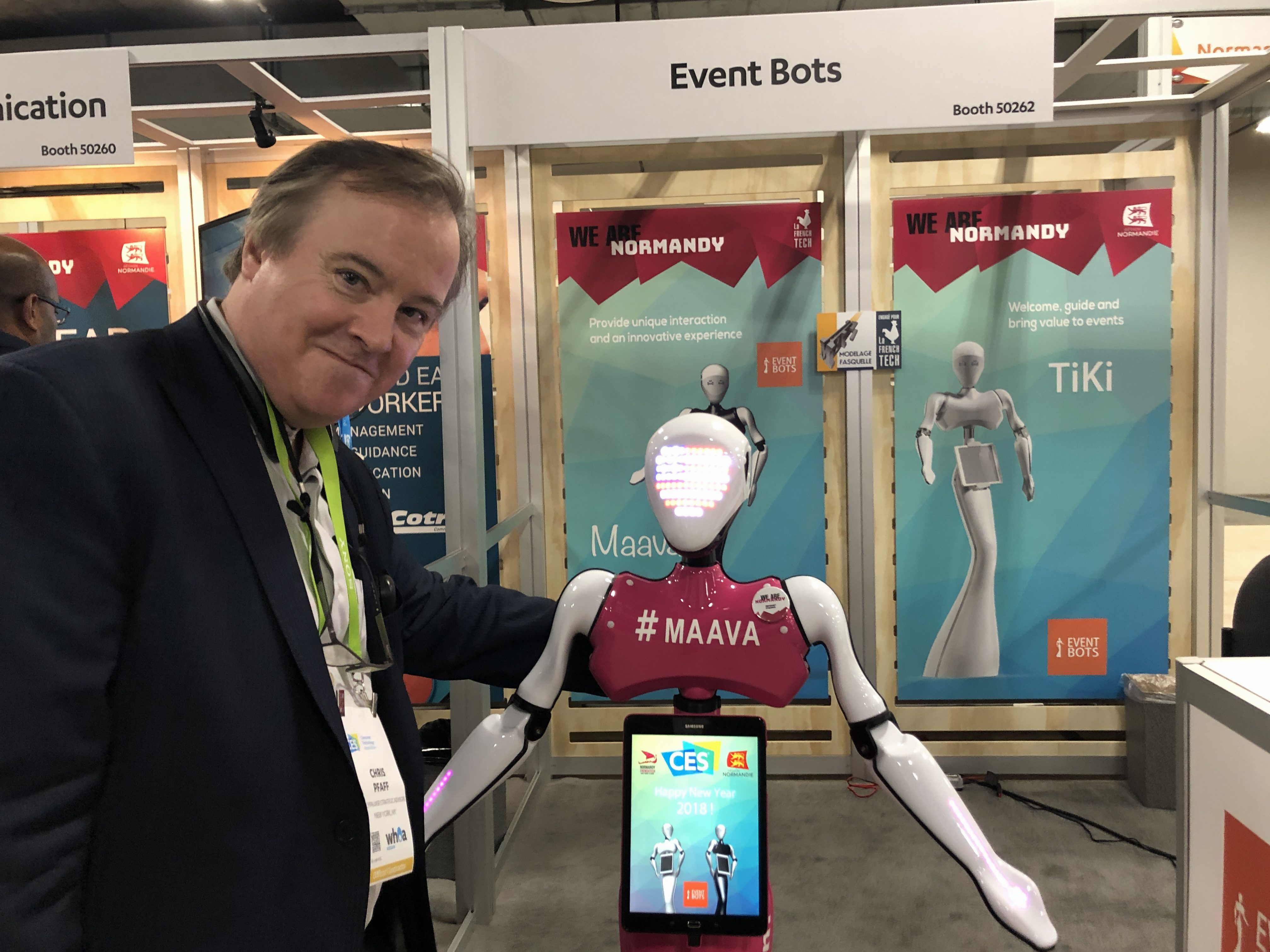
Eureka Park this year was another strong showing by La French Tech, with about 350 French start-ups, almost half of all the start-ups in the area. There were many more clever IoT and mobile start-ups, as well as a smart musical ring, using MIDI, from Enhancia. My favorite Normandy start-up, Event Bots, was at the show, demonstrating their hospitality robots.
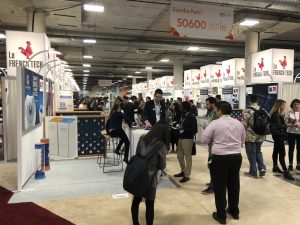
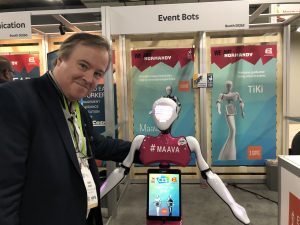
La French Tech was dominant at Eureka Park. Normandy start-up Event Bots was part of the massive French presence
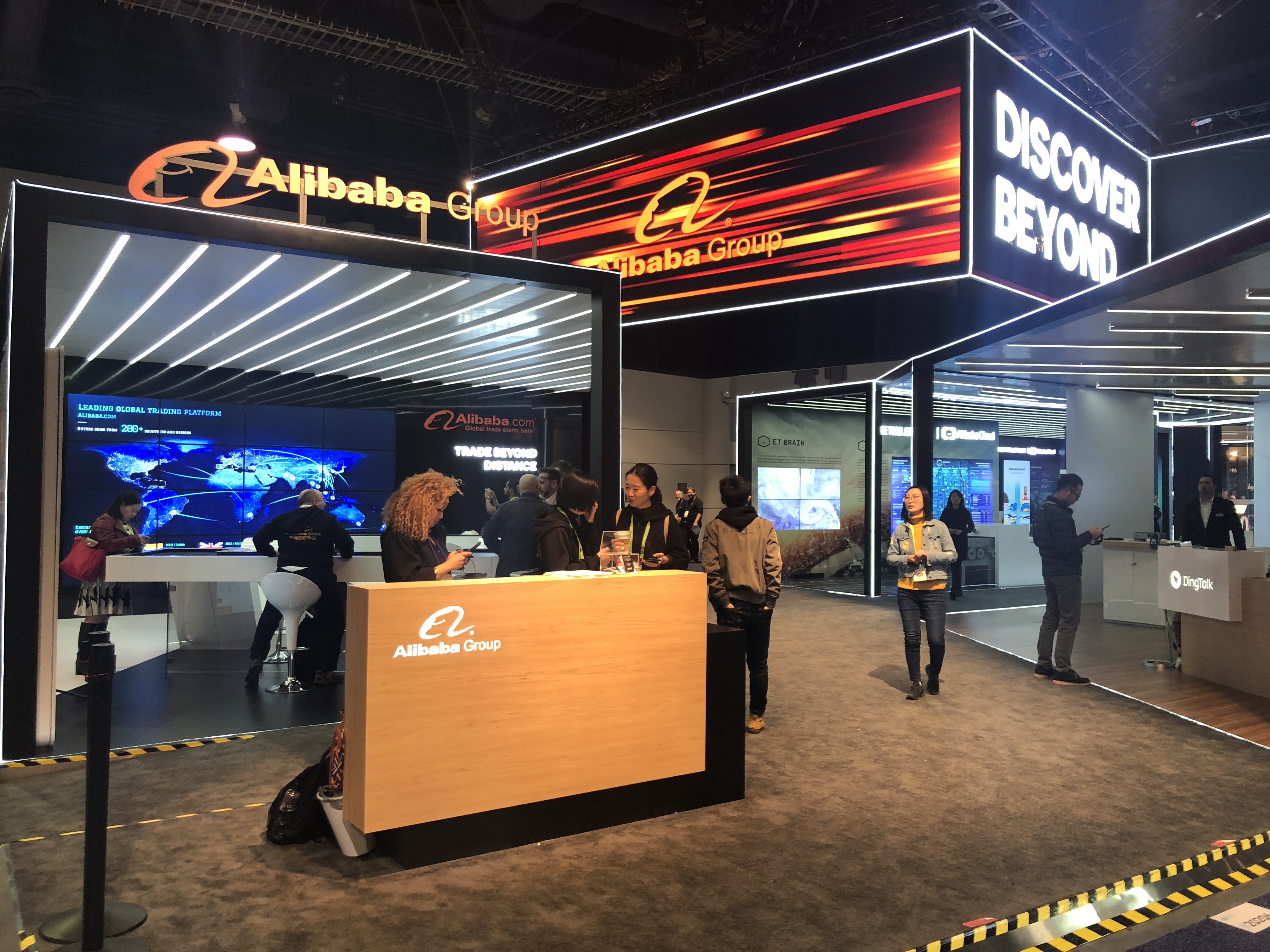
The South Hall featured some new players, including Alibaba, which took over the South Hall Lower front booth. Alibaba’s presence reminded visitors of the strength of China’s companies at CES 2018. From TCL to Huawei to Baidu and Alibaba, Chinese technology was on display in great force. As a further example, Hi-Sense, which took over the Microsoft booth in the Central Hall, opposite Intel, a few years ago, showed a stunning laser TV product, which uses a short-throw laser projection system for high-resolution, large-screen displays. This is an astonishing change from just 8 years ago, when the only Chinese companies at CES were tucked away in a lackluster “China Pavilion” in the then-Las Vegas Hilton ballroom area. Now, they are a dominant presence.
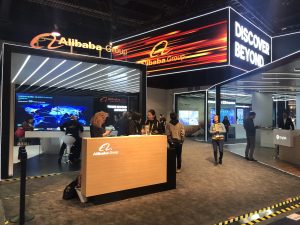
Alibaba took over the South Hall lower level front booth this year
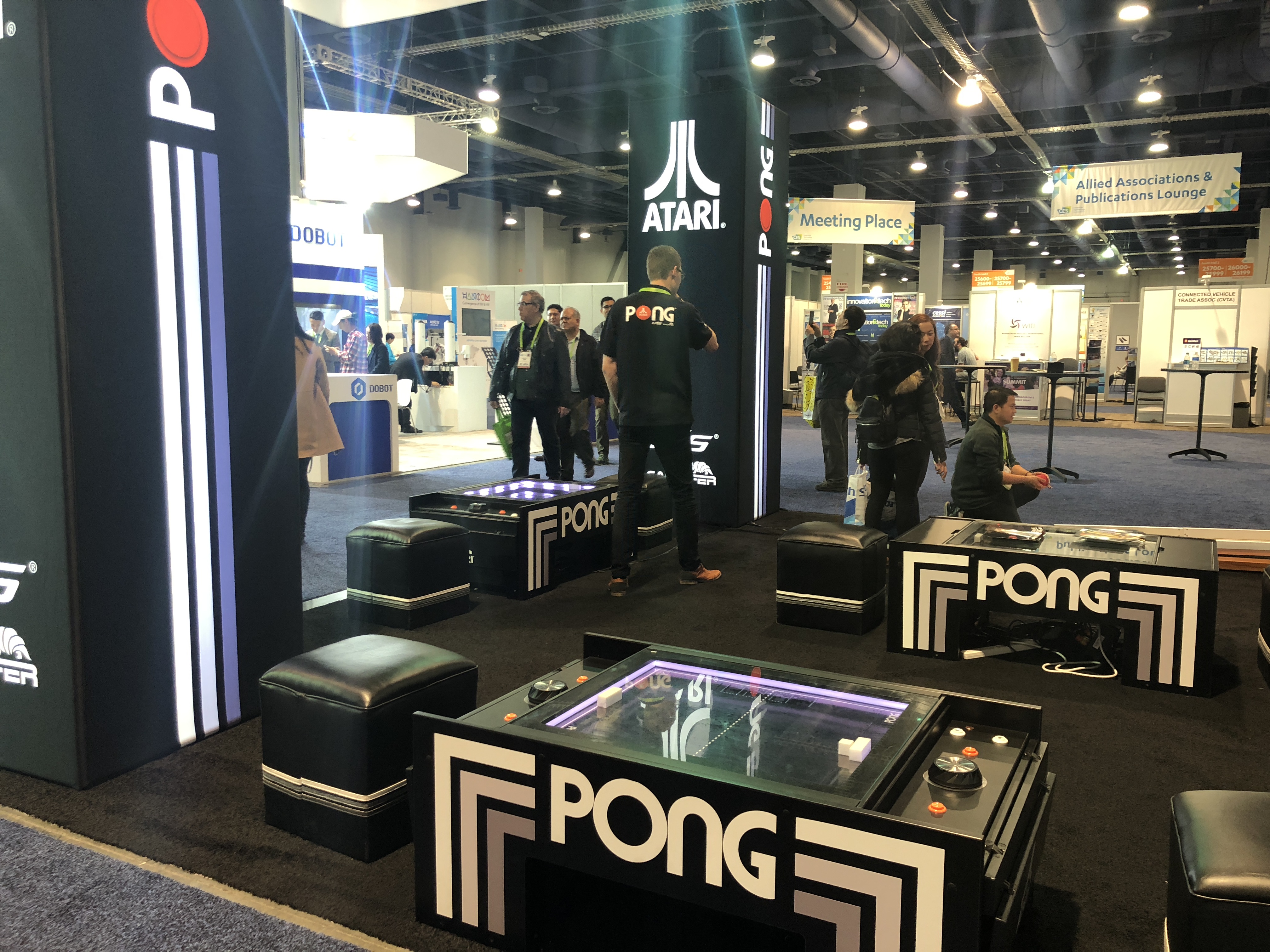
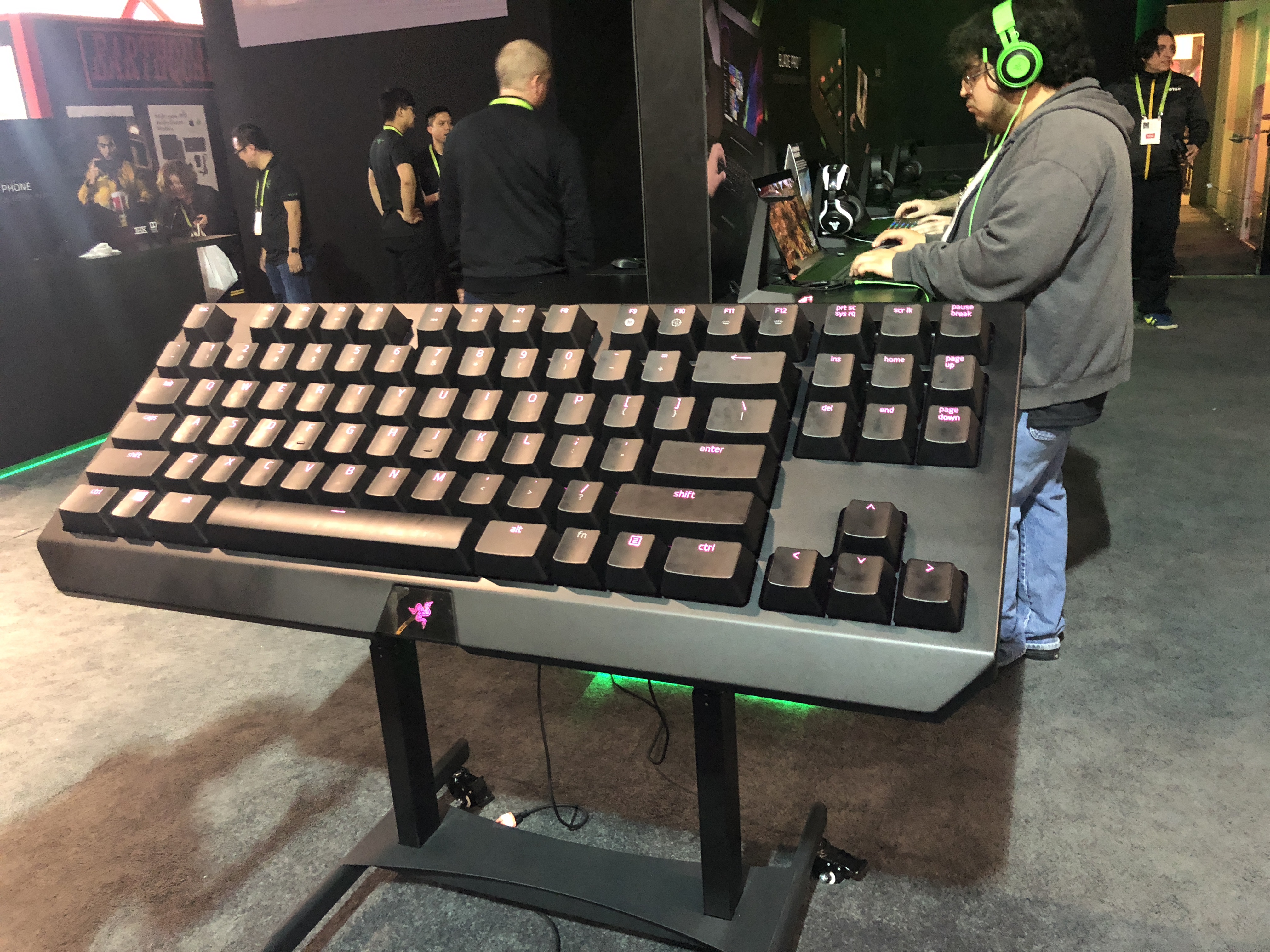
Other South Hall stops of note included gaming PC company Razer, who had their gaming tournament large keyboard on display. Speaking of gaming, Atari had a pong exhibit on the floor, creating great pangs of nostalgia for all.
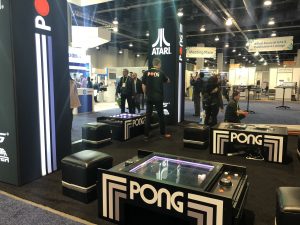
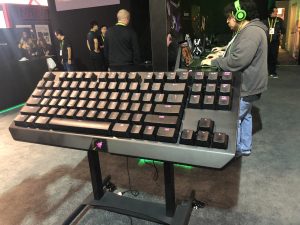
Retro time meets Big Time: Atari Pong (left) and the Razer tournament gaming keyboard for e-sports
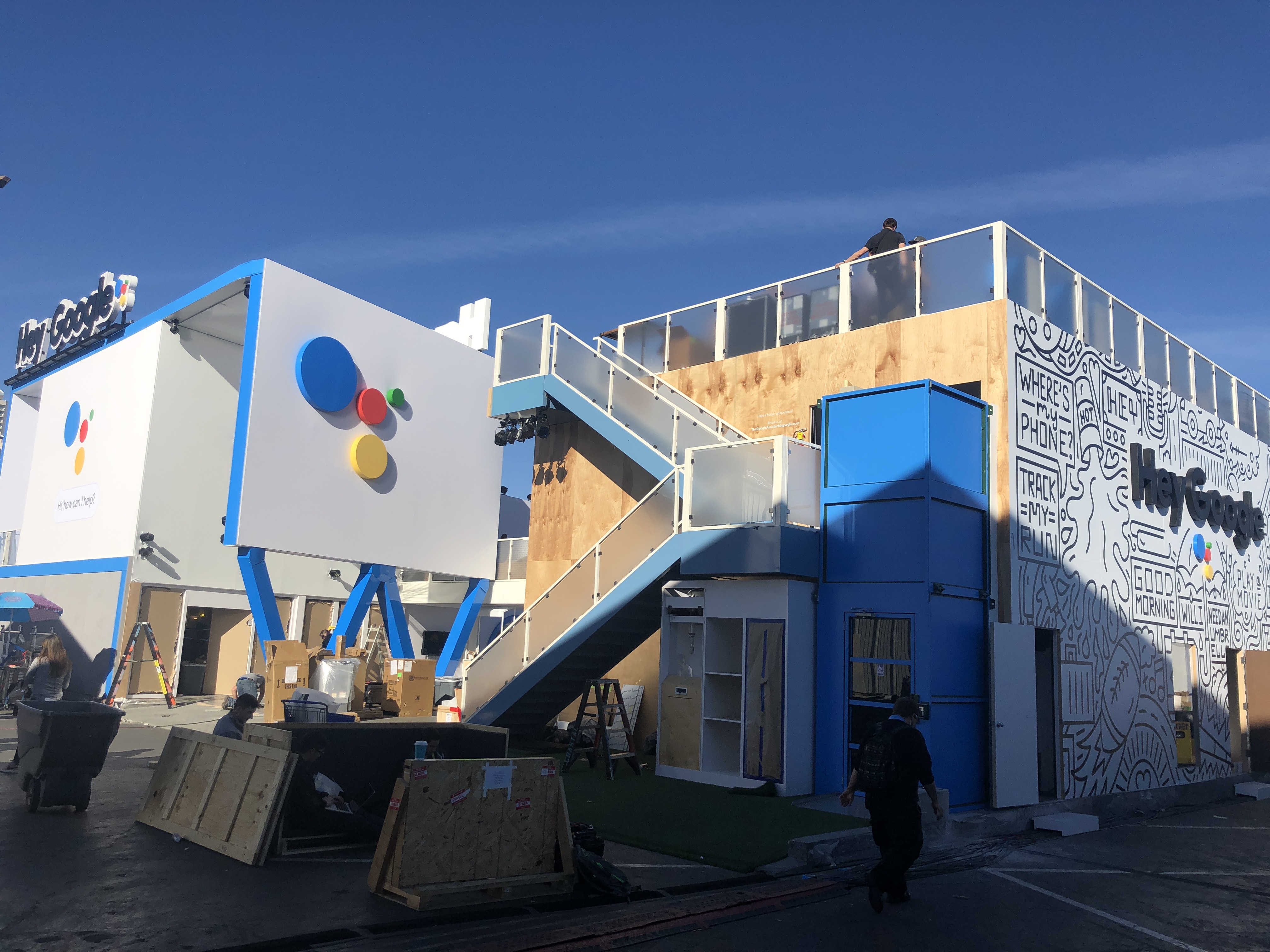
Last year’s CES was the “Alexa Show,” with Amazon’s intelligent assistant being shown in dozens of booths. This year, Google tried to step up to the plate, branding the Las Vegas Monorail with “Hey Google” and setting up numerous “Hey Google” signs in partner booths. A large Google Assistant pavilion in the Central Hall parking lot made its presence felt. They need it, of course; Amazon has about 70% of the smart speaker market to Google’s 23%, but many people would have argued that Amazon actually won this year’s battle, given that Alexa was still so prevalent. Cortana, Microsoft’s assistant, was virtually nowhere to be heard.
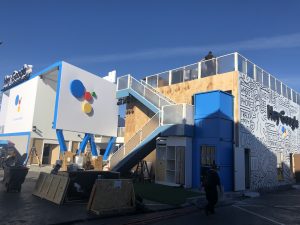
The Google Assistant pavilion in the Central Hall parking lot
What we have learned from CES 2018 is that more consumer choices will be made based on AI-powered devices or platforms and more products will highlight their AI or on-demand capabilities more than ever. It will be interesting to see how this trend translates into next year’s show, but it augurs a shift into the cloud in greater measures for the CE industry at large.